
Nvidia accelerates: Rubin AI chips enter production
At CES in Las Vegas, Jensen Huang unveils the Vera Rubin platform. The goal is to cut the cost per inference token by up to 10 times and reduce by four times the number of GPUs needed to train complex models

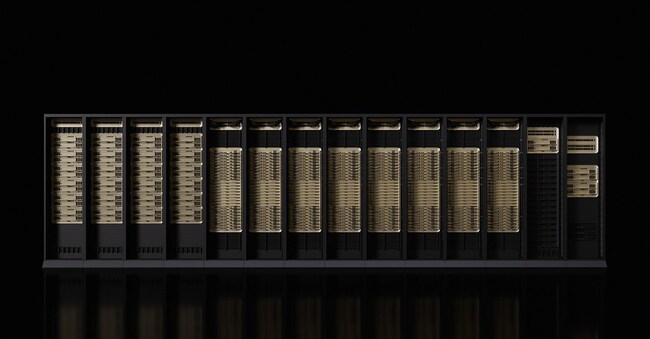
LAS VEGAS (USA). After an hour and twenty keynote, Jensen Haung in black leather jacket after sketching the future of autonomous driving and robotics focused on the markets' most eagerly awaited announcement: the next generation of chips for artificial intelligence. As expected from the stage at Ces in Las Vegas, he officially launched the new Rubin computing architecture, which he described as the state of the art in artificial intelligence hardware. The new architecture is currently in production, is expected to be further enhanced in the second half of the year, and promises superior performance. That was what the markets wanted to hear.
"Vera Rubin is designed to address this fundamental challenge we face: the amount of processing required for artificial intelligence is increasing dramatically," Huang told the audience. "Today I can tell you that Vera Rubin is in full production."
The Rubin architecture, first announced in 2024, is the latest result of Nvidia's relentless hardware development cycle, which has turned Nvidia into the world's most valuable company. The Rubin architecture will replace the Blackwell architecture, which in turn replaced the Hopper and Lovelace architectures.
Less than a fortnight ago, the company snapped up talent and chip technology from start-up Groq, including executives who have been instrumental in helping Alphabet-Google design its own artificial intelligence chips. Although Google is one of Nvidia's biggest customers, its in-house chips have turned into one of the most serious threats to Jensen Huang's group, especially as Google works closely with Meta Platforms and other partners to erode Nvidia's dominance in AI.
How Rubin is described.
Rubin is not a single chip. It is an ecosystem: six new components designed together - CPUs, GPUs, interconnects, AI-native storage and networking - that talk to each other like a well-trained team. NVIDIA founder and CEO Jensen Huang's stated goal is to lower the cost per inference token by up to 10 times and reduce the number of GPUs needed to train complex MoE models by four times compared to the previous platform, Blackwell.


