
Migrant package towards tomorrow's Cdm: the latest news
The immigration bill could include a naval blockade and a clampdown on family reunification

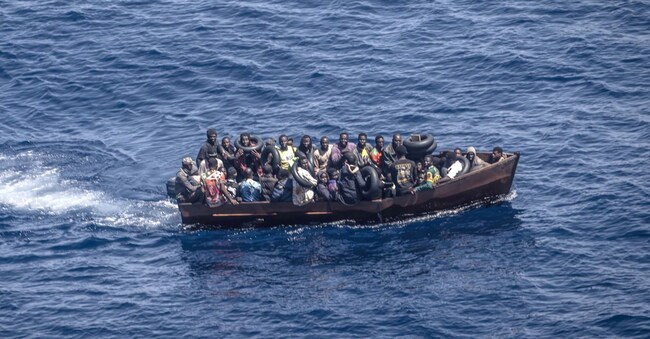
A naval blockade, the return of the 'Albania system', with the possibility, 'where there are agreements with safe third countries, of transferring people to different places to carry out asylum procedures', but also a tightening on family reunions. These are some of the regulations that could be included in the immigration bill that is expected on Wednesday 11 February on the table of the Council of Ministers. The measure under preparation aims - among other things - to implement the European Pact on Migration and Asylum, which will enter into force in June, and within it a number of regulations removed from the security bill, approved last week, will be included.
The Naval Blockade
Among the measures, the so-called 'naval blockade', i.e. the possibility of banning - for no more than 30 days, extendable up to a maximum of six months - the crossing of the territorial waters limit, 'in cases of serious threat to public order or national security understood as a concrete risk of acts of terrorism or infiltration by terrorists', but also of 'exceptional migratory pressure such as to compromise the safe management of borders'. In these cases, migrants can also be 'taken to third countries other than the one they belong to or come from, with which Italia has signed special agreements'. The tightening of family reunifications should also be included, while it is not clear whether there will be the so-called 'save Almasri' rule, which was contained in the drafts of the security bill and provided for 'the handing over to the State of origin of a person who is dangerous to national security or to the compromise of international relations'.
Piantedosi's visit to Tripoli
Meanwhile, on Monday 9 Interior Minister Matteo Piantedosi flew to Tripoli where he met his Libyan counterpart Emad Mustafa Trabelsi and Prime Minister Abdulhamid Dbeibah. And in the coming days he may also see Cyrenaica's strongman Khalifa Haftar. "Constant dialogue and cooperation with the Libyan authorities represent a fundamental element in order to effectively and responsibly address the common challenges linked first and foremost to the management of migratory flows," Piantedosi stressed, explaining that "Italia will continue to support, in conjunction with the EU and other international partners, initiatives aimed at consolidating cooperation with particular reference to assisted voluntary repatriation programmes and initiatives for the control of land and sea borders". An official visit to 'promote bilateral cooperation between the two countries,' the Libyan Interior Ministry stressed. And while the Viminale data show a drop in arrivals by sea in the first 40 days of 2026 (1,813, equal to -56.38% compared to 4,156 in the same period last year) with a decrease even on the Libyan route (which is still the main one), the United Nations Migration Agency has given news of a new shipwreck off the Libyan coast: 53 people are missing because of a boat that capsized north of Zuwara on 6 February. Children are also among the missing.

