
The discovery

Mild cognitive impairment, possible 'resilience' factors identified

An Italian study published in the US journal Alzheimer's & Dementia shows that a proportion of patients do not worsen over time thanks to specific brain resilience mechanisms detected by electroencephalography

4' min read

Translated by AI
Versione italiana

4' min read

Translated by AI
Versione italiana

Not all patients with Mild Cognitive Impairment (MCI) are destined to slide towards dementia. This is a key point, often overlooked in the public narrative of neurodegenerative diseases, because Mci is a 'borderline' condition: more than normal brain ageing, but not yet dementia, with a clinical future that may differ significantly from person to person. International estimates indicate that asignificant proportion of people with Mci progress towards dementia every year, but there is no single fate: there are also stabilisations and, in some cases, improvements.

It is within this grey area that fits an Italian work that tries to shift the centre of gravity of research: not just "who is most at risk", but "who is resilient" despite having unfavourable biological signs. The study is entitled"Electroencephalography-based signatures of cognitive resilience in individuals with stable mild cognitive impairment despite carrying a high-risk for dementia" and is published in the prestigious US journal Alzheimer's & Dementia. The first author is Chiara Pappalettera, a biomedical engineer and researcher at the IRCCS San Raffaele in Rome; responsible for the project and the study is Professor Paolo Maria Rossini, director of the Department of Neuroscience at the Roman institute.

Loading...

The heart of the investigation is this: among patients with Mci, there is a subgroup that, despite altered biomarkers and risk indicators, remains clinically stable. Understanding how this happens means looking for mechanisms that can be measured, replicated and, one day, enhanced.

The INTERCEPTOR project

The study comes under the umbrella of INTERCEPTOR, a programme launched in 2018 and supported by the Ministry of Health and the Agenzia Italiana del Farmaco (Aifa) with the aim of intercepting early pathways leading to dementia and improving the ability to stratify risk in patients with mild cognitive disorders. The picture is consistent with a worldwide research trajectory: if early-acting therapies are coming (or if you want to understand who will really benefit from them), you need reliable tools to read the prodromal phase.

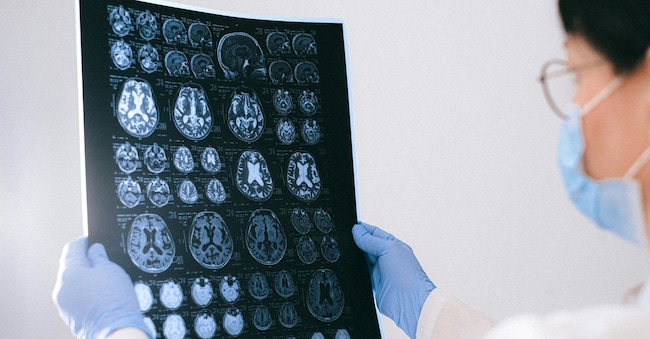
According to IRCCS San Raffaele in Rome, the work involved 351 subjects with Mci followed for three years. The initial evaluation was extensive and 'multimodal': biomarkers in cerebrospinal fluid and blood (amyloid and tau), genetics (in particular Apoe), neuroimaging (MRI and PET), electroencephalogram with advanced analysis of brain connectivity, neuropsychological tests, and comprehensive clinical evaluations.

Follow-up numbers

At the end of three years, about one third of the participants developed dementia and a proportion were clinically attributable to Alzheimer's disease. But the perspective-changing finding is the other: a significant proportion of the subjects, despite having alterations in biomarkers considered 'heavy' (including reduced hippocampal volume on MRI and Pet signals), did not show progression to dementia in the same time frame. It is this group that the researchers describe as, in essence, 'stable and resilient'.

Connectivity, rhythms and efficient networks

To answer the crucial question ("how come patients already at risk and with altered biomarkers don't get worse?"), the team compared the electroencephalogram tracings of those who progressed to dementia with those of subjects who remained stable.

A consistent profile emerged from the reports: converting subjects show neurophysiological signals consistent with cortical distress (more delta activity, less alpha, higher delta/alpha ratio), while the 'resilient' maintain 'healthier' characteristics on the delta side and show a strengthening of aspects related to alpha and anterior connectivity. In simpler terms: it is not just a 'less damaged' brain, it is a brain that seems to organise itself better, compensate and redistribute resources.

Rossini, in his account of the project, emphasises two elements: a greater synchronisation and connection of the frontal lobes for specific rhythms, as if the anterior areas were working in a more coordinated manner, and differences in the relationship between alpha and delta rhythms, particularly in the right temporal lobe. Alpha is typically associated with a relaxed waking state and 'ordered' functional dynamics, whereas delta, if excessive in wakefulness, can be a sign of slowing and dysfunction.

Because talking about resilience changes the way we think about dementia

In recent years, research has tried to bring order to terms often used synonymously: cognitive reserve, brain reserve, brain maintenance, resilience. A conceptual framework proposed by Yaakov Stern and colleagues calls for using 'resilience' as a broader hat, distinguishing between compensatory capacity and the ability to maintain a more 'intact' brain over time despite age or disease.

The Italian work, in this sense, attempts a leap:translating a theoretical concept (resilience) into recurring and recognisable patterns in electroencephalogram tracings that are potentially measurable and repeatable. And it does so in a clinically realistic context, with patients followed over time and evaluated with a battery of 'hard' biomarkers, from genetic profiling to brain imaging to amyloid/tau markers.

This is not a detail. If dementia were only the inevitable outcome of an accumulation of biological risk, then the prediction would be simple: more altered biomarkers equals more worsening. But the clinical data tell something else: there are people who, despite being 'loaded' with risk, resist. The scientific message, therefore, is that the trajectory is not linear, but a dynamic balance between pathogenic and protective factors, between vulnerability and compensation.

Copyright reserved ©
Loading...

Brand connect

Loading...

Newsletter

Notizie e approfondimenti sugli avvenimenti politici, economici e finanziari.

Iscriviti