
Minetti case, can the pardon be revoked? Here are the cases
The measure came last February with a decree by Head of State Mattarella
Key points
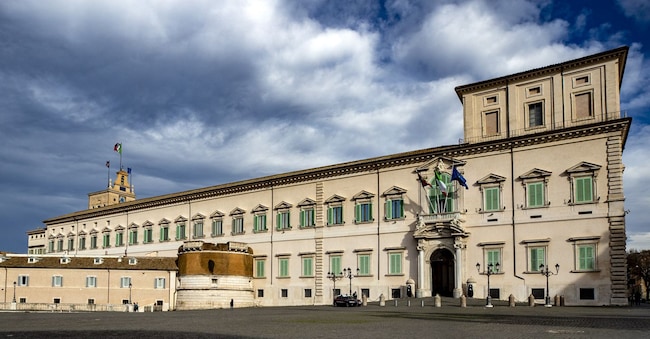
The 'Minetti case', in which it is obviously premature to draw conclusions, has given rise to a legal doubt: can the pardon granted by the President of the Republic be revoked? The doubt arose after the letter sent by the Quirinale to the Ministry of Justice to carry out further investigations into the situation of Nicole Minetti, whose 3 years and 11 months sentence for aiding and abetting prostitution and embezzlement were cancelled with the pardon received from Sergio Mattarella in February.
The Grace
Let us start with the Constitution. The pardon is included among the powers of the Head of State: it is he who, with a special decree, can extinguish, in whole or in part, "the penalty inflicted with the irrevocable sentence or transform it into another type of penalty provided for by law (for example temporary imprisonment instead of life imprisonment or a fine instead of imprisonment). A pardon also extinguishes accessory penalties, if the decree expressly provides for this; it does not, however, extinguish the other penal effects of the conviction (art. 174 of the criminal code)". Pursuant to Article 681 of the Code of Criminal Procedure, it also states, 'it may be subject to conditions'.
The revocation
If the pardon has been conditionally granted and the recipient commits a new non-culpable offence within 5 years of the presidential decree (10 years in the case of a pardon relating to life imprisonment) for which he is sentenced to a term of imprisonment, the benefit is revoked as of right. The revocation is ordered by the execution judge. In the event of revocation, the pardoned sentence becomes enforceable again. However, the Minetti case does not fall under this heading.
On the other hand, should it emerge that the pardon was granted on the basis of false or concealed assumptions, a new ministerial procedure could be opened to assess the validity of the original decree.
'Since this is an exceptional measure,' Alfonso Celotto, professor of Constitutional Law at the Roma Tre University, reiterated to Ansa, 'the whole situation must be assessed. It must be clearly understood whether the pardon was granted on erroneous premises and whether it then becomes revocable or modifiable'. Celotto recalled that 'it is a general principle of law that of the equal and opposite act, i.e. one can never exclude that there is room for a pardon to be revoked if it turns out that the pardon had been granted on the basis of non-existent or non-confirming assumptions'.

