
Small parcels: double collection fee from 1 July – here’s how much we’ll pay
The EU tariffs of €3 and the Italian tax of €2 will come into effect. Confcommercio: postpone the domestic levy to avoid distortions

Key points
- The impact of the mini-tax
The alert level for small parcels remains at its highest. In its planning of objectives, the the Customs and Monopolies Agency (Adm) has scheduled 47,000 checks for 2026, set to rise to 47,500 in 2027 and 48,000 in 2028. But that is not all, as the intention is to increasingly focus import checks on ‘low-value’ declarations: the positive rate is forecast at 8.2% for this year and next, rising to 8.3% in 2028. These are the figures emerging from the agreement between the Ministry of the Economy and the Customs Agency. Figures that demonstrate the significant focus on the issue of imports of small parcels from non-EU countries and on the correct declaration of value upon entry into Italia and other EU countries.
The countdown
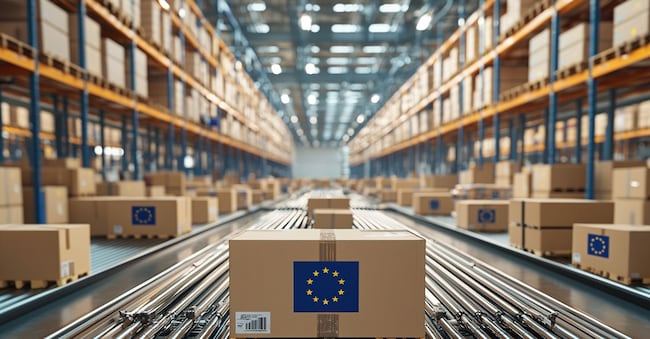
All this as the countdown begins to 1 July, a watershed moment for two main reasons: the introduction of the €3 EU tariff (following the enactment of the implementing regulation) and the entry into force of the Italian mini-tax of €2. A combination of these measures could lead to a cumulative levy. But let’s take it one step at a time. From 1 July, in fact, the €3 EU tariff will come into effect for all imports from non-EU countries (China in the lead, but the impact will also extend, amongst others, to shipments from the United States) on parcels valued at less than €150. An end to the duty-free regime, therefore, particularly in light of the flow of low-cost parcels from countries outside the EU. As noted by the European Commission itself, the volume of small parcels arriving in the EU has doubled every year since 2022, and in 2024, 4.6 billion small parcels entered the EU market (91% of which came from China).
How the tariffs work
The new tariffs will apply to each category of item contained in a parcel, as identified by the relevant tariff subheadings. To put it more simply, if a parcel worth less than €150 contains both a silk blouse and two woollen blouses, these are considered two separate items, on which €6 in tariffs will be levied.
The impact of the mini-tax
Then there is the issue of the Italian mini-tax, the implementation of which was postponed until 1 July by the Spring Fiscal Decree (Decree Law 38/2026). The problem here is twofold. On the one hand, because it risks overlapping with the scope of the EU tariffs. On the other, because the EU Council and Parliament have already reached an agreement to introduce a new handling fee on small parcels relating to distance sales, with implementation set to begin no later than 1 November. Therefore, great care will need to be taken regarding how and what will be affected by the levy, not least because the Italian mini-tax is projected to generate revenue of €122.5 million in 2026 and €245 million from 2027 onwards.
The risk of circumvention highlighted by Confetra
The danger, however, is the one highlighted by Confetra (see the preview on the *Il Sole 24 Ore* website). In practice, two alternative scenarios could unfold between July and November. If the Italian mini-tax were to come into force, according to the trade association, Italia would risk losing 50% of its freight traffic, as already experienced in the first two months of 2026 before the law was postponed, with major carriers shifting flights to other EU airports and then transporting goods to Italy by lorry. In this scenario, according to Confetra’s estimates, the state would collect a total of €70 million, of which only €51 million would come from the Italian tax. In the second scenario, however, relating to the cancellation of the Italian mini-tax pending the introduction of the EU tax from November, Italia would recover the full volume of traffic, still collecting €38 million from European tariffs alone. Essentially, there is a difference of €32 million, which, however, risks making all the difference by diverting significant volumes of traffic away from Italian hubs.


