Europe

Tributes to Mladic, the victim from Sarajevo: ‘A defeat for remembrance’

Kanita Focak speaks out; she spent four years in the city besieged by the general’s troops: her husband was killed

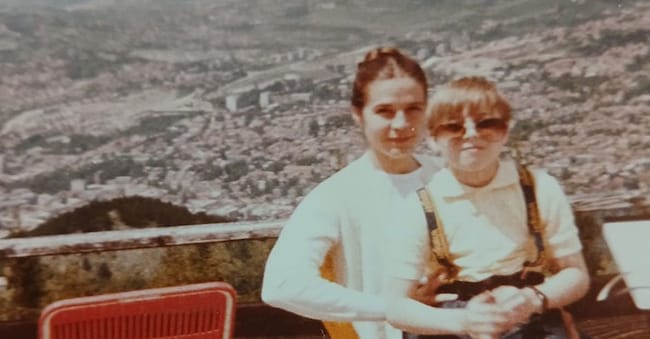
Kanita Focak e il figlio sul Monte Trebevic, sopra Sarajevo, dove si sono tenute le Olimpiadi invernali 1984.

3' min read

Translated by AI
Versione italiana

3' min read

Translated by AI
Versione italiana

“Mladic killed my husband. He took my friends, classmates and neighbours away from me. I saw children and innocent people die during those four years of siege.” This is how Kanita Ita Focak speaks, recalling the man who changed her life forever: Ratko Mladic. Born in Split, she has lived in Sarajevo since she was a child. There she graduated with a degree in architecture, got married and had two children, Faris and Daniel. When the war began, the situation was unclear, Kanita recalls: ‘Our politicians told us, “It’s just a mix-up, a misunderstanding; everything will sort itself out.”’ Instead, the war began to seep into the homes of every citizen. In May, about a month after the first clashes, Faruk, Kanita’s husband, was hit by an anti-aircraft shell whilst sitting in an armchair at home.

An immense pain that Kanita still carries within her: ‘I cannot bear to see that name, so dear to me, on a gravestone.’ Yet the general who besieged the city from 1992 to 1996 is now being honoured with the state funeral, a symbol ‘of the defeat of memory’ and of historical revisionism.

Loading...

What do you think of the state funeral granted to Mladic?

It’s a scandal. What saddens me most is that some people in Bosnia continue to revere and glorify him, even young people who weren’t even born when the war broke out and the genocide took place. How can anyone take an executioner, a murderer, a war criminal as a role model?

Why are there still people who praise a war criminal?
People would rather not admit their own faults or those of the political establishment. The Serbs have concocted a myth and now everyone follows this ideology. They have done the same with the Chetniks (armed gangs who collaborated with the Axis forces to oppose Tito’s Partisans, Ed.): they have exonerated them of their crimes and forgiven them.

Mladic was the last of the key figures responsible for the conflict; does he feel that this chapter in history has come to a close with the truth having prevailed, or with memory having been defeated?

In my view, it is the defeat of memory. It is appalling that he is glorified by the Serbian people as a hero and a symbol of patriotism. And it is even worse that the younger generations have been brought up on this false myth. The public is indoctrinated by propaganda. In Belgrade and Banja Luka, there are still leaders who deny the genocide because it serves their electoral campaigns and helps them gain even the slightest political advantage.

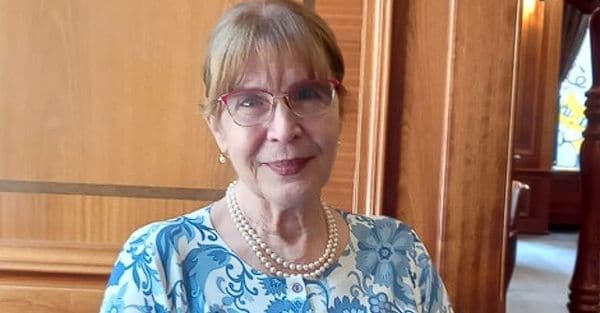
Kanita Focak oggi

Bosnia will go to the polls in a month’s time: how do you view the political situation in the country? 

It is very difficult. The system established under the Dayton Agreement has created an unfair model in which only people belonging to the three main ethnic groups (Bosniaks, Serbs and Croats) can stand for election. In 2009, the European Court of Human Rights ruled that the Bosnian Constitution violates human rights. The international community and the European Union are pushing for changes, but local politicians are unwilling to enact legislation that would rectify this injustice.

Loading...

Why?

Whoever has got hold of the seat has no intention of giving it up for any reason; it’s all very trivial. As General Jovan Divjak, famous for the defence of Sarajevo, used to say, ‘Our fence stinks, but it’s warm.’

Beyond politics, there remains the memory of those who lived through those 1,425 days. What does it mean to be constantly in someone’s crosshairs?

Being a sniper is the most despicable thing there is. One day I risked my life whilst crossing Veliki Park to visit my sister with my youngest son. I was in the gardens when a sniper started shooting. As I pulled the little one towards me to hide behind a low wall, he lost a shoe and burst into tears – not out of fear, but because of his little shoe. An elderly man, who had already taken cover, came back to retrieve it, risking his life in the process. This is what the people of Sarajevo are made of.

Despite the fear of snipers, Sarajevo never gave up. What did it mean to hold out under those conditions? 

We had no water, food, electricity or gas, but we tried to make the most of every opportunity to carry on living. The siege did not crush the spirit or dignity of the citizens. Schools, dance classes, classical music concerts and art exhibitions were organised. A cultural rebellion emerged that restored our sense of purpose, despite the enormous danger.

Copyright reserved ©
Loading...

Brand connect

Loading...

Newsletter

Notizie e approfondimenti sugli avvenimenti politici, economici e finanziari.

Iscriviti