
Mobile World Congress 2026, everything we can expect

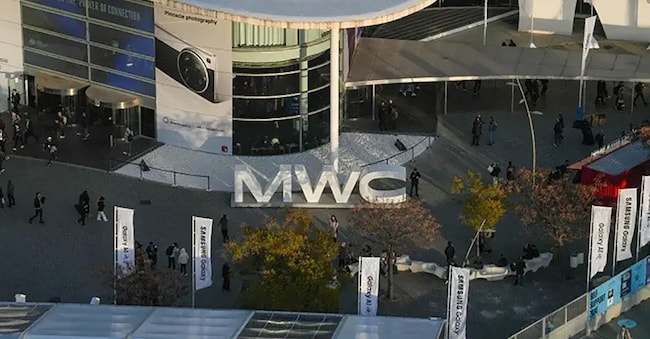
From 2 to 5 March 2026, Barcelona's Fira Gran Via will once again become the gravitational centre of global technology with the Mobile World Congress (MWC), an event that has accompanied the transformation of the mobile communications ecosystem in the Catalan city for two decades. Born in the 1980s as the GSM World Congress, a global event - with over 90,000 visitors, more than 2,000 exhibitors and delegations from over 200 countries - that has gradually evolved into a platform capable of connecting business leaders, policy makers, companies and start-ups around the technologies that are rewriting the future of connectivity. A market that has gone through the smartphone revolution, the advent of 5G and now enters what the organisers call 'The IQ Era'. The 2026 narrative focuses on intelligence as the unifying criterion, exploring how the latest artificial intelligence, multimedia and connectivity technologies are transforming product design and the way we interact with the world around us.
Consumer tech in the spotlight: design, modularity and robotics
While network architectures are the strategic backbone of the event, the media stage remains dominated by concrete and, in several cases, unconventional consumer novelties. There is no shortage of breakthrough products, smartphones that try to experiment with alternative forms and functions to the standard.
Honor is leading the way with the already announced 'Robot Phone', a concept with a camera mounted on a gimbal capable of following the user's movements, turning the phone into a home assistant. Also attracting attention will be Tecno's Modular Phone Concept, with interchangeable magnetic modules - cameras, batteries, audio components and gaming controllers - which aims to introduce concrete modularity without sacrificing design. The basic device measures 4.9 millimetres; even with the 4.5 millimetre power bank module, the overall thickness remains comparable to that of a traditional flagship.
Nothing expands its range with the Phone 4a series (Phone 4a and 4a Pro), evolving the Glyph design towards an even more iconic aesthetic. Also among the expected protagonists is Unihertz, which presents the third generation of the Titan series - the 2 Elite and the robust Tank 5 Pro - smartphones with a physical QWERTY keyboard and integrated trackpad, designed for productivity and for those who have never fully digested touchscreen writing.
In the flagship segment, the global debut of the Xiaomi 17 series - launched just a few days before the opening of the congress - aspires to the title of 'camera phone' of the year, consolidating the collaboration with Leica on a profoundly renewed main sensor.

