Interview

Monti, Terna: ‘Investment in electricity grids is crucial for national security’

The CEO outlines the challenges ahead: “We aim to build industrial diplomacy with our strategic suppliers; the cost of transmission in Italia is amongst the lowest in the EU”

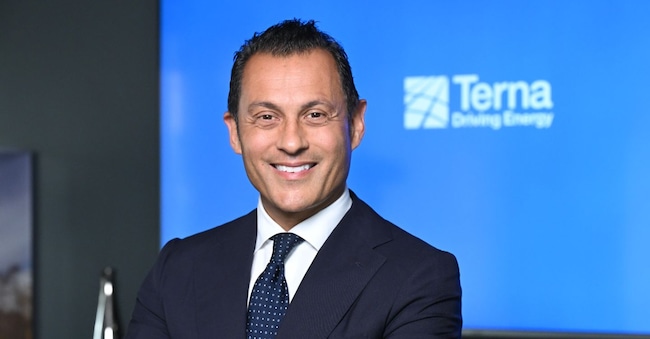
L’amministratore delegato di Terna, Pasqualino Monti

4' min read

Translated by AI
Versione italiana

4' min read

Translated by AI
Versione italiana

“Every investment in the electricity system – from grid infrastructure to energy storage systems and new renewable energy sources – is also an investment in the country’s energy security.” Terna’s chief executive, Pasqualino Monti, aged 52, already has very clear ideas, despite having taken the helm of the group just over two months ago. He has spent that time trying to understand how the ‘machine’ works, within which he has found, as he explains, “on the one hand, a strong sense of belonging and, on the other, highly skilled people”. This, therefore, was his starting point for reorganising decision-making processes more efficiently because, as he repeats several times in this interview with *Il Sole 24 Ore* – his first since being appointed CEO – “Terna is a complex company with a strategic role for the country’s economy”.

The wars that have taken place over the last five years, from Ukraine to the Middle East, have put energy back at the centre of governments’ agendas. What lessons should we learn from this period?

Loading...

I would like to begin with some figures. The 2022 crisis caused the country’s energy expenditure to triple, bringing it to 256 billion, compared with an average of 88 billion in the pre-crisis period. Within a few months, households and businesses found themselves facing extraordinary costs that had a direct impact on the competitiveness of the economy. Energy prices have become a geopolitical factor even before they became a market factor, and this has changed the way we think about infrastructure: no longer just efficiency and cost, but also resilience and self-sufficiency. It was the moment when we realised that energy is not merely a commodity but an essential component of global economic security.

What are the implications of all this for Terna? 

For Terna, this means that the work we do is not merely about transmitting energy from point A to point B, thereby enabling the distributors to supply it to households and businesses. Rather, it is a strategic mission: it involves managing a complex system that is crucial to the country’s energy security.

In this context, however, gas remains central.

Gas is important today, but it cannot be the future. The issue is not renewables versus gas, but renewables despite a grid designed for gas. Without adequate transmission backbones, every additional gigawatt of renewable energy in the South risks becoming ‘trapped energy’. We are building a more modern, resilient and digital grid, capable of integrating increasing shares of renewables, and this is the tool through which we can help reduce energy bills for households and businesses whilst enhancing energy security and self-sufficiency. We have a 10-year grid development plan involving over 23 billion in investment, to create the conditions that will enable the growing output from renewables to be integrated into the grid. The structural reduction in energy prices depends not only on the growth of renewable sources, but above all on the system’s capacity to integrate them efficiently.

The energy transition requires an increasing amount of cables, transformers, technologies and specialist skills. Is there a concern regarding the availability of these resources that could affect the development of the grids?

In the short term, our investments are covered; this will become a key issue in the medium to long term. Suffice it to say that the HVDC cables used for our projects, such as the Tyrrhenian Link, are manufactured by only a small number of operators worldwide. This is why we aim to forge industrial partnerships with our strategic suppliers, establishing a national network to support our supply chain. For it is clear that managing this final piece of the puzzle is no longer merely a support function for investments, but a lever for ensuring the country’s energy security, meeting industrial targets and adhering to project timelines.

The completion of the works also depends on the ability to secure broad local support for your investments. How important is this aspect for Terna?

Loading...

This is a very important factor for me. Over the past two months, I have been trying to ascertain whether there are any issues with the local areas in relation to the strategic projects. The ability to carry out the works within the required timeframe also depends on the quality of the relationships we have built. Engaging with local communities is not a final stage of the project but an integral part of the project itself. We are already initiating consultation processes during the preliminary stages, before the authorisation procedures begin.

Terna is often accused of charging end users too much on their bills. What is its response?

I prefer to let the figures speak for themselves, as they paint a completely different picture: the cost of transmission in Italia remains among the lowest in Europe. The unit cost of integrating 1 GW of renewable energy is 0.38 billion euros, compared with an average of 0.85 billion in Germany, France and the United Kingdom. When compared with the leading European TSOs, Terna therefore stands out for its high efficiency in planning investments to integrate new renewable generation into the national electricity system.

Let’s stay with Europe. Has the need to invest in and modernise the electricity grids become a matter of urgency for the Old Continent?

There is a European trend towards accelerating investment in electricity networks, and Terna will need to position itself within this trend. Germany invests over 20 billion euros a year and the United Kingdom around 12 billion. We remain at a much lower level. Across Europe, there is a growing realisation that the grid is the prerequisite for the energy and digital transition. Our responsibility is to ensure that Italia has the networks, technologies and industrial capacity to support the growth in electricity consumption, the electrification of the economy and the development of new strategic loads, including data centres and digital infrastructure.

When will you be presenting the new plan?

As we announced to the market during the conference call with analysts following the half-year results, the new plan will go hand in hand with the regulatory process.

Copyright reserved ©
Loading...

Brand connect

Loading...

Newsletter

Notizie e approfondimenti sugli avvenimenti politici, economici e finanziari.

Iscriviti