The interview

More checks in the agricultural sector and innovative investigations into digital labour trafficking

Danilo Papa (Director of the National Labour Inspectorate): The deduction of points from a points-based driving licence where workers are employed illegally acts as a strong deterrent

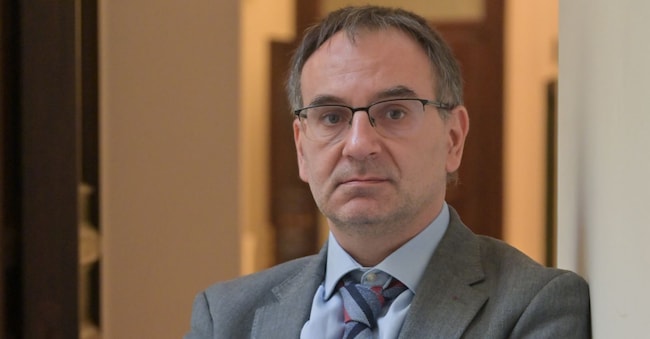
by Valentina Melis

DANILO PAPA DIRETTORE INL IMAGOECONOMICA

4' min read

Translated by AI
Versione italiana

4' min read

Translated by AI
Versione italiana

An increase in the number of inspectors, a stepping up of inspections in the agricultural sector during the summer months, and innovative techniques to combat digital labour trafficking. These are the guidelines for inspections over the coming months set out by Danilo Papa, Director of the National Labour Inspectorate.

Director, what impact have the recruitment drives had on increasing the number of technical inspectors – that is, those responsible for on-site inspections – for workplace safety?

Loading...

In recent years, the strengthening of inspection activities has been accompanied by a significant increase in staff numbers. The 949 technical inspectors recorded at the end of 2025 represent a significant increase compared with previous years: in 2021, there were 240. In addition to these, further staff have already been recruited or are due to be recruited in the coming months. The recruitment drive for 750 new technical inspectors has already enabled the recruitment of a further 260 staff, and we expect to be able to recruit the remaining 490 in the future. The inspectorate is set to grow further thanks to the provision, contained in Decree-Law 159/2025, for a further 300 inspectors and 100 Carabinieri. Finally, following the reinstatement of the inspection roles at INPS and INAIL, Article 2-ter of Decree-Law 63/2024 provides for the recruitment of approximately 500 inspectors.

What impact has the introduction of the points-based licence system had on construction sites?

On the credit-based licence scheme, the most interesting finding is that many companies already in operation have chosen to bring their affairs into order before submitting their application. In other words, the credit-based licence has triggered a virtuous cycle of self-regulation, prompting businesses to check and adjust their position as a preventative measure. This confirms that the scheme is not merely a sanctioning mechanism, but also an effective incentive for compliance on a voluntary basis. Furthermore, the new provision introduced by Decree-Law 159/2025, which provides for the immediate deduction of credits in the event of ‘undeclared’ workers, acts as a strong deterrent to this type of practice, encouraging the disclosure and voluntary regularisation of irregular situations.

In 2025, 597,710 workplace accidents were reported to INAIL, an increase of 1.4% compared with the previous year. And there are still over a thousand fatal accidents each year. What measures have been put in place to reverse this trend?

The issue of accidents remains a key concern and requires an integrated approach. When interpreting the data, however, it is essential to consider the context correctly: the increase in accidents in absolute terms is set against a significant increase in the workforce, which results in a reduction in the accident rate. This in no way diminishes the significance of the phenomenon: every accident represents a person and their network of relationships. However, it helps to interpret the data correctly and to tailor more effective prevention measures. The Inspectorate’s work is carried out along several lines. On the one hand, the number of inspections in the most at-risk sectors – such as construction, agriculture and industry – has been stepped up, with a further increase in inspections recorded in 2025. On the other hand, the work is increasingly focused on prevention and targeted action, through risk analysis and the integration of the databases of INL, INPS and INAIL, which can now also draw on information contained in the National Portal on Undeclared Work, which also incorporates the findings of inspections carried out by the Carabinieri Command for Labour Protection and the Guardia di Finanza. For 2026, the plan envisages a further strengthening of inspections in the sectors with the highest incidence of accidents, with checks on the main sources of risk: equipment, work organisation, contracts and subcontracts.

The fashion supply chain, work via digital platforms and agriculture appear to be the sectors where cases of worker exploitation are most frequently reported, partly due to the use of subcontractors. What measures are being taken in these sectors?

The Inspectorate has gradually stepped up its efforts in the sectors most at risk. In agriculture, in 2025 there was a 13.5% increase in inspections, as part of a structured strategy to combat undeclared work and illegal labour recruitment. We have launched a summer programme to step up monitoring activities in the agricultural sector, starting in June. As regards complex production chains, such as the fashion industry, the focus is primarily on contracts and subcontracts and on the correct mapping of employment relationships throughout the supply chain. These are often complex and multi-faceted operations, which enable us to tackle phenomena such as labour exploitation and illegal labour brokering using investigative tools that are more effective than routine checks. In this context, collaboration with the judicial authorities results in high-profile operations, carried out in support of key judicial bodies such as the Milan Public Prosecutor’s Office, thereby helping to strengthen the overall effectiveness of the enforcement system. With regard to digital platforms, the 2026 programme envisages a strengthening of measures against so-called ‘digital caporalato’, through advanced analytical tools and innovative inspection techniques, designed to detect less visible but rapidly expanding forms of irregular employment.

Copyright reserved ©
Loading...

Brand connect

Loading...

Newsletter

Notizie e approfondimenti sugli avvenimenti politici, economici e finanziari.

Iscriviti