The investigation

More and more wild boars and other species in the city: how to deal with the emergency

The uncontrolled growth of the species creates problems for human activities in several EU countries, from damage to agriculture to road accidents. Expert: 'Hunting is not the solution'

by Massimo De Laurentiis (Il Sole 24 Ore), Kim Son Hoang (Der Standard, Austria), Petr Jedlička (Denik Referendum, Czech Rep.), Gruia Dragomir (Hotnews.ro, Romania), Justė Ancevičiūtė (Delphi, Lithuania)

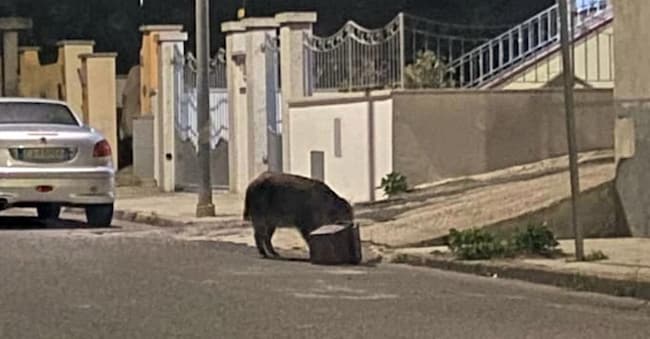
Un cinghiale mangia spazzatura in strada, Nuoro, 12 ottobre 2021

8' min read

8' min read

In recent years it has become increasingly frequent to see wild animals roaming around the city, wandering the streets or rummaging through the rubbish. Famous by now are the images of Roman wild boars spotted several times in the capital, which have become a symbol of inadequate management of urban spaces. But wild boars have also arrived in Genoa, where for some time dozens of specimens have settled in the area of the Bisagno, the stream running through the city. More recently, there have also been sightings in the Turin area.

The impact on human activities

.

According to the Istituto Superiore per la Protezione e la Ricerca Ambientale (Institute for Environmental Protection and Research), the number of wild boars in Italy has grown considerably, reaching an estimated 1.5 million animals by 2021. A substantial presence that has so far not been adequately contained and that increasingly interferes with human activities. The main problem is the damage to agriculture, which according to Ispra's analysis averages 17 million euro per year. The worst affected regions are Abruzzo and Piedmont, followed by Tuscany, Campania and Lazio.

Loading...

To deal with the emergency, in September the Lazio region authorised producers in possession of the requirements to slaughter the wild boars responsible for the incursions. This measure was welcomed by Coldiretti, which had repeatedly denounced the inadequate management of wildlife.

Fears also affect livestock farming, which is affected by African swine fever (ASF), a virus that is not dangerous to humans but can be transmitted to pigs after contact with their wild 'cousins'. The disease was also identified in Italy in January 2022 and has since led to the slaughter of more than one hundred thousand cattle, with major repercussions on exports due to the blockade of Italian products.

As for the danger to humans, attacks are very rare and linked to exceptional circumstances, but the risk could increase as the species expands into urban areas. More alarming is the number of road accidents caused by wild animals, including many wild boars. According to the Association of Friends of the Traffic Police, there were 181 serious accidents involving a wild animal in 2024. In the first six months of 2025, there were already 100 cases, 91 per cent of which involved game, with a toll of 7 fatalities and 118 injuries.

But the damage does not only affect human activities. "The wild boar is omnivorous and in addition to crops it can also damage various habitats. This is a problem for ground-nesting bird species and can have an impact on important species from a conservation point of view," explains former Federparchi president Giampiero Sammuri.

How it got to this point

The growth of the wild boar population and the consequent problems in coexisting with man have their roots in three triggering factors highlighted by Sammuri: "First of all, there has been a progressive abandonment of traditional agricultural activities, which has led to an increase in wooded areas, thus enlarging the ideal habitat for the wild boar. In addition, for most of the last century this animal was introduced into the environment by man for hunting purposes. The lack of predators such as the wolf, long absent from the territory, has also contributed to this.

Renato Semenzato, biologist and wildlife expert, also speaks of the consequences of forest growth: 'On the one hand, we will have mountain and foothill areas that are progressively depopulated and reforested, and on the other hand, cities that are continually expanding with wild boar, deer and wolves reaching the urban periphery, as we are already seeing.

Recent years have seen an increase in the wolf population in Europe and particularly in Italy, where there are now more than 3,300 wolves compared to 100 fifty years ago. A return also favoured by the abundance of prey and capable of contributing to the rebalancing of ecosystems. The effect on wild boar, however, remains limited: 'The wolf cannot effectively control wild boar populations in the sense of bringing about a significant reduction in their numbers. It can contribute in part to limiting their increase, but its impact remains marginal compared to the overall population dynamics of the species,' explains Semenzato.

How to deal with it

.

To curb the problem, Italy approved a ban on the release and foraging of wild boar in 2015, in an attempt to curb its uncontrolled expansion. Limits on the movement of live animals were then introduced to combat PSA, a problem also recognised at European level. Moreover, as the wild boar is not a protected species, it is regularly hunted, amounting to around 250,000 kills per year in our country.

However, as the former Federparchi president makes clear, hunting is not an effective activity for containing the population: 'Hunters have no interest in limiting the number of wild boars. Some teams stop hunting if they have already shot 'too many' in January, others fine those who kill adult females to ensure future reproduction. Hunting is organised in such a way as to maintain the species, not reduce it'.

According to Sammuri, there should be an increase in wildlife control operations such as targeted trapping and culling, which according to Ispra data currently amount to less than one sixth of the total. "Operations conducted by specialised personnel are needed. Wild boars in certain areas, especially in cities, should not be there. We have all the necessary tools to remove them but ideological resistance often prevails,' he says.

Apart from the wild boar issue, the biggest problems for the ecosystem and human activities are caused by alien species, introduced by man into unsuitable environments. "The blue crab, the nutria, the red palm weevil, the pine beetle that has wiped out pine nut production. It is these, more than the large carnivores, that cause the most damage. Limiting problems with nutria, for example, is much more difficult than living with bears or wolves,' Sammuri concludes.

The Austrian case

.

Zoologist Richard Zink, head of the Stadtwildtiere project in Vienna, points out that many wild animals do not just 'visit' cities, but live there permanently. Urban growth and intensive agriculture surrounding built-up areas drive wildlife to city areas, where they often find more favourable conditions: less hunting pressure, milder winters and diverse habitats. The first to arrive in cities were foxes, back in the 1970s in England, and today species such as wild boars, hares and wild rabbits are increasingly present in Vienna and other European cities.

Vienna is a special case because of its green character and proximity to reserves such as the Danube Floodplains National Park. Protected areas are crucial for conservation, but they do not explain the phenomenon of urbanisation of fauna. The main cause is the loss of habitat in the countryside, which forces animals to adapt to the urban environment.

There is no shortage of conflicts. Wild boars can become dangerous in cities, while badgers dig deep burrows and cause damage: in one case in Vienna, a football pitch became dangerous for players because of underground tunnels. Most problems, however, arise from human behaviour, such as feeding wild animals.

To address this issue, the city has created a dedicated wildlife service and Stadtwildtiere promotes 'good coexistence' with information, education and scientific support campaigns. Citizens are advised to respect nesting areas and not to feed the animals.

The project has been running for more than ten years and works with partners in German-speaking countries and Switzerland. Together they analyse data to draw a kind of 'footprint' of the fauna of each city: Berlin with wild rabbits, German cities with raccoons, Vienna with hares, Zurich with chamois. These comparisons help develop strategies to manage urban fauna and reduce conflicts.

In the Czech Republic between curiosity and culling

In the Czech Republic, the topic is more of a curiosity. The most frequent cases concern wild boar 'visits', which occur about every two years when the population grows too large. In these cases, action is taken with culls organised by official hunters.

The second most common problem concerns damage to poultry kept in some homes on the edge of towns, caused by foxes, martens and birds of prey. Here the issue is dealt with by do-it-yourself: fences, traps and scarecrows, a topic that also often attracts media attention for its visually curious side.

Hares, badgers, squirrels and similar animals normally live in city parks and peri-urban woods, without disturbing anyone.

Romania: bears, foxes between forests and cities

When one thinks of wild animals in Romania, the first image that comes to mind is bears, which in the last 20 years have killed 26 people and injured 274. But Romania's 'wilderness' is not limited to the forests: it has also arrived in the capital, Bucharest.

Foxes are now a regular presence in cities, from central streets to suburban garages. According to veterinary surgeon Ovidiu Roșu, their spread is linked to the disappearance of stray dogs and the easy availability of litter or pet food. Coexistence, however, is not without risks: 17 people ended up in hospital after bites from foxes. If they get too close, these animals must be removed without harming them, for example with water or noise, so that they do not associate humans with a positive source.

In addition to the streets, Bucharest is home to areas of great biodiversity. The Văcărești Nature Park, nicknamed the 'Delta between palaces', covers 190 hectares and is home to otters, bats, foxes and over 180 species of birds. For biologist Vlad Cioflec, it is a valuable refuge for physical and mental health, where animals still retain a natural fear of humans. Other green areas seem to be destined for a different future: the Băneasa Forest, threatened by property pressure, is in danger of losing its ecological integrity, while the Petricani Meadow, recently declared a protected area, is a success story thanks to specialised management and the contribution of volunteers such as the 'Urban Ranger' project.

Bucharest thus encapsulates both the challenges and opportunities of urban wildlife. From street-crossing foxes to life-rich marshes, the city shows how careful co-existence can transform the 'concrete jungle' into a space where nature and people thrive together.

The Vilnius case

.

In Vilnius, encounters with large wild animals such as moose and bears have recently attracted public attention, with sightings in city neighbourhoods, along streets and even in the Neris river. Episodes reported on social media that show how expanding cities are increasingly overlapping with shrinking natural habitats.

Veterinarian Rokas Matevičius, from the Lithuanian University of Health Sciences, explains that encounters with urban wildlife are not necessarily on the increase, but receive more visibility when cases are spectacular. Animals such as roe deer, foxes and raccoon dogs have now adapted to city life, often living permanently in urban areas while remaining barely visible. Others, such as moose and bears, on the other hand, are not adapted to the city and try to return quickly to their natural environment.

Wild animals in the city are exposed to various risks: traffic accidents, disorientation and stress. In severe cases, stress can cause so-called 'capture myopathy', a condition that can lead to death. Matevičius recommends that people remain calm, do not panic and leave the animals alone. In most cases they find their own way out. One behaviour to be avoided is foraging for wildlife, which can be addictive and alter natural behaviour.

*This article is part of theEuropean collaborative journalism project "Pulse" 

Copyright reserved ©
Loading...

Brand connect

Loading...

Newsletter

Notizie e approfondimenti sugli avvenimenti politici, economici e finanziari.

Iscriviti