The operation

‘More effective institutions to overcome this phase of “fragile convergence”’

There is one figure which, in Occhiuto’s view, should guide decisions in the coming years more than any other: when assessing the Strategy for Inland Areas, the South received 59 per cent of the resources, yet achieved results that were significantly lower than those of the Centre-North. The difference, he explains, lies not in geography but in the quality of local government

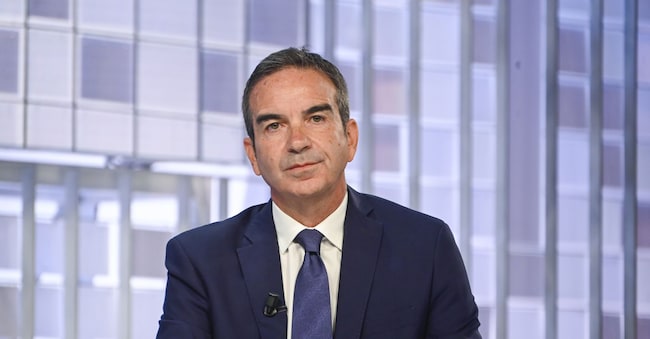
by Roberto Occhiuto, President of the Calabria Region

Aggiungi Il Sole 24 Ore
ai preferiti su Google
ROBERTO OCCHIUTO PRESIDENTE REGIONE CALABRIA IMAGOECONOMICA

4' min read

Translated by AI
Versione italiana

4' min read

Translated by AI
Versione italiana

The report ‘Leve per la crescita’ (Drivers of Growth), edited by Roberto Garofoli at the instigation of ANCI, has the merit of bringing together two truths that are usually discussed separately.

The first is that convergence in the South has begun: between 2021 and 2024, the South’s GDP grew by 8.5 per cent, compared with 5.8 per cent in the Centre-North, and between 2021 and 2025 the employment rate rose from 42.7 per cent to 50.2 per cent, with almost half a million more jobs.

Loading...

The second point is that this convergence is fragile, because the gaps in income, services, education and infrastructure remain wide.

There is one figure in the Report which, in my view, should guide decisions in the coming years more than any other. In its assessment of the Strategy for inland areas, the Bank of Italia notes that the South received 59 per cent of the resources, yet achieved results significantly lower than those of the Centre and North: the difference lies not in geography but in the quality of local government.

This confirms a conviction I have formed whilst in government. The South does not need handouts; it needs institutions that work. The problem is not the South itself. It is how it is governed.

Calabria, for years a symbol of the South’s backwardness, can now contribute some insights to this discussion. According to the Bank of Italy, in 2025 the region’s GDP grew by 1.1 per cent – the highest figure amongst Italia’s regions – compared with the national average of 0.5 per cent. The number of people in employment rose by 3.8 per cent – over twenty thousand in a year – and unemployment fell from 13.1 per cent to 9.8 per cent. The quality of employment has also improved: between 2022 and 2025, permanent contracts rose by 14.5 per cent and fixed-term contracts fell by over 20 per cent, whilst the proportion of young people neither in education nor in employment fell from 32 per cent to 24 per cent.

Exports have grown for the fifth consecutive year and have exceeded one billion euros for the first time. The port of Gioia Tauro ended 2025 with a record high of around 4.5 million TEUs, up 14 per cent, despite the Red Sea crisis. Airports handled over four million passengers, and in the first half of 2026, Calabria was the leading Italian region in terms of growth in tourist arrivals, up 10.5 per cent, and in arrivals from abroad, up 23 per cent.

I do not intend to turn these figures into a cause for triumphalism. Our employment rate remains amongst the lowest in Europe, and it will take many years to close the gap with the rest of the country. But the figures show that we are heading in the right direction, and that when the institutions cease to be an obstacle, private initiative steps up to the mark.

The first key factor, therefore, is the quality of our institutions. A regional government must not seek to replace entrepreneurs: it must create an environment in which those who invest, recruit and innovate can rely on predictable timelines and clear rules. We have achieved this through ongoing dialogue with Unindustria Calabria and its president, Aldo Ferrara, as well as with intermediary bodies and trade unions.

The second factor is human capital. Between 2002 and 2022, around 500,000 university graduates left Southern Italy, and in Calabria the out-migration rate exceeds 50 per cent: these are regions that educate their young people only to see their talent go elsewhere.

Loading...

That is why we have introduced the Merit-Based Income scheme: students from Calabria who enrol at universities in the region and maintain an average mark of 27 or above receive between 500 and 1,000 euros a month, with a total budget of 15 million.

At the heart of this lies a liberal principle: where you start should not determine where you end up. But a region on its own can do little. At national level, we need the courage to abolish income tax for young people under 30–35: not a bonus, but a means of boosting competitiveness for a country that struggles to retain its own talent and, even more so, to attract new talent.

The third lever is the ‘Zes Unica’, which the Report rightly proposes should be transformed into a genuine industrial policy. It has already mobilised around 11 billion in investment by halving authorisation times, and among the cases cited is Baker Hughes, which has chosen to invest further in its plant in Vibo Valentia: retaining existing businesses is just as important as attracting new ones.

I agree with the proposals set out in the Report, starting with a stable tax credit over a five- to seven-year period. In 2025, coverage fell to 70 per cent of applications, and no investor plans on the basis of a variable figure.

Finally, infrastructure. In Calabria, the NRRP has had less of an impact than elsewhere because the high-speed rail line has not yet reached the region and just over half of the rail network is electrified. The framework law with binding deadlines that the Report proposes for the high-speed rail network is the right way forward, and the Salerno–Reggio Calabria line would be its first test case.

And if Europe truly wants Southern Italy to be a Mediterranean hub, it cannot draw up rules – such as those on maritime transport emissions – that risk diverting traffic from European ports to those on the North African coast. One year into my second term, the lesson I have learnt is that we must recognise the positive signs without glossing over the difficulties, and tackle the difficulties without denying the achievements.

The South can step up a gear: the figures in the report prove it, and those for Calabria show that change has already begun. For this to translate into stable growth, we need fewer promises and more decisions – even when they are unpopular. In a word, we need courage.

Copyright reserved ©
Loading...

Brand connect

Loading...

Newsletter

Notizie e approfondimenti sugli avvenimenti politici, economici e finanziari.

Iscriviti