
An exodus costing 116 billion in the South: a six-point recovery plan following the NRRP
The report ‘The Drivers of Growth’, edited by Roberto Garofoli, sets out proposals on Special Economic Zones (SEZs), funds, Local Economic Partnerships (LEPs), cohesion, high-speed rail and inland areas to stem the drain of human capital from Southern Italy

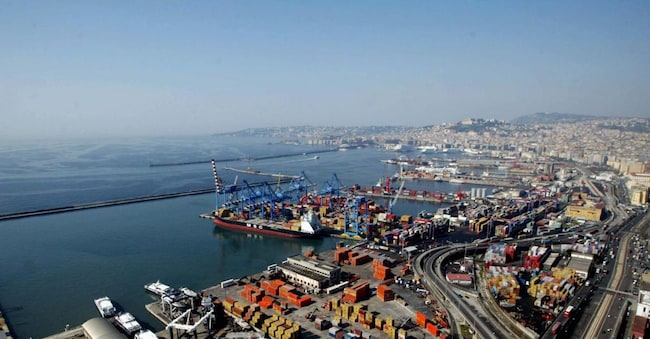
In Europe’s most polarised country, the NRRP has made cohesion one of its ‘cross-cutting’ objectives, common to all missions and initiatives. And it has achieved more than one success, which can be summarised as a cumulative growth rate of 8.5 per cent between 2021 and 2024, whilst the Centre-North recorded a +5.8 per cent increase, an employment rate rising from 42.7 per cent to 50.2 per cent thanks to around 500,000 new jobs, and an increase in investment more than double that of the rest of the country.
Three drivers of growth
It is precisely here, however, that one of the key challenges lies in ‘making the legacy of the NRRP a structural reality’ – an issue placed at the heart of the economic policy agenda in the report on ‘The Levers of Growth’ edited by Roberto Garofoli with the support of ANCI (published in *Il Sole 24 Ore* on 25 September). The reason is simple: without the South, the objective of providing the country with a growth rate sufficient to maintain the momentum of the Plan becomes a pipe dream. And the three ‘levers’ for achieving this – identified as support for productivity, the interplay between social cohesion and economic health, and the modernisation of institutions – require a tailored approach for a South that reflects, in an intensified form, many of the country’s structural shortcomings.
The Exodus from Southern Italy
The report’s methodology relies on figures to formulate proposals based on a detailed analysis of the phenomena. And the figures, alongside the positive developments just mentioned, reveal that 500,000 graduates have left the South over the past 20 years, resulting in an estimated economic loss of 116 billion euros; and of an exodus that continues, with 17,000 students from the South enrolling at universities in the Centre and North every year. This exodus leaves a region in a state of decline, where, alongside pockets of excellence, 90 per cent of inland municipalities are experiencing depopulation, and schools are losing pupils at more than twice the rate seen in the North (-9 per cent between 2017 and 2023), faces precariousness rates twice as high as in other parts of the country, and lags behind both in high-quality healthcare (almost all 15 top-tier hospitals are elsewhere) and in basic preventive care.
The tools of the NRRP
But the NRRP shows that decline is not inevitable. Provided, that is, that the lessons learnt are consolidated. The measures identified by the Report to consolidate the recovery of recent years draw on the experience of the Plan. This is the case with the Single Economic Zone (ZES), which has facilitated 11 billion in investment but now needs to focus on strategic supply chains within individual regions and on skilled human capital, offering opportunities for people to remain in the area by strengthening integration between businesses, technical colleges (ITS), universities and research. The same strategic approach must take shape in the ‘40 per cent clause’ on funding, a hallmark of the National Recovery and Resilience Plan (PNRR) which must now move beyond its purely accounting-based connotations to address the actual needs of the various regions of the South. With regard to ‘essential performance levels’ (LEP) – which are performance-oriented rather than focused solely on inputs (staff, funds, resources) – a cohesion policy should then be developed, centred on selected common and verifiable objectives.
In this plan, a framework law on logistics is intended to strengthen the backbone of this recovering sector, setting clear timelines and concentrating powers in the hands of a single commissioner for high-speed rail (Rome–Bari in 2 hours, Rome–Reggio Calabria in 3 hours, Naples–Taranto in 2 hours, Palermo–Catania in one hour), to be placed at the heart of a logistics network connecting inland areas. Coordinated measures, working together towards the same objective: to lay the foundations for a structural recovery of the South, and consequently of the country as a whole.


