

Morocco, a country on the verge of joining NATO, is boosting its aerospace sector
It’s not just joint exercises: following the automotive sector and the port system, the Kingdom is consolidating its defence supply chain. Close collaboration with Boeing and Airbus, and now a relaunch as a platform for electronic integration and specialist maintenance

In just over a decade, Morocco has transformed itself from an industrial backwater into a hub in global aerospace supply chains. This trajectory is rooted in an economy which, despite recurring droughts and external shocks, has consolidated its non-agricultural pillars – automotive, renewables and digital – and in a logistics infrastructure that sets the standard in the Mediterranean. Tanger Med, Nador West Med and the future Dakhla Atlantic are all part of the same ambition: to transform the kingdom into a hub for high-value manufacturing and services, on Europe’s doorstep and facing West Africa. This industrial strategy has been underpinned by a long-standing political process that has made Morocco one of the countries closest to NATO outside the circle of member states. This applies not only to security and the fight against terrorism, but also to production standards and joint exercises with the armed forces. The most recent exercise, as part of African Lion, involved over 4,500 personnel from 40 nations. The NATO command in Naples has permanently included the Kingdom in its resilience and civil-military cooperation activities.
The macroeconomic context remains one of ‘managed’ stability: a constitutional monarchy with strong decision-making centres, capable of driving projects forward – yet exposed to well-known challenges, such as regulatory difficulties, the concentration of industrial power and regional disparities. Yet, in the eyes of investors, the balance between political continuity, trade openness and competitive infrastructure has been enough to trigger a recovery in foreign investment, driven primarily by European partners. The results are evident on the docks of Tangier and in the industrial districts of Casablanca and Kenitra: wiring harnesses, metalworking, structural components and MRO (maintenance, repair and overhaul) services supplying major aerospace programmes.
The value chain
The first wave focused on labour-intensive activities and certified assembly, capitalising on a favourable cost-to-quality ratio and proximity to the EU and US markets (reinforced by the free trade agreement with Washington). The second wave, already underway, seeks to consolidate specialised processes – surface treatments, composites, additive manufacturing – and to meet the most demanding certification standards (AS9100, NADCAP), with an eye on dual-use applications that span avionics and systems. We are witnessing a sort of outward opening: deep integration with the EU (Association Agreement), an active role in NATO’s Mediterranean Dialogue, a return to the African Union and accession to the AfCFTA. The stance on Western Sahara shapes much of the country’s economic and security diplomacy. There are robust economic partnerships with France, Germany and Spain; the United Arab Emirates and, to a limited extent, China are playing an increasingly significant role. However, it is with the US that trade in dual-use goods is far more active.
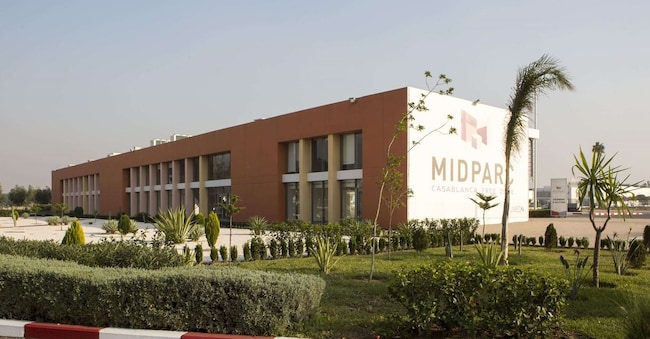
Midparc, on the outskirts of Casablanca, is home to TIER 1 and TIER 2 operators linked to the two major ecosystems of Boeing and Airbus; in Kenitra, synergies with the automotive sector are boosting electrical engineering and component manufacturing; in Tangier, the focus on exports is reducing cycle times and costs. The industrial acceleration zones, with simplified tax and regulatory frameworks, have done the rest, alongside packages covering land, utilities and co-funded training.
There is no shortage of risks
Technological dependence on foreign countries remains significant: machinery, licences, specialised processes and certification know-how are often imported, and are subject to export controls and geopolitical factors. Global competition is intensifying: Eastern Europe, Turkey, Tunisia, Mexico and Asia are competing in the same supply segment, whilst rising energy costs and environmental standards are squeezing margins. Against this backdrop lies water scarcity: the aerospace sector consumes water at critical stages (treatment, cleaning, electroplating) and requires water recirculation schemes and ‘dry’ processes to sustain growth without undermining the ESG concerns of European clients.

