Products

Motorola Razr 70, the foldable that becomes human again (even in price)

The basic model explains why clamshell smartphones are experiencing a second life. Nice design, really useful external screen, good autonomy without exceeding the psychological threshold of a thousand euros.

by Luca Tremolada

4' min read

Translated by AI
Versione italiana

4' min read

Translated by AI
Versione italiana

The foldable has survived. In fact, it is experiencing a second youth. After years in which smartphones seemed to have become all the same - big black slabs indistinguishable from one another - Motorola has realised one simple thing: nostalgia, if well designed, can turn into innovation. And the new Motorola Razr 70 base is probably the best example of this idea.

Because the point is not just to have a smartphone that folds. It's about having a phone that becomes a desirable object again. An accessory. Something that closes with an almost cinematic snap and actually fits in your pocket without looking like a tile. In a market dominated by increasingly incomprehensible technical specifications, the Razr puts the physical pleasure of use back at the centre.
Loading...

Motorola has understood this better than Samsung and better than almost all Android competitors. This is also written by many international reviews: The Verge, talking about the new Razr, points out how Motorola has brought 'style' back into the world of smartphones, turning the foldable into a fashionable as well as a technological object.
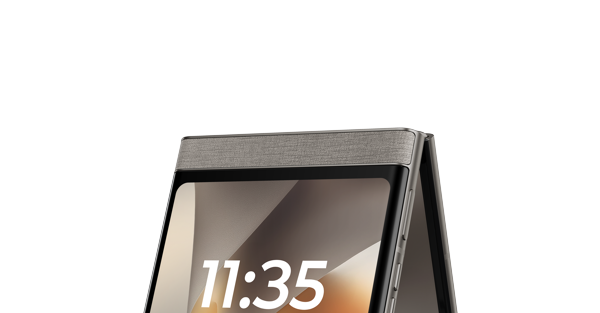
The basic Razr 70 is proof that the foldable does not have to cost as much as a laptop. And this is where Motorola hits the mark: 999 euros at launch. Still a lot of money, sure. But in the foldable world it means staying below the psychological threshold of a thousand euros. And above all, it means costing much less than the Ultra models without really sacrificing the experience.

In fact, for many users the regular Razr 70 is probably the most sensible model in the family.

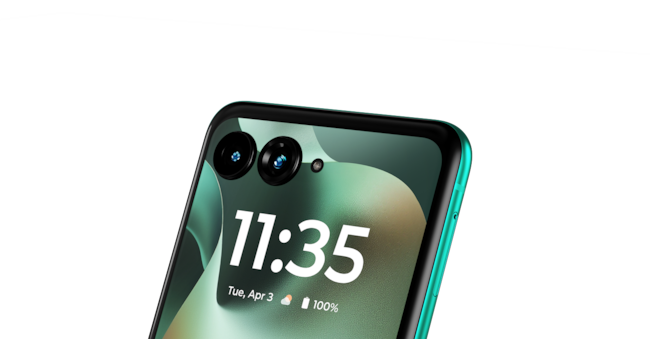
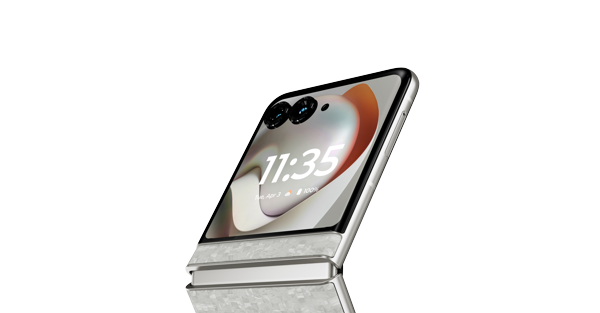
The rubberized faux leather or textile-like back is very successful. The colours Hematite, Violet Ice, Bright White and Sporting Green look more like something out of a Pantone collaboration than a tech catalogue. In the hand, the phone feels different from the usual shiny glass flagships: warmer, less slippery, almost 'human'.

The 3.63-inch external display is also convincing. On paper it is smaller than that of its big brothers, but in real use it makes little difference. Notifications read just fine, you can use the camera without opening the phone, and even call up Gemini with the screen closed. Motorola remains one of the companies that has best designed the external display experience in flip phones.

Opening the device reveals the internal 6.9-inch AMOLED panel at 120 Hz. The central fold is there, of course, but Motorola has done a remarkable job: from the front it almost disappears and during navigation it is much less noticeable than in the first foldable generations. Dolby Vision, Pantone Validated colours and stereo speakers with Dolby Atmos complete a multimedia compartment that is surprising, especially considering the price.

Under the casing works the MediaTek Dimensity 7450X. It's not an extreme benchmark chip, but it's exactly the kind of processor this phone needs: fast in everyday tasks, efficient and powerful enough for photography, multitasking and AI. International reviews agree on one point: the basic Razr was not made for those who want to play three hours of Genshin Impact, but for those who want a stylish and reliable foldable in real life.

Then there is the whole artificial intelligence game. Motorola has built a kind of pocket-sized AI hub around the Razr. Gemini is deeply integrated, even when the phone is closed. There's Copilot for productivity, Perplexity for searches with cited sources and moto ai that tries to synthesise notifications and suggest quick actions. Not everything is indispensable - some functions still seem immature - but compared to other manufacturers here at least there is a glimpse of an idea: using AI to reduce the number of compulsive smartphone openings.

The battery is also a bit of a surprise. 4800 mAh is a lot for a flip phone. Many competitors sacrifice autonomy in pursuit of ultra-thin designs; Motorola instead seems to have chosen the right compromise. 30W fast charging, 15W wireless and a battery life that finally allows you to get to the evening without anxiety.

The photo compartment is more than good: 50-megapixel main sensor with optical stabilisation, 50-megapixel wide-angle lens and 32-megapixel selfie camera. But the real highlight is not so much the numbers as the way in which the form factor changes the way photography is done.

The Razr folds to 90 degrees and becomes a tripod. Or use it like a video camera from the 1990s: horizontal grip, zoom controlled by tilting the wrist, external display to see yourself while recording. It's a seemingly gimmicky feature, until you try it. Then you understand why flip phones are making a comeback: they are not simply foldable smartphones. They are smartphones that try to make using a smartphone fun again.

And this is perhaps Motorola's real insight. In 2026, the perfect phone is not necessarily the one with the most powerful processor. It is the one that still manages to amaze.

Copyright reserved ©
  • Luca Tremolada

    Luca TremoladaGiornalista

    Luogo: Milano via Monte Rosa 91

    Lingue parlate: Inglese, Francese

    Argomenti: Tecnologia, scienza, finanza, startup, dati

    Premi: Premio Gabriele Lanfredini sull’informazione; Premio giornalistico State Street, categoria "Innovation"; DStars 2019, categoria journalism

Loading...

Brand connect

Loading...

Newsletter

Notizie e approfondimenti sugli avvenimenti politici, economici e finanziari.

Iscriviti