Made in Italy

Mozzarella is export champion. And prices do not dampen domestic consumption

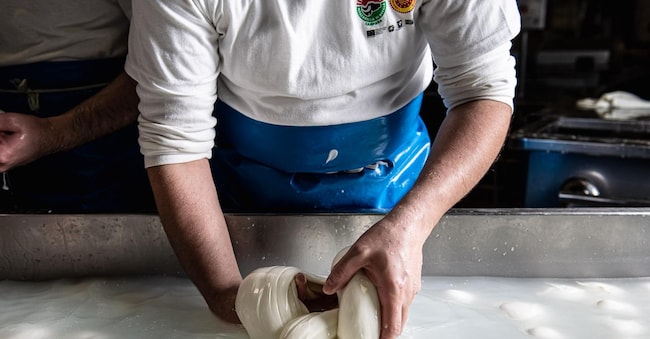
 Italy's leading cheese in terms of volume (390 thousand tonnes) and turnover (2.6 billion) is also the leader in sales across borders. Supermarket purchases hold up despite 30% increase from 2022

by Emiliano Sgambato

4' min read

4' min read

Increasingly strong abroad and resistant to price increases on the domestic market as well. Italians and foreigners just can't seem to give up mozzarella, in all its variations. This is excellent news for the made-in-Italy dairy chain, given that it is the leading Italian cheese in terms of volume (390 thousand tonnes produced in 2023) and production turnover (2.8 billion, +9.3% per year), followed by Grana Padano Dop (212 thousand tonnes) and Parmigiano Reggiano Dop (161 thousand tonnes), both around 2 billion turnover.

"The data show a segment that is constantly on the rise: compared to pre covid the growth in volume was 16%, that in value 30%," confirms Assolatte president Paolo Zanetti, who emphasises how "mozzarella is an emblem of Italian character and know-how in the dairy industry, with an extremely wide offer, embracing many product types. It is a cheese suitable for all tastes, all uses and even all pockets'.

Loading...

Supermarket shopping is not slowing down

.

At the beginning of April, the quantities purchased in supermarkets on a year-on-year basis increased by 1.4% after a decline of 1.6% between 2022 and 2023 (NielsenIq data). In a context of shrinking consumption, a substantial hold is already a success, especially considering that prices grew by 20.9% between 2022 and 2023 and by more than 5% in the last year.

The biggest increases - around 30% from April 2022 to date - were for cow's milk mozzarella (almost 114,000 tonnes sold in large-scale distribution in the last 12 months), while buffalo mozzarella stopped at 10% (17,640 tonnes). A special case in point are light mozzarellas, which fell by over 28% in volume and the only type to also see a drop in overall expenditure in euro.

"Despite a context in which Italians have changed the trolley mix to defend themselves against inflation, volumes are growing for buffalo mozzarella (which we could call the 'gourmet' segment) and lactose-free mozzarella (the segment with more health-conscious characteristics). Both types,' comments Sergio Grasso of Niq, 'mainly steal shares from cow mozzarella, which, although recovering volumes in the last year, is the only one of these three segments to lose compared to two years ago. But this is about 1.5 per cent.

Sabelli conquers the market with supply chain pact

A slowdown certainly not felt bySabelli - 270 million turnover (including Trevisanalat) and third player in the Italian mozzarella market after Lactalis and Granarolo - which recorded a +23% growth in value in cow's milk product

"Both the decision to invest in fixed weight for a company like Sabelli, traditionally strong in service at the deli counter," says ad Angelo Davide Galeati, "and our investments in promotion and marketing amounting to about 1.5 million a year, in addition to the 10 million a year in industrial investments, have worked. In the future, we will continue to innovate and expand the presence of our references in the large-scale retail trade".

At Cibus in Parma Sabelli presented "The Good of White", a supply chain project that introduces "a system of remuneration for feeders based on the level of implementation of the requirements set out in a specification": not only organoleptic quality of milk, but also traceability, animal welfare, sustainability and energy efficiency, and generational turnover among farmers.

Export champion beats camembert

Domestic purchases, however, only account for half of national consumption, with the other half going to food service and industrial use. On the other hand, 142 thousand tons of mozzarella, worth 921 million Euro, are destined abroad: first place among cheeses with 18.6% of the total export value. Last year, exports grew by 3.9% in quantity and 10% in value.

Three quarters go to Europe and in particular to France, which alone accounts for almost a third of the total, to the extent that mozzarella has even overtaken camembert on transalpine tables.

Butthe biggest growth was in Germany (+24% for 12 thousand tonnes), Spain (+10.5%) and Poland (+30.5%). Only the United Kingdom, the second largest export market, recorded a drop of 5.1%. Switzerland, on the other hand, holds the record for per capita imports: almost 1 kg per year.

Lactalis leader: beware of imports

To cover domestic needs, however, imports are also involved, amounting to 95,100 tonnes (+6% on 2022), more than half of which comes from Germany.

"After a good 2023, our exports are off to a brilliant start in January 2024 with mozzarella growing by 12%. Quality Italian products are holding up well and Lactalis has always invested and believed in them, leaving autonomy and identity to each brand. But we must not forget that we act in a market that is at least European and that not all milk is destined for PDOs. Abroad there are lower costs and we often go for the first price and the discounters, who risk being advantaged at a time when purchasing power is falling'. This was emphasised by Mauro Frantellizzi, export director in Italy for Lactalis, which in addition to Parmalat owns leading brands in the sector such as Galbani and Vallelata and is the leading producer of mozzarella in Italy. It holds 37% of exports and in particular 50% of French exports.

Copyright reserved ©
Loading...

Brand connect

Loading...

Newsletter

Notizie e approfondimenti sugli avvenimenti politici, economici e finanziari.

Iscriviti