Use

Nasa, here's what's in the $25.4bn budget for the space race

Fiscal Year 2023 published: US aims to maintain leadership between collaborations with SpaceX and resource allocation

by Leopoldo Benacchio

4' min read

4' min read

Nasa, the US Space Agency, shows off its activities, all geared towards keeping the United States at the forefront of space exploration and utilisation, and presents its report for the fiscal year 2023, in which it clearly illustrates how it spends its budget of USD 25.4 billion, 0.5% of the US budget. Of course, long gone are the days of the Apollo lunar programme, which reached 5.5 per cent in the 1970s, a percentage that is unthinkable today, also because of the change of scenario, which sees many of Nasa's main operations delegated to others, first and foremost to SpaceX, which, over time, has almost become a competitor of the Agency with its autonomous space exploration programmes.

The report is impressive, in the tradition of Nasa, which, in keeping with the old joke, also accounts for the pins used, a commendable attitude. It is 400 pages full of numbers and information illustrating important results, since the endowment that the state provides to Nasa causes an economic output in American society of 75.6 billion dollars, three times as much.

Loading...

The activities with the greatest impact on the economy are the Artemis project for the Moon and then Mars, in which Italy is also a front-row participant, and which alone has generated $23.8 billion in economic output.

Highlighting the jobs produced: NASA missions, as a whole, have supported 304,803 jobs, nationwide, and generated $9.5 billion in federal, state and local taxes throughout the United States. Very positive results proudly displayed by the Agency, which knows how important it is, also for its future, to report what happens to American taxpayers' money.
The 'distribution' of resources across the territory

.

Nasa pays a lot of attention to the distribution of funding and resources across the country, and it is easy to see from the report that 45 states had an impact of more than $10 million, and also that eight of these, the ones most interested in space-related technologies, exceeded the $1 billion revenue threshold. Texas, with its large space centre, the 'Houston we have a problem' one from the film Apollo 13, takes the lion's share of course, but California and a couple more do not shy away either.

We always think of rockets and satellites when we talk about space, but an agency like Nasa has a much more articulated activity. One of the most important missions entrusted to it is to provide increasingly complete, accurate and global-scale data on climate change. Measuring greenhouse gases, the surface temperature of the seas and oceans, measuring the extent of glaciers and sea levels, studying cloud systems and winds are the essential data that are provided every day by US-made satellites to the centre, which then studies how the climate varies, which is no small problem today for our everyday lives. Eight billion dollars are produced by activity in this field and, invariably, we are informed that this corresponds to one billion in various taxes paid and some 33,000 jobs sustained or produced from scratch.

The election variable

.

Nasa is now also plagued by constant criticism, not entirely unjustified, of elephantiasis and excessive bureaucratism, but it does a lot of good for the US economy and makes this clear in the impressive report, which is being distributed these days, just as the important presidential elections are approaching, which are very important for Nasa. It would not be the first time that the incoming president changes the space agency's objectives by 180 degrees, with obvious problems, whether a Democrat or a Republican wins. It happened with Obama and also with Trump, to varying degrees. This time, however, it seems difficult to change the Artemis programme for the return and colonisation of the Moon, which is important, articulated and subscribed to by no less than 33 other states.

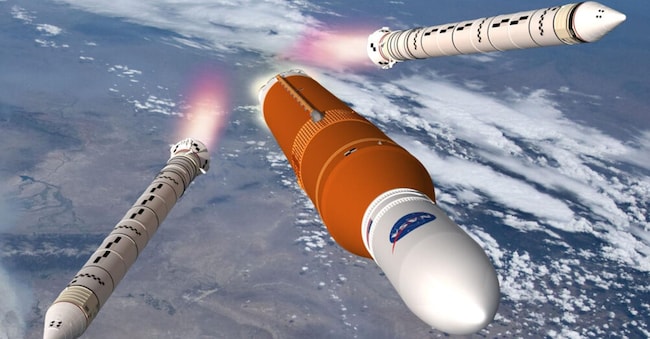
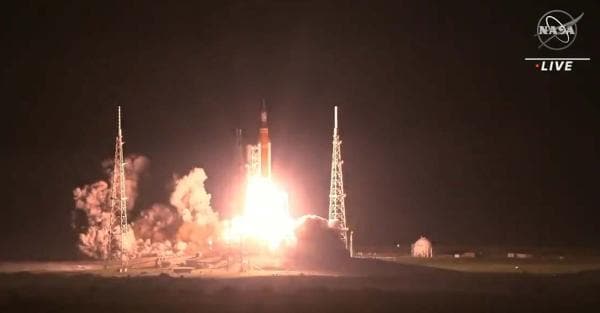
To say a few more words about Artemis, Nasa's main programme with which the USA intends to maintain its leadership in the space field, let us say that the ambitious goal is to take mankind back to the Moon, but this time to stay there, populate it and exploit its resources by creating a real lunar economy, which, as we read between the lines of the report, has already largely started. At the moment, it is a matter of launching Artemis II, which will go all the way to the Moon and back, while the third mission in 2028 (but there is also talk of 2030) will bring a crew consisting of a woman, a person of colour and a non-American astronaut to the surface. With this, Artemis was Apollo's sister and also goddess of the Moon: America pays a debt to 'diversity' that it has since the Apollo mission, which is now seen as too masculine.

The first 'demonstration' mission

.

But it will only be the first, demonstrative mission that will be followed by many others with robots and astronauts that will build dwellings, laboratories, roads and mines to extract precious minerals, a multi-billion dollar business that foresees continuous trips to the Moon in the near future. SpaceX, Nasa's main partner in this, wants to ensure more than one launch a week towards our satellite, in which Italy has already won important orders for the construction of part of the Station that will orbit the Moon and the first habitation-shelter for astronauts on lunar soil.

"Investing in NASA means investing in American workers, American innovation, the American economy, and American economic competitiveness," said NASA Administrator Bill Nelson at the report presentation, and it must be said that he proved this with numbers.

Copyright reserved ©

Brand connect

Loading...

Newsletter

Notizie e approfondimenti sugli avvenimenti politici, economici e finanziari.

Iscriviti