Interview

Defence, NATO doubles the budget. Portolano: 'Now focus on manpower, drones, air cover and ammunition'

After the agreement reached by the Atlantic Alliance countries at the Hague summit to increase the target for defence investments to 5 per cent of GDP by 2035, the general clarified: 'We need to strengthen the land component (armoured forces, artillery, engineers), the capacity to counter air and missile threats, including ballistic missiles, as well as long-distance precision engagement capabilities. But also logistics and armament and ammunition stocks'.

by Andrea Carli

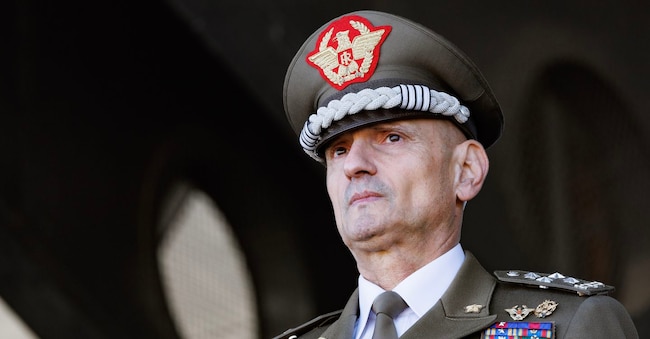
Il Capo di Stato Maggiore della Difesa Luciano Portolano

5' min read

5' min read

The NATO summit staged in The Hague this week raised the bar for defence resources to 5% of GDP by 2035. 3.5 per cent goes directly to spending on classic defence (weapons, equipment, ammunition) and 1.5 per cent on security.

In an international context marked by growing threats, from the war in Ukraine to terrorism, from energy security to the defence of critical infrastructures, and at the urging of US President Donald Trump, who has repeatedly called for the cost of European defence not to be borne solely by the United States, the 32 allied countries have changed pace and decided to put their hands in their pockets, aiming to more than double the current target of 2%.

Loading...

Now it is a question of how and where to invest this money. Among the people best qualified to shed light on this, also and above all because of his long experience in the field, is General Luciano Portolano, Chief of Defence Staff.

General, where do we start?

We start with the need to be able to deal with possible current and future threats: we need technological and infrastructural investments that meet the commitments made to the Nato and the balancing of the asymmetries that - unfortunately - still exist between the Armed Forces. Today, it is once again necessary to enhance those capabilities, which are and remain indispensable for sustaining a possible conventional conflict. In addition to these, there is the investment in the acquisition of strategic assets, such as capabilities related to the cyber and space domains, drones, integrated air and missile defence, digitalisation, the electromagnetic spectrum and the cognitive dimension, which also strengthen the country's industrial and technological base and produce positive effects on the economy, competitiveness and employment.

Where is it appropriate to invest?

We need to strengthen specific operational capabilities: the land component (armoured forces, artillery, genius), the capabilities to counter air and missile threats, including ballistic missiles, as well as precision long-range engagement capabilities. But also logistics and armament stocks and munitions. At the same time, with the current level of digitisation, in which the centrality and importance of data is established, it is essential to continue to invest heavily in the cyber domain and strategic enablers, first and foremost space, aiming at the fundamental factors of interoperability, interconnection and interchangeability. A greater commitment of the nation in economic terms must be read as an investment for the whole country.

Threats are increasingly coming from the sky. Just think of the use of Shahed drones in the war in Ukraine.

What we call Integrated Air and Missile Defence must always be measured against the reference threat. That of Italy, like that of other NATO countries, must be strengthened through the acquisition of additional new-generation assets, both for medium- and short-range defence. As far as defence against ballistic missiles and hypersonic systems are concerned, no country can, to date, boast total coverage and maximum international cooperation is required. Italy participates in NATO's 'Ballistic Missile Defence' as an integral part of the permanent mission of the Integrated Air and Missile Defence Alliance. Also in this sector, specific programmes have already been initiated with the acquisition of new ballistic threat detection radar sensors and additional batteries equipped with new-generation missiles.

The defence game is also played on the field of personnel strengthening. How should we move forward?

We have, as of today, highly trained, globally esteemed personnel, but in inadequate numbers to support a conflict such as the ongoing Russian-Ukrainian one, which we hope we will never have to face. Operational readiness depends on forces that are numerically adequate and trained to be ready for deployment. Also on the basis of Minister Crosetto's indications, proposals are being studied to gradually increase the number of personnel, pursuing a balance between the permanent service component and the temporary component; the creation of a reserve pool that is well trained, readily deployable and with highly professionalised personnel in specific areas; all resources ready to supplement Defence activities already in peacetime.

At this point, it is safe to assume a change in the strategy of the Atlantic Alliance: what is to be expected?

The NATO Summit in The Hague marked a radical step change in the commitment of all Allies to equip themselves with the necessary capabilities to face growing threats. The fluidity of future scenarios requires the Alliance to evolve strategically and operationally, focusing on credible deterrence and enhanced interoperability. However, ensuring collective security implies synergetic NATO-EU cooperation and, in particular, a more active role of the Alliance's European pillar. Italy, like many other European countries, will therefore have to enhance capabilities and the level of operational readiness.

The reasoning is intertwined with that of European defence.

European defence is a requirement that must be developed with the same criteria as NATO, within which it must grow as a European pillar, without unnecessary duplication with the Alliance. More than a hard core, both capabilities and an operational architecture capable of coordinating them are needed. All objectives to which European states must contribute personnel, systems and investment, naturally each according to its own needs.

In the meantime, the crisis in the Middle East continues: what measures for the Italian military?

We have taken all necessary measures to ensure the safety of our personnel. This is an operational priority of Minister Crosetto, myself and the Interforce Summit Operations Commander. Our contingents in Iraq, Kuwait and Qatar were immediately redeployed to secure areas. The decisions, based on intelligence analyses and taken in coordination with international partners, do not foresee a downsizing of our presence in the area. All international missions in which Italy participates, including humanitarian support for Gaza, remain active and ready for any scenario.

Italian military personnel involved in the UN Unifil mission are constantly on the front line.

The situation in south Lebanon remains tense. The arrival of General Abagnara in command of Unifil is a strong signal of Italy's commitment. Our contingent - around 1,000 soldiers - enjoys respect and trust. By ensuring our presence in Lebanon even during the recent conflict, with Unifil, the bilateral mission Mibil and the further mission of the Military Technical Committee for Lebanon, again under Italian leadership, we have given a sign of determination and continuity and, if you will allow me, we are proud and satisfied of this. There is a willingness on the part of the Lebanese Forces to grow with our support, to independently guarantee the security of their own territory. The extension of the mission's mandate beyond August I believe is necessary to ensure this continuity.

And then there is the tension between Israel and Iran, with direct repercussions on trade flows in the Red Sea.

Italy is actively participating in the Aspides mission, today with the missile launcher destroyer 'Andrea Doria' and from 1 July will assume tactical command of the entire mission. In line with our strategic interests, we will continue to contribute to the freedom of navigation and the protection of commercial and energy traffic from the persistent threats in the Red Sea so that commercial vessels can safely reach the Suez Canal and Italian and European ports.

Italy lacks critical raw materials. Is this a risk for defence?

Industrial dependence on the import of so-called strategic raw materials is one of the main themes of the national security strategy, given their use in practically all technologies related to the digital transition and those specific to the defence and aerospace sectors. It is an issue that Minister Crosetto has focused on, and he was the first to put it on the table for Italy and all the Allies.

Copyright reserved ©
Loading...

Brand connect

Loading...

Newsletter

Notizie e approfondimenti sugli avvenimenti politici, economici e finanziari.

Iscriviti