The Balkans

NATO KFOR mission, Portolano: there is a risk of a rapid deterioration in security

The Chief of the Defence Staff addressed the joint Defence and Foreign Affairs Committees of the Chamber of Deputies and the Senate on Wednesday 17 June regarding the missions decree

by Andrea Carli
3' min read

Translated by AI
Versione italiana

3' min read

Translated by AI
Versione italiana

Whilst the general rule is that foreign policy issues are closely linked to a country’s defence strategies, this principle is even more relevant in the case of Italy. One need only consider two regions: the Balkans and Lebanon.

The KFOR mission and Kosovo

In the first instance, Italia is promoting the integration of those countries into the European Union and is working to uphold the principle that they should take priority over Ukraine. At the same time, it must contend with NATO’s stated intention to reduce the number of troops operating under the umbrella of KFOR mission.

Loading...

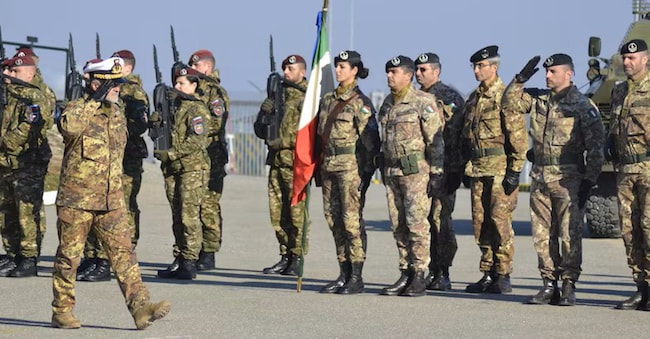
The announcement by the North Atlantic Treaty Organisation was made on 12 June. The mission comprises around 4,600 military personnel from 29 nations, following a reinforcement of almost 1,000 troops deployed in 2023 in response to the attacks in Zvecan. General SACEUR Grynkewich explained that the decision reflects the improvement in security conditions and that the measure is ‘reversible’. NATO has not disclosed the extent of the reduction in troop numbers nor the national contingents involved, making it impossible to assess the operational impact accurately. Italia contributes to KFOR with a contingent estimated at between 300 and 500 military personnel.

“You will have heard about the United States’ decision to align its contributions with NATO’s force structure,” NATO Secretary-General Mark Rutte confirmed in the last few hours. “In some cases, this move has been interpreted as a problem, as a distancing of the United States from its allies, but that is not the case. The United States has made clear its commitment to NATO. We have reviewed the division of tasks in the context of conventional forces and note that the European allies and Canada are ready, willing and able to do more.”

Lebanon and the UNIFIL mission

On the other front – that of Lebanon – the UN has decided to wind up the UNIFIL mission. And Italy plays a leading role in this operation: it is one of the mission’s main contributing countries (with around 10,000 military personnel, of whom the Italian contingent numbers around 1,200).

And it was precisely these two issues that General Luciano Portolano focused on. The Chief of the Defence Staff spoke on Wednesday 17 June at hearing before the joint Defence and Foreign Affairs Committees of the Chamber of Deputies and the Senate on the missions decree.

Kosovo, Portolano: there is a risk of a rapid deterioration in the security situation

Portolano commented on the possible reduction and restructuring of the KFOR mission in Kosovo, “in which we have been actively involved since 1999. I remember this personally, as I was the first commander to enter Kosovo at that time”. “I believe,” said the general, “that an assessment of the reduction in troop numbers must be carried out, but in a truly prudent and thorough manner to avoid running the risk of exposing the theatre to a rapid deterioration in security conditions due to the never-dormant tensions between Pristina and Belgrade.”

“Moreover,” he continued, “any reduction without a careful ‘strategic assessment’ that also takes political aspects into account could well open the door to further influence by external stakeholders – and I am referring to Russia. “Therefore, in the letter I sent to NATO’s Supreme Commander, General Grynkewich – having also consulted Minister Crosetto – I sought to highlight the key aspects that should be taken into account before proceeding with the implementation of a so-called reduction in the current contingent in the Balkans,” explained the Chief of the Defence Staff.

Lebanon: ‘An operational component is needed to support the Lebanese Armed Forces’

As for UNIFIL, ‘the United Nations is talking about a follow-up mission in Lebanon. Honestly,” Portolano confided in his address to MPs and senators, “I do not know whether this will ever be accepted by Israel, but having the backing of a United Nations resolution is absolutely essential. However, priority should be given to an international mission that already exists and is effectively carrying out activities in support of the Lebanese Armed Forces, which are the key element in the demilitarisation and disarmament of Hezbollah”. This should take place, he clarified, “not only through training, capacity building and economic and financial support, but above all through what could be an operational component, which could support the Lebanese Armed Forces in providing guidance, assistance and advice as they develop their own activities, as well as a naval component that continues to carry out the tasks currently performed by UNIFIL (monitoring to prevent the supply of weapons to Hezbollah militias),’ concluded the Chief of the Defence Staff.

Copyright reserved ©
Loading...

Brand connect

Loading...

Newsletter

Notizie e approfondimenti sugli avvenimenti politici, economici e finanziari.

Iscriviti