
NATO Summit in Ankara: here are the resources and investments Italia has put on the table
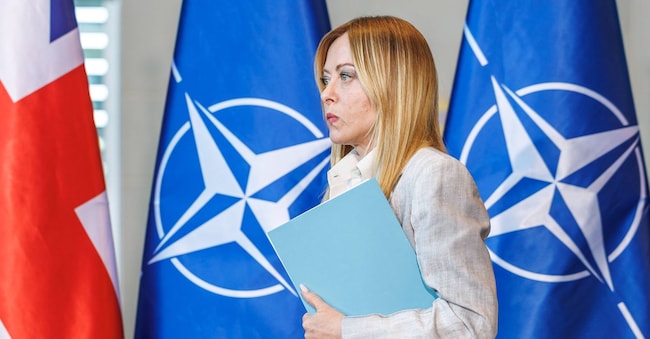
At the summit in Turkey, Prime Minister Giorgia Meloni is presenting defence spending at 2.8 per cent of GDP, which represents an increase of 0.71 per cent, driven mainly by expenditure on internal security

Key points
The main item on the agenda at the NATO summit, to be held on 7 and 8 July in Ankara, is defence spending, against a broader backdrop in which the US President (and this is nothing new) has been pressing allies to fund their own defence. From this perspective, the ice was broken at the NATO summit in The Hague, which took place on 24 and 25 June last year, just over a year ago.
The most politically significant decision, strongly backed by Washington, was to lift the old 2 per cent cap. On that occasion, the leaders of the North Atlantic Alliance committed to achieving total defence spending of 5 per cent of GDP by 2035, divided into two categories: 3.5 per cent for ‘Core Defence’ (armed forces, arms procurement, etc.); 1.5 per cent for ‘Soft Defence’ (security of critical infrastructure, cyber security and technological innovation).
Italia arrives in Ankara with 2.8 per cent of its GDP earmarked for defence spending
At the summit in Turkey, Prime Minister Giorgia Meloni is presenting defence spending at 2.8 per cent of GDP, which represents an increase of 0.71 per cent driven primarily by expenditure on internal security, in line with the multi-domain approach on which Meloni will emphasise. Italia therefore approaches this round with rising expenditure, almost double the 1.6 per cent recorded in 2024, but with an increase linked primarily to the security component (15 billion, or 0.71 per cent, to be precise).
The ‘Safe’ and the National Escape Clause of the Stability Pact
Two variables then come into play in Italia’s deliberations on the resources to be allocated to defence. Both are instruments established by the European Union with the aim of supporting the defence expenditure of the member states of the North Atlantic Treaty Organisation, and therefore of Italia as well. The first is the SAFE, the loan mechanism that would allocate up to 14.9 billion to Italia over five years. The second is the NEC, the National Escape Clause of the Stability Pact, which, according to the rules agreed in Brussels, would open up a budgetary margin of up to 1.5 per cent of GDP (34.5 billion in Italia’s case at current values), and which the Government had previously envisaged using for a maximum of 11.5 billion (0.5 per cent of GDP). According to reports emerging in recent days (see *Il Sole 24 Ore* of 5 July), the government has linked the two instruments, making the activation of SAFE loans conditional upon parliamentary approval of the safeguard clause; following Italy’s request, this will allow a sum of up to 0.6 per cent of GDP (around 14 billion) in 2026–28 to be allocated to investments and structural measures aimed at reducing energy dependence on fossil fuels.

