After the war

Nato, that's what the US role is: 40 bases and 60% of contributions

The United States maintains around 90,000 military personnel in Europe stationed on more than 40 bases, ranging from Greenland to Turkey

by Rome Editorial Staff

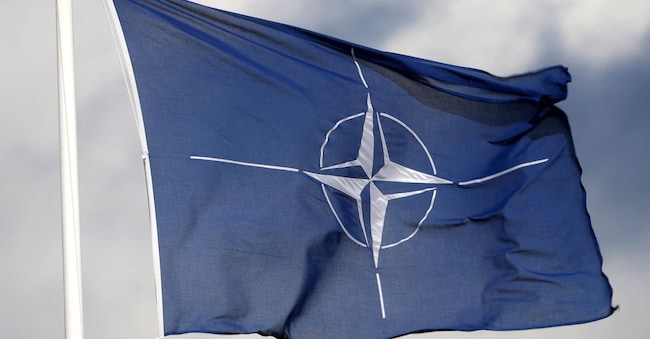
FILE PHOTO: A NATO flag flutters at the Tapa military base, Estonia April 30, 2023. REUTERS/Ints Kalnins/File Photo REUTERS

2' min read

Translated by AI
Versione italiana

2' min read

Translated by AI
Versione italiana

Nato is not the United States but the United States represents the bulk of Nato's operational strength: one can only start from this great paradox to frame the US presence in Europe.

One figure above all. If one looks at the Alliance's total military expenditure, 60 per cent (2025 figures) comes from America (i.e. $980 million) against 657 from Europe and Canada (which together put up the remaining 40 per cent). Grand total: 1,637 million, by far the highest value in the world.

Loading...

Tools and bases

Precise numbers vary over time, but according to 2025 figures, the US maintains around 90,000 military personnel in Europe deployed on more than 40 bases from Greenland to Turkey.

The majority is concentrated in Central Europe, especially in Germany, Italy, Poland and the United Kingdom. Germany, in particular, is the heart of the American network in the Old World, with around 50,000 men spread over seven facilities.

Ramstein is considered the most important US airbase abroad and is both a key logistics centre and a hub for several command centres.

Italia has 13,000 men, Poland 14,000, the UK 10,000, Spain 4,000 (the naval base in Rota is very important) and Romania more or less 2,000 (the base in Constanta is expanding greatly and will surpass that in Ramstein in size).

There are nine United States Army Garrisons (USAG) in Europe: 5 in Germany, 1 in Belgium, 1 in Italia, 1 in Poland and 2 in the Black Sea (Romania and Bulgaria). France, on the other hand, does not host any bases and operates an independent nuclear deterrence system.

Commands

Germany, here too, is central. The EUCOM headquarters - European Command - is located in Stuttgart, next to the Africa Command, and is led by General Alexus Grynkewich, who is also the Supreme Allied Commander (Saceur). Also in Stuttgart are the headquarters of the Marines and Special Forces. Ramstein, on the other hand, is the home of Aviation and Space (as well as Allied Air Command). The Navy, on the other hand, is headquartered in Naples. Many of these bases are interoperable with NATO, which means that US troops collaborate with allied states to ensure cohesion between processes, technologies, information networks and personnel.

The Nuclear Umbrella

US forces also manage the atomic arsenal in Europe. In the early years of the Cold War, in fact, the US set up a nuclear sharing programme through NATO and, at present, around a hundred B16 bombs - i.e. small tactical weapons - are believed to be stockpiled in Belgium, Italia, the Netherlands, Germany and Turkey. No one, however, can use these weapons without US authorisation.

The missile shield

Defence against air threats, old and new, is ensured by NATO's Integrated Air and Missile Defence based in Ramstein. Developed continuously since the 1950s, it networks all allied capabilities: short-, medium- and long-range missile batteries (Iris-T, Samp-T, Patriot), sensors, satellites, jets and ships. However, the US also maintains its advanced Aegis protective system in Europe through both the naval version - with interceptor vessels - and the land version, with bases in Romania and Poland.

Copyright reserved ©

Brand connect

Loading...

Newsletter

Notizie e approfondimenti sugli avvenimenti politici, economici e finanziari.

Iscriviti