EU FUNDS / PROJECT

In the new multi-year financial plan, cohesion stands at a crossroads: redistribution or growth?

The new European financial package shifts the focus from cohesion to competitiveness. But without growth, the gaps will widen once again. The real issue is not how much is spent: it is whether the policy that made the single market possible will be able to reinvent itself as a driver of development or whether it will be reduced to a mere handout for those left behind.

by Andrea Mairate* and Enrico Wolleb**
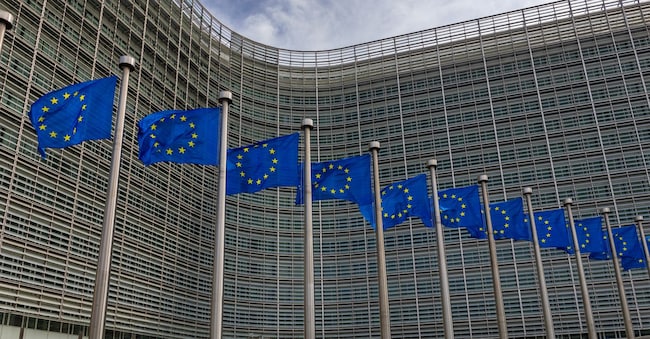
 (AdobeStock)

7' min read

Translated by AI
Versione italiana

7' min read

Translated by AI
Versione italiana

Negotiations on the 2028–2034 Multiannual Financial Framework have now entered the stage of discussing the figures. And this has brought an uncomfortable truth to the fore: discussing the size of the budget is now inseparable from deciding who will manage the resources for cohesion and those for competitiveness. It is there, rather than in the ceilings, that the future structure of the Union is measured: its internal cohesion and its geopolitical clout.

The Commission’s proposal, presented in July 2025, is worth approximately 1,763 billion euros at 2025 prices — 1.26 per cent of gross national income, which, however, includes a substantial allocation of 150 billion for interest on the debt incurred under the European Recovery and Resilience Plan — but it redesigns the budget’s structure. More than half of the budget is channelled into a single major heading that brings together cohesion, agriculture, social policies, migration and security (865 billion); on the other hand, there is a package comprising the new European Competitiveness Fund, with a budget of 450 billion, and the research and innovation programme (Horizon Europe), with a budget of 175 billion. Paradoxically, the Cypriot Presidency has proposed a 3.6 per cent cut to the resources allocated to competitiveness and research, whilst those allocated to national plans have remained almost unchanged.

Loading...

This is not merely an accounting exercise: the allocation of the European budget’s resources conceals the most significant problem – one that the new package leaves unresolved. How can divergent objectives – international competitiveness and territorial cohesion – be reconciled, and with which institutions and instruments should the responsibilities for joint action be shared?

Lab24 / The European budget: a comparison of the three positions

The merits and limitations of cohesion policy

In a changed geopolitical landscape, the Union has found itself slow, weak and unprepared, lacking the tools to act promptly, and weighed down by a burden of institutional and budgetary reforms that have never been implemented. Hence the shift: after five decades in which cohesion was central, the new framework introduces competitiveness — research and critical investments — with a financial allocation that remains substantial, thanks to the leverage effect on private capital. The underlying assumption is that the single market is no longer sufficient, and that an aggressive industrial policy in critical sectors, accompanied by greater investment, is indispensable for the Union’s growth: a necessary condition, in turn, for territorial and social cohesion as well.

A long-term political analysis of cohesion – alongside the limitations of a formalistic, inflexible and slow system of multi-level governance, weighed down by excessive procedures and controls – reveals far-reaching achievements that have shaped the Union’s fundamental institutional and political mechanisms. It has broadened direct participation, granting powers and responsibilities to regional, urban and local communities, and has fostered a culture of transparent administration and capacity-building in countries that previously lacked these, particularly in Southern Europe and in those with a centralist and authoritarian past.

The single market would never have come about without support for the regions, populations and businesses that were less developed and less able to compete: regional disparities did in fact narrow until 2009 and then stabilised during a period of sharply polarised growth. Since then, cohesion has struggled to keep pace, becoming more of a transfer scheme to support employment, infrastructure and essential services than a structural intervention for growth.

Among its greatest achievements is its decisive support for the accession of the countries of Southern Europe and, subsequently, those of the former Soviet bloc, which joined with a per capita income of less than half the European average and which rose to four-fifths of that average by 2024. In just a few years, it has strengthened cohesion between the founding member states and the rest of the continent.

Yet a policy conceived almost fifty years ago cannot remain unchanged. Maintaining the policy’s characteristics in isolation from the economic strategies of the Union and its Member States – which are decisive for the performance even of the weakest regions – is not feasible. Maintaining it in the form that has become established since the 1980s is neither realistic nor beneficial for the regions, at a time when regional development now depends on European strategic, technological, energy and trade decisions. Looking ahead, it will remain a cornerstone of the Union if it is able to adapt to the global economic landscape.

The new approach redefines cohesion within a more national framework through National and Regional Partnership Plans, which are geared towards measurable results and closely resemble the Recovery and Resilience Facility, though with differences designed to prevent it from being reduced to a mere transfer of resources to the Member States. The crucial question, then, is how to preserve its territorial, partnership-based and place-based added value within a framework that prioritises integrated plans, targets, reforms and common priorities. The new package of measures is based on the observation that, without growth in the Union, disparities will not narrow but will instead widen to include even the traditionally industrialised regions – once prosperous but now threatened by energy costs and the green transition. The Strategic Technologies for Europe Platform (STEP) proposed by the European Commission points the way forward — focusing investment on deep tech and digital technologies, new fuels, biotechnology and rare earths — guidelines to which less developed areas are struggling to adapt due to a lack of stakeholders and know-how.

This is not a new problem. Ever since the Treaty of Lisbon, the less developed regions have been unable to integrate cohesion policy with policies on technological development and competitiveness: over 80 per cent of public resources have been concentrated in a few developed regions and metropolitan areas.

Research, cohesion and competitiveness must go hand in hand

Hence the interest in the change brought about by the new framework. Cohesion must choose between a redistributive function and a function aimed at long-term growth. The former, essentially continuing the post-2009 approach, sets out objectives for redistribution between regions and between ‘winners’ and ‘losers’ among social groups, without the ambition to generate growth: greater territorial concentration, place-based projects with broad local participation, and objectives focused on tackling inequalities to establish a level playing field. This function is constrained by limited resources in the face of growing disparities. The second approach envisages it being integrated with measures relating to science, technology and competitiveness, based on locational advantages supported by state aid, within a medium- to long-term territorial industrial policy. This means bringing together the three funds — research, cohesion and competitiveness — which, until now, have pursued their strategic objectives in isolation and with little integration. The integration of these instruments should be the driving force behind widespread regional growth, extending even to less developed regions. We must not, however, overlook the political and technical difficulties involved in integrating such diverse instruments, including issues of institutional capacity and the potential for conflict between allocation criteria and beneficiary groups. Separating the three initiatives, however, would revert cohesion to its original role: a social safety net for those left behind – necessary, but lacking any ambition for growth.

Competitiveness, too, must be considered within a context in which European governance is under simultaneous pressure: stricter fiscal constraints and, at the same time, the need for greater investment in technological, climate, energy and industrial transitions. And competitiveness should not be understood in a narrow sense, as merely corporate productivity, but as the overall capacity of the European system to generate innovation, attract investment, reduce strategic dependencies, support industrial transitions and narrow regional disparities. The financing of investment thus becomes the crucial issue: it is not enough simply to increase resources; we must determine where to direct them, and under what conditions, using which instruments and with what implementation capacity.

The Trap of Objectives

There is also a risk inherent in the new management structure for these instruments. The watchword is ‘results’: measurable objectives, targets and indicators. It is a sound approach if it serves to make those responsible for spending more accountable; it becomes a trap if it results in targets being chosen simply because they are easy to measure or achieve, rather than because they are genuinely meaningful.

Cohesion operates across diverse regions, with varied needs and a strong multi-level dimension: mechanically transposing that model risks producing targets that are formally measurable but weak in substance, or reducing the regions’ ability to adapt the tools to their own needs. Hence the challenge for local authorities. In a framework geared towards integrated plans and national outcomes, the regions may act as co-planners or merely as implementing bodies, and this choice is not neutral: involving them solely in implementation reduces their ability to identify needs and set priorities. They will need to be able to plan – and at times design – by developing credible strategies, robust indicators and appropriate information systems; only in this way will they be able to participate in multi-level governance, rather than remaining on the sidelines. Even partnership, at this stage, is not merely a consultative formality but a prerequisite for verifying the quality of decisions and the plausibility of outcomes.

A results-oriented approach requires greater attention to be paid to the development of indicators. Performance cannot be reduced to the mechanical achievement of milestones or quantitative targets. The quality of indicators depends on the availability of data, the clarity of definitions, knowledge of implementation timescales, and the ability to estimate costs, physical units and expected outcomes in a credible manner. In the absence of these conditions, there is a risk that the performance system will produce unrealistic targets or indicators that are not linked to the outcomes and impacts intended to be achieved.

One fundamental issue remains, which no accounting compromise can sidestep: whatever solution is chosen, it will be impossible to do without a proactive European industrial policy, capable of channelling strategic investment with the speed required to compete in today’s geo-economic arena. The crux of the matter, in fact, is not merely what the new architecture will look like, but whether public administrations will be able to operate within it using appropriate data, expertise and tools, shifting from a mindset focused on expenditure and compliance to one centred on results-based governance, without losing the ability to understand local contexts. Ultimately, the new European governance requires less formal compliance and more strategic capacity, with the territorial added value of cohesion at its heart.

(*) former member of the European Commission; (**) CEO of Ismeri_Europa

Copyright reserved ©
Loading...

Brand connect

Loading...

Newsletter

Notizie e approfondimenti sugli avvenimenti politici, economici e finanziari.

Iscriviti