

Heart: new therapy to reduce bad cholesterol risks on the way
Thanks to enlicitide, a drug available in tablet form and associated with statins, LDL values drop significantly

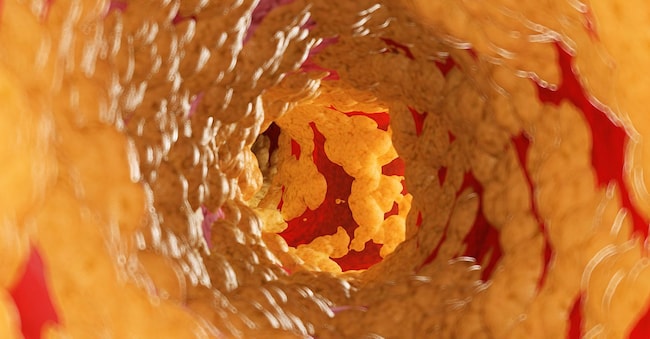
In the beginning were statins, fundamental drugs for the prevention of heart attack and stroke because they lower LDL cholesterol, the causative factor of these clinical manifestations. They changed the narrative of cardiovascular prevention and are still basic. Over time, other drugs have been added, such as ezetimibe and bempedoic acid, to make the lowering of 'bad' cholesterol even more efficient by reaching lower and lower values and allowing an increasingly effective personalisation of the approach. And that's not all. More recently, in view of the need to reduce LDL values (the lipoproteins that bind fat and keep it in the blood) as quickly and as much as possible in high-risk individuals, anti-PCSK9 monoclonal antibodies have been added, true smart drugs that have ensured an even more drastic drop in LDL-cholesterol levels, helping to reduce the risk of heart attacks and strokes and more.
And it is on this front, among the diverse research that is crowding in on the dyslipidaemia panorama, including through different and innovative mechanisms of action than today, that an important novelty is appearing that will soon (this is the hope) be available in clinical practice. It is called enlicitide decanoate and is a drug active on PCSK9. The novelty? It is administered in an easy tablet that can be taken daily orally in combination with statins.
From the US the latest studies
Treatment with enlicitide led to statistically significant and clinically relevant reductions in LDL-cholesterol compared to bempedoic acid, ezetimibe or their combination after eight weeks of treatment. This is stated by data from the CORALreef AddOn study, presented at the American College of Cardiology congress and published in the Journal of the American College of Cardiology. After 56 days of treatment with enlicitide in combination with statins, a 64.6 per cent decrease in LDL-cholesterol levels compared to baseline was observed. In addition to this absolute figure, the drug reduced LDL by 56.7% compared to bempedoic acid, 36% compared to ezetimibe, and 28.1% compared to the combination of bempedoic acid and ezetimibe. All this, given the ease of intake, with high levels of treatment adherence and simplicity in following the proposed dosage.
The prospects opening up
"Enlicitide will represent in the future a new therapeutic option in the management of patients who, despite being treated, do not reach the goals established by the guidelines," emphasises Alberico L. Catapano, one of the study's lead authors, President of the SISA Foundation and Director of the Atherosclerosis Study Centre at IRCCS Multimedica and the University of Milan, who presented the results at the American College of Cardiology. This is evidence that could really change daily clinical practice, with the advantage of a daily oral therapy that can be co-administered with a statin'. All this, it must be said, with an extremely interesting mechanism of action, shared with the anti-PCSK9s already available by injection. The PCSK9 protein binds to LDL receptors on liver cells: the drugs, by taking it away, prevent it from binding to these receptors, which thus remain more available. As a result, the presence of a higher number of receptors, like real 'dog catchers', results in the increased capture and elimination of bad cholesterol. "The silent cardiovascular epidemic urgently requires innovations supported by robust scientific evidence and the result of a long-term commitment," comments Nicoletta Luppi, President and CEO of MSD Italia. The positive results of the phase 3 CORALreef AddOn study strengthen the clinical profile of enlicitide, consolidating what has been observed in previous studies and paving the way for the potentially most effective oral solution for patients who do not achieve therapeutic goals despite treatment with statins".

