
Uncertainty grows with Trump's new tariffs, but the impact is limited on individual stocks
For Prysmian and Tenaris nothing changes, even St at the window

Le ultime da Radiocor
*** BTp: rendimento 10 anni torna a salire e chiude a 4,59%, spread a 95 punti
Borsa: Europa ingessata con nuovo scatto petrolio, a Milano (-0,2%) in luce Amplifon
***Bce: Lagarde mette in guardia dai rischi mercati per il debito imprese IA
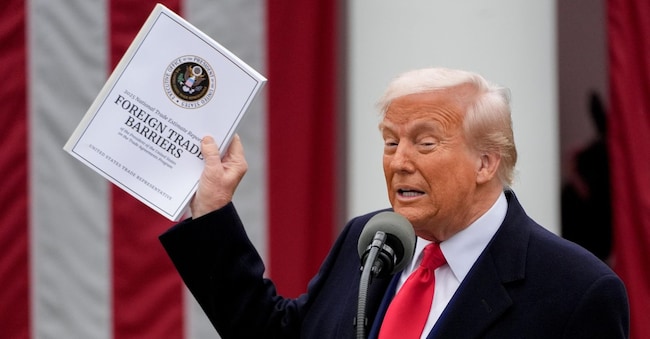
(Il Sole 24 Ore Radiocor) - After a period of relative calm, the subject of tariffs has returned to the forefront after the US Supreme Court declared unconstitutional a large part of the tariffs imposed by US President Donald Trump, who, in response, announced global tariffs of 15% to be applied with immediate effect. The new tariff, according to current indications, will remain in force for a maximum of 150 days (the president has taken advantage of Section 122 of the Trade Act of 1974, which has never been used before, but which allows the imposition of tariffs of up to 15% for a period of five months without congressional approval).
"The Supreme Court closed one door, but opened several others. It has eliminated a binary risk, that of an immediate rejection of the tariff system, but it has transformed the uncertainty into something longer and spread out over time," eToro analysts explain, pointing out that "the uncertainty has not disappeared, it has been diluted. It opens a 150-day window, until mid-July 2026, during which the new tariffs remain in place while the administration prepares for possible increases under Section 301 and 232. The existential risk has been removed, the political and negotiating risk remains'. The most delicate knot, in fact, was left out of the verdict: the Court did not rule on possible refunds of the approximately $175 billion in tariff revenue collected and the issue passes to the lower courts. "This opens up a grey area that weighs on businesses and the federal budget. This is not a legal technicality, it is an issue that can affect margins, cash flows and fiscal expectations,' experts say.
That said, for observers, the current confusion is not favourable to exports to the US, but should not exacerbate the current tariff burden. "The new tariffs seem more favourable for countries with higher tariffs, such as China and Brazil, whose exports to the US may become more competitive," say Intermonte analysts, who do not rule out "further developments in the coming weeks, while it remains to be seen whether and to what extent there may be refunds for tariffs paid under measures deemed illegal by the Supreme Court." With the new tariffs, exemptions remain in place for Usmca-compliant goods from Canada and Mexico and for some specific products related to food, critical minerals, electronics and automotive-related products.
Also unchanged were the Section 232 tariffs for steel and derivatives (25-50%), copper, timber, woodwork (10-50%), aluminium and derivatives (50%), automotives and components (25%), and those for ongoing investigations in the semiconductor sector (25%). As a result, for companies such as Tenaris (supported by the fact that Barclays raised its target price from EUR 20 to EUR 24 with 'overweight' confirmed, Prysmian and Danieli Ord , "exposed to metals covered by Section 232, nothing changes. The ruling opens up the possibility of repaying the Ieepa tariffs already collected (estimated at USD 100- 200 billion per year), but the modalities remain unclear and the issue could drag on for a long time," explains Luigi de Bellis, Head of Research Team at Equita, emphasising that "beyond the average level of tariffs and the individual companies that could temporarily benefit from them, the main message is that uncertainty over US trade policy is increasing, making the macro picture more complex and volatile. We also believe that, in the run-up to the November mid-term elections, it will be politically difficult to adopt measures that will boost inflation; as a result, we do not see a significant impact on the Fed's rate cut outlook'.
At the sector level, the oil sector is 'only slightly affected by the increased economic uncertainty. For the automotive sector we do not estimate any change, while the pharmaceutical sector remains exempt from tariffs. Among the stocks most affected by the introduction of the tariffs are Essilux and Safilo Group , due to their predominantly Chinese sourcing (vertically integrated for Essilux, from third-party suppliers for Safilo)," de Bellis writes. For Stmicroelectronics and Technoprobe, the impact is also low because "the sector is still being investigated under Section 232 and therefore not impacted by tariffs to date".


