
Gentiloni: 'NextGenerationEU will boost European GDP by 1.4 per cent in 2026'. And he opens up to Eurobonds for defence
In an eagerly awaited report taking stock of the NextGenerationEU programme born in the wake of the 2020 pandemic, the European Commission was optimistic about the future of growth in the European Union

3' min read
3' min read
FROM OUR CORRESPONDENT
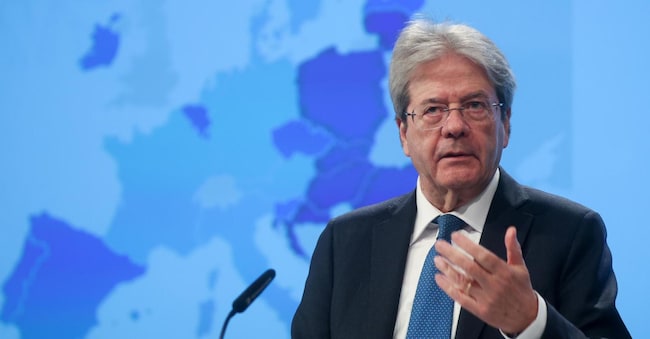
BRUSSELS - In an eagerly awaited report taking stock of the NextGenerationEU programme created in the wake of the 2020 pandemic, the European Commission expressed optimism on Wednesday 21 February about the future of growth in the European Union, thanks precisely to the innovative joint financing plan. Both Vice-President Valdis Dombrovskis and Economic Affairs Commissioner Paolo Gentiloni opened the door to new joint instruments in the field of defence.
"Models from the UK-based National Institute for Economic and Social Research (NIESR) show that in 2022 the EU's gross domestic product was 0.4% higher than it would have been without the spending programme," explained Commissioner Gentiloni. "Looking forward, the European Commission's simulations estimate that the NextGenerationEU could increase real GDP by 1.4% in 2026, compared to a scenario without NGEU."
The stance comes at a time when doubts and scepticism about the real impact of a EUR 750 billion economic programme are emerging from many quarters. In his speech, the former prime minister made it clear that the Commission's estimate is net of the positive impact of the reforms envisaged by NextGenerationEU itself. Beyond the economic aspects, the programme was particularly innovative because it is based on funds borrowed by the EU executive from the markets.
Asked at a press conference about the possibility of repeating the initiative to meet Europe's defence and security needs in the wake of the Russian war in Ukraine, European Commission Vice-President Valdis Dombrovskis was possibilistic: 'The defence issue is at the top of the agenda. We will have to work on this front in the future, also at European level'. Commissioner Gentiloni urged the political class to think about 'possible new joint financial instruments'.


