

"No shortage of drugs': Farmindustria warns distributors about the risk of scaremongering
A 'complex' international framework, but according to the branded medicine companies, thanks to the Technical Table on Procurement at the Ministry it will be possible to avoid supply bottlenecks. Meanwhile, Foreign Minister Tajani meets the EU Commissioner for Health

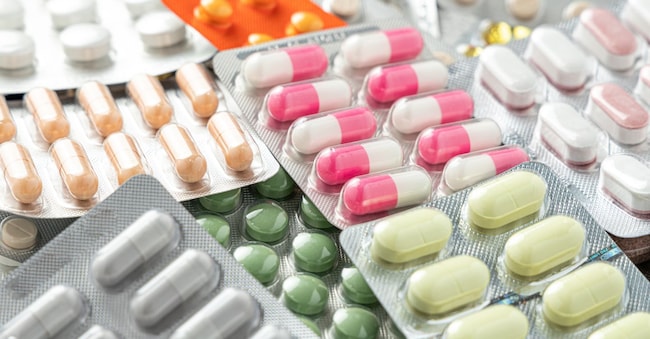
"The evidence that emerged from the Technical Table on national drug procurement confirms that, at present, there are no emergencies relating to shortages in Italy. A fact that testifies to the effectiveness of the joint work between institutions and the supply chain". This was how the president of Farmindustria, Marcello Cattani, commented in a note on the outcome of the meeting at the Ministry of Health, organised by undersecretary Marcello Gemmato precisely to take stock of the availability of medicines. Cattani was echoed by Federfarma and the medicine distributors of Federfarma Servizi, who, like Gemmato, thus 'threw water on the fire' of those expressing concern. Not insignificant alarm bells are ringing from the producers of generic and equivalent medicines who are members of Egualia, to the extent that the president Riccardo Zagaria went so far as to declare to Radiocor-Il Sole24Ore that "41% of our companies have stocks for only 8-10 weeks". In the meantime, the issue of the fallout from the Strait of Hormuz crisis is also at the attention of Foreign Minister Antonio Tajani, who just on the heels of the Health Table met with European Commissioner for Health, Olivér Várhelyi.
Farnesina Spotlight
"The meeting," the Farnesina explained in a note, "focused on the consequences of the blockade of the Strait of Hormuz on trade in the sector, on the challenges for the pharmaceutical sector related to tariffs and phytosanitary controls on products imported into the EU from third countries. Tajani stressed that the pharmaceutical sector is a key driver of Italia's exports, expressing concern about the impact of the Hormuz crisis on exports, particularly to the Gulf markets, an important destination for our pharmaceutical products. In 2025, Italy exported pharmaceuticals worth EUR 69.2 billion (+28.5% over 2024), accounting for 10.8% of national exports. Our country ranks 7th among the world's leading exporting countries in the sector.
Tajani and Várhelyi then discussed possible EU measures in the face of the logistical challenges caused by the blockade of Hormuz, 'with an additional reduction in airfreight capacity estimated at between 4% and 12%, affecting pharmaceutical supply chains and delivery times, costs and predictability', they warned.
The Voice of Farmindustria
'The international framework,' said Farmindustria President Cattani in the meantime, 'remains very complex and characterised by strong pressures on energy, logistics, raw materials and active ingredients costs. We appreciate the Government's action in constantly monitoring the situation, and we believe that the Technical Table represents a fundamental tool for comparison and prevention. Thanks to this coordination, we will be able to avoid the emergence of supply criticalities and also address in a systemic logic the issue of the industrial sustainability of production, which may affect the availability of certain drugs, with the usual attention to ensuring access to treatment and innovation for all citizens'.
For this reason, 'it is becoming increasingly important,' he concluded, 'to strengthen investments in Europe and reduce dependence on non-EU areas, continuing the work that has already begun in the context of the Single Text. We will continue to collaborate with the government and make every effort to identify shared solutions that will allow us to preserve the balance of the system'.

