
Nobel Prize for Literature 2025 to László Krasznahorkai, author of 'Satantango'
Swedish Academy crowns Hungarian novelist

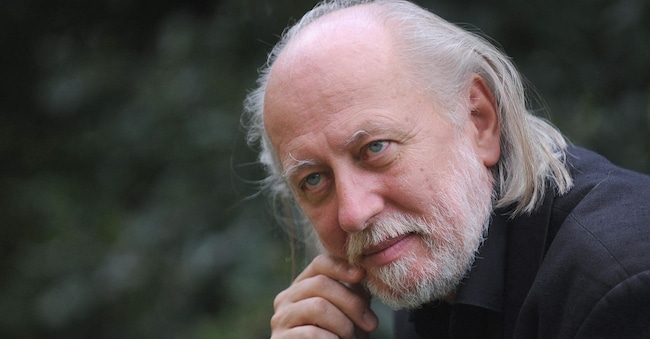
The Nobel Prize for Literature 2025 goes to the Hungarian writer and screenwriter László Krasznahorkai, author of the novels Satantango , on which Béla Tarr's 7.30-hour film of the same name was based, and Melancolia of Resistance. This is the decision announced in Stockholm by the Swedish Academy. The award comes "for his compelling and visionary work that, in a context of apocalyptic terror, reaffirms the power of art," said Mats Malm, permanent secretary of the Swedish Academy.
Born in Gyula on 5 January 1954, Krasznahorka studied law in Szeged and Hungarian language and literature in Budapest. At the beginning of his career, he worked for a few years as a journalist until 1984, when he devoted himself completely to fiction. His writing is characterised by very long sentences, devoid of traditional punctuation, constructed in a hypnotic and obsessive manner, which render a narrative continuously poised between rationality and delirium. His style has been compared to a 'narrative lava flow', according to the definition of the poet George Szirtes, his English translator.
La narrativa dell’autore, pubblicato in Italia da Bompiani, si muove lungo coordinate che ruotano attorno alla stasi, all’attesa e all’impossibilità di riscatto. Satantango (1985), romanzo d’esordio, ambientato in un villaggio ungherese abbandonato e cadente, introduce molti dei suoi temi fondanti: l’illusione della salvezza, la manipolazione, la circolarità dell’azione. I personaggi aspettano un ritorno, quello di Irimiás e Petrina, figure ambigue che incarnano la speranza di un cambiamento ma si rivelano, se non apertamente malvagie, comunque ingannevoli. Lo scrittore ha adattato per l’omonimo film diretto nel 1994 dal regista ungherese Béla Tarr. La collaborazione tra lo scrittore e il regista ha portato ad altri quattro adattamenti cinematografici dei romanzi di Krasznahorkai, nonché a quello che Tarr ha dichiarato essere il suo ultimo film, Il cavallo di Torino (2011).
Melancoly of Resistance (1989) revolves around the arrival of a circus with a whale in a provincial town: the event, only apparently neutral, triggers a wave of collective hysteria, a prelude to a deeper disintegration. Like Satantango, it stages marginal communities, poised between social disintegration and symbolic collapse, in which salvation is expected but never really conceived as possible. In the following texts - War and War (1999), The Return of Baron Wenckheim (2016), Forward Goes the World (2024) - the structure expands, but the tension between radical disenchantment and metaphysical tension remains intact.

