
Norwegian salmon grows again: in Italia it exceeds 90% share
For the Norwegian Seafood Council revenues of 550 million in Italia and 11 billion worldwide

Salmon for everyone, as long as it is Norwegian. After a 13% growth with 1.4 million tonnes sold and a turnover of 11 billion euro in 2025, of which over 72 thousand in Italia (+12% for 550 million turnover), the export race on global markets continues, supported by the wealthy state promotion body, the Norwegian Seafood Council, which on 12 May at a meeting within the Tuttofood exhibition at Fiera Milano will present the new 2026 data.
In February, global exports rose by 10% in volume and 5% in value, exceeding 850 million. In Italia, Norwegian salmon has a market share of over 90%, which is aimed at further increasing. Nine out of ten Italians consume it, but still mainly on a monthly basis. "The Italian market shows a strong attractiveness for salmon, but there is still a gap between purchase intention and actual consumption" and the aim is to "close this gap", explains NSC Director in Italia, Tom Jorgen Gangso.
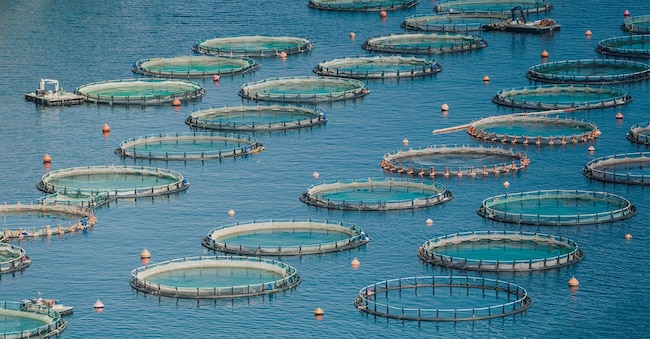
Supporting this growth is the increasingly central role of aquaculture (where Italia is at the bottom of the list in Europe), with fish farms now accounting for almost three quarters of exports. A structured production system with thousands of plants anda production of 1.5 million tonnes of fish in the sea (in Italy it is 15 thousand tonnes) that ensures continuity of supply even during the most volatile phases of the market.
With thousands of kilometres of coastline and cold water, the country has developed an aquaculture model supported by dedicated legislation, scientific research and promotion, contributing to the image of Norwegian salmon as a sustainable, quality product.
Since 2006, the Aquaculture Act has regulated every stage of fish farming with precise criteria on cages, up to 40 metres deep and up to 200 metres wide, with a maximum occupancy of 2.5%, with a rest period at the end of each production cycle during which the seabed is monitored. The fish is used almost in its entirety (99.5%) limiting waste, with the residues also turned into biogas or fertiliser.

