
Not just bias: silencing noise for fairer and more effective business decisions
The book by Daniel Kahneman, together with Olivier Sibony and Cass R. Sunstein, reveals how noise clouds the judgements and decisions of people and organisations
by Alessandra Cattani *
 Aggiungi Il Sole 24 Ore
ai preferiti su Google
4' min read
4' min read
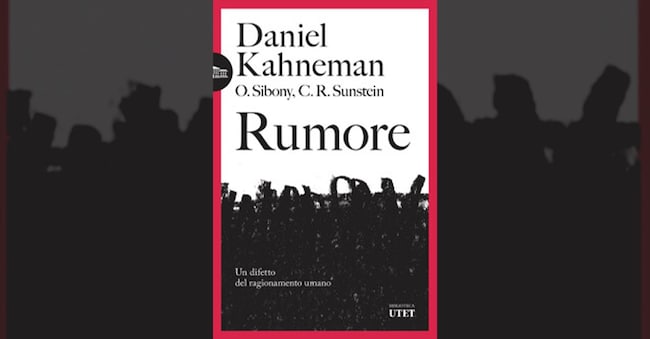
Two summers ago in a whatsapp group, a colleague shared the photo of the cover of Rumour, a flaw in human reasoning, the latest book by Daniel Kahneman, the first psychologist to be awarded a Nobel Prize in Economics for his theories contributing to our understanding of how human beings make decisions.
I rushed to buy it thinking I would read it with all the attention it deserved. But, as it was summer, I did not, caught up in lighter reading. The news of Kahneman's passing prompted me to pick up the book again and discover a perspective capable of innovating the analysis and cultural management of organisational behaviour.
It is an eye-opening read. Written with Olivier Sibony, professor of economics, and Cass R. Sunstein, legal scholar and co-author with Richard Thaler ofNudge, the book explains how the phenomenon of noise clouds the judgements of people and organisations and what to do about it.
After more than 50 years of studying biases and the way they lead to errors in evaluation and judgement, known as cognitive biases, Kahneman became aware of another type of error, something he had not thought of before, namely noise. It follows that to the impact of biases on decision-making, already at the centre of managerial debate, is added that of noise.
What is the difference between bias and noise?
Bias determines erroneous judgements that, in most cases, systematically go in the same direction, e.g. when a company's managers are always over-optimistic about turnover growth forecasts. Conversely, noise determines errors that go in different directions. An example that helps to understand the difference is the scales: if it consistently underestimates the real weight by 1 kg, it is biased but without noise; if it marks a different weight each time, it is noisy.

