Business Management

Novo Nordisk’s dilemmas and that fine line between science and marketing

The Danish pharmaceutical group is grappling with a strategic crisis, amid market challenges and cultural change within the pharmaceutical sector

by Francesco Guidara*

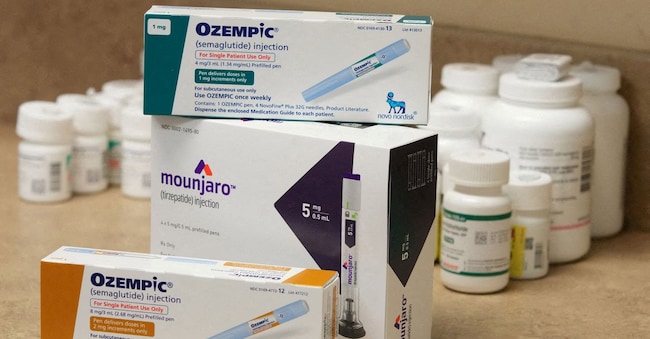
Confezioni di Ozempic e Mounjaro, farmaci iniettabili a base di semaglutide e tirzepatide utilizzati per il trattamento del diabete di tipo 2 e prodotti da Novo Nordisk e Lilly, in una farmacia Rock Canyon a Provo, nello Utah (Stati Uniti), il 29 marzo 2023. REUTERS/George Frey/Foto d'archivio REUTERS

4' min read

Translated by AI
Versione italiana

4' min read

Translated by AI
Versione italiana

When presenting the 2026 figures a few weeks ago, Chief Executive Mike Doustdar described it as the need for better “commercial execution” and the ability to reach customers in “new ways”. A call to action that actually conceals something deeper: the urgency, for Novo Nordisk to change its identity – not just its strategy – in the face of the most difficult challenge in its recent history.

The Danish group – and with it a significant part of the European pharmaceutical industry – is discovering just how a best-selling drug can spiral out of control, becoming a social phenomenon even before it is recognised as an excellent therapeutic product. And how much this calls into question a culture rooted in scientific rigour, regulatory prudence and a mediated relationship with doctors.

Loading...

Novo Nordisk has seen around 70% of its market value evaporate since its mid-2024 peak, crushed in the battle against obesity by Eli Lilly: faster, more aggressive. The first results of 2026 have triggered a partial recovery, although the gap from the highs remains huge and the strategic challenge remains intact. In the pharmaceutical sector, as in many others, it is the US market that crowns – and rewards – the global champions, and Novo has two of the most powerful drugs of the last thirty years in its portfolio: Ozempic and Wegovy, produced originally developed for diabetes and obesity but which soon became something quite different.

Doustdar himself acknowledged this: the phenomenon whereby one patient tells another about a ‘fantastic medicine’ and the latter goes out to obtain it, bypassing – at least in part – the medical prescription, had never before occurred on this scale. It is a landscape in which the demand for healthcare no longer arises solely in the doctor’s surgery, within an orderly chain of diagnosis, prescription and treatment. It arises from a late-night scroll through social media, from a celebrity’s endorsement, from a ‘before and after’ photograph, and from the algorithm that leads the pharmaceutical industry to compete in the very same mental space where consumers’ desires, hopes and aspirations take shape.

Eli Lilly operates in this arena with ease. Not because it has better medicines, but because it is accustomed to a dynamic forged over decades of direct-to-consumer pharmaceutical advertising, which was liberalised in the United States in 1997 and has since reshaped the relationship between patients, doctors and brands. It also knows that the obesity market is not merely about treatment: it taps into megatrends that have now become crucial — longevity, self-management as a form of individual responsibility, image control as a public issue, and wellness tech.

The mass consumption approach

This is why the appointment of Poul Weihrauch, CEO of Mars, as an observer on the Novo Nordisk board – announced at the annual general meeting a couple of months ago, with a view to his formal appointment as a board member in 2027 – is a first attempt at a response. It is a sign that the group, which has built its reputation on insulin, metabolic research and Nordic rigour, has decided to seek help from those with a background in mass-market consumer goods. Chairman Lars Rebien Sørensen put it in no uncertain terms: “We must start viewing our community more as customers than as patients”. A statement that, five years ago, would have been unthinkable at a board meeting of a European pharmaceutical company.

Novo Nordisk is experiencing first-hand what many European companies still struggle to admit: in the new healthcare landscape, scientific research contributes to, but does not exhaust, the process of shaping the supply. Now more than ever, demand must be managed. The American market knows full well how to reach consumers, reduce barriers to purchase and expand distribution channels. It is clear, however, that applying this approach to healthcare has meant lowering barriers of caution – which did not arise by chance – whilst increasing the pace, commercial pressure and the demands of consumerism.

Novo Nordisk’s dilemmas thus become a testing ground involving the management of major healthcare players and the regulatory authorities themselves, from the EMA to the FDA, right through to Italy’s AIFA. They, too, are called upon to rewrite part of the rules governing medicines: to understand where to allow commercial innovation, where to accept new channels of engagement with patients, and where, on the other hand, to stand firm. Because there is only one decisive question: what will be the non-negotiable boundary between science and marketing in 2026?

Here, paradoxically, Europe has something to teach us. It is precisely the constraint that today appears to be a competitive disadvantage – mediation, regulatory prudence – that is the repository of a historical stratification which America has not experienced. Four centuries in which the relationship between healthcare, authority and the body has been conceived as a public matter rather than a transaction: from the earliest health regulations of the Italian city-states through to twentieth-century welfare, via the notion that illness is not a private matter for the individual but a matter of public concern. It is an institutional awareness that has become ingrained in regulatory agencies, in the detail of package leaflets, in the role of the doctor, and in the scepticism towards pharmaceutical advertising.

The challenge over the coming years will be to see how Novo Nordisk and the major European groups manage to update their business models whilst maintaining this boundary. With a bit of courage, Europe could make an unexpected statement, finding a new way of addressing the market without selling its soul to the marketing department.

*International Advisory Board, GSOM, Politecnico di Milano

Copyright reserved ©
Loading...

Brand connect

Loading...

Newsletter

Notizie e approfondimenti sugli avvenimenti politici, economici e finanziari.

Iscriviti