Quarterly reports

Nvidia posts another record quarter: shares rise by over 4 per cent in after-hours trading

The chip giant reported turnover of $96.2 billion. Revenue is forecast to rise by 70 per cent in 2028. CEO Huang said: “We are at a turning point.”

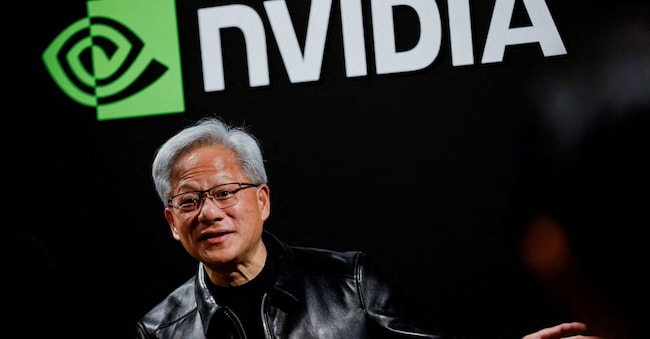
Il ceo di Nvidia, Jensen Huang durante un evento a Tokyo, in Japan REUTERS

3' min read

Translated by AI
Versione italiana

3' min read

Translated by AI
Versione italiana

Nvidia has posted another quarter of exceptional results, and its shares have gained ground on Wall Street in after-hours trading (following a dip immediately after the close), buoyed by forecasts of accelerating revenue growth, which helped allay market doubts about the sustainability of artificial intelligence-related activities and fears of excessive spending on AI infrastructure.

The US company, led by CEO Jensen Huang, closed the quarter at the end of July with record revenue of $96.2 billion: more than double (+106 per cent) compared with the previous year, up 18 per cent on the previous three months, and also exceeding the $92.3 billion forecast by analysts surveyed by FactSet. Net profit of $59.7 billion (again, more than double the previous year’s figure) and earnings per share of $2.46 also far exceeded market experts’ expectations.

The key data centre segment, which comprises most of the artificial intelligence servers for which Nvidia is best known, generated revenue of $89 billion. Analysts, however, had expected revenue of $86.3 billion.

Loading...

The company’s earnings and strategic agreements

Nvidia’s shares rose by more than 4 per cent in after-hours trading after Chief Financial Officer Colette Kress, speaking on a conference call with investors and analysts, stated that the company expects revenue to grow by 70 per cent in 2028.

In recent months, a series of commercial agreements and announcements regarding new projects and products has propelled Nvidia – the world’s largest publicly listed company and a leader in the design of advanced computer chips – even further into the heart of the artificial intelligence boom. Nvidia’s results are regarded as a key indicator for analysing the artificial intelligence industry, given its very strong supply ties with major groups such as OpenAI, Anthropic, Meta and Google, right through to SpaceX.

Major US technology firms have confirmed that they will spend over $730 billion on AI infrastructure this year: an unprecedented figure, representing a sharp increase on the $400 billion spent last year.

The $5,000 billion tech giant also announced earlier this month a partnership – with Goldman Sachs, BlackRock and Apollo – to provide guarantees for data centre financing of up to $500 billion. Nvidia subsequently agreed to guarantee a massive data centre project in Ohio by OpenAI, with a commitment of $105 billion.


CEO Jensen Huang: ‘We are at a turning point’

These projects, together with rumours of production capacity shortages and the company’s ambitious investment in developing artificial intelligence models to counter China, have caused concern amongst investors in recent weeks: so much so that the share price closed lower for seven consecutive trading days. “‘Artificial intelligence has reached its tipping point. It is doing useful work. Its tokens are productive and profitable,’ said Jensen Huang in a statement. “A year ago, a single lab was the driving force behind development; today,” he added, “we are experiencing a golden age of new research and start-ups in the field of AI, with multiple cutting-edge initiatives expanding in parallel, a thriving open ecosystem and physical artificial intelligence coming into operation.”

Forecasts for the current third quarter

Nvidia expects revenue to exceed Wall Street’s expectations in the current third quarter: $108 billion (with a margin of error of 2 per cent), compared with the $105.2 billion forecast on average by analysts. In its guidance, Nvidia states that it has not included any sales of data centre chips to China. The gross margin – the company explained – will be around 74 per cent for the quarter, but could fall subsequently due to rising costs, settling between 71 per cent and 72 per cent in the period ending in January.

Doubts remain over sustainability

Despite the growing demand for Nvidia products, there remains a gap between what large technology firms spend on data centres and other IT infrastructure and the slow pace at which end-user artificial intelligence products generate profits, said Naveen Chhabra, a market analyst at Forrester. “Companies are struggling to integrate AI into production, and this situation won’t change overnight,” said Chhabra. “There is a growing gap between investment in AI and its value to businesses. The wider this gap becomes, the more problematic it gets. If AI projects fail to meet businesses’ expectations, they will abandon them.”

Copyright reserved ©
Loading...
Loading...

Brand connect

Loading...

Newsletter

Notizie e approfondimenti sugli avvenimenti politici, economici e finanziari.

Iscriviti