
Nzatu, start-up to grow sustainable coffee between Uganda, Zambia and Parma
The project involves 60,000 people with the aim of supplying one tonne of coffee per month to supermarkets with a global expansion plan to bring in at least 5 million in sales within two years

3' min read
3' min read
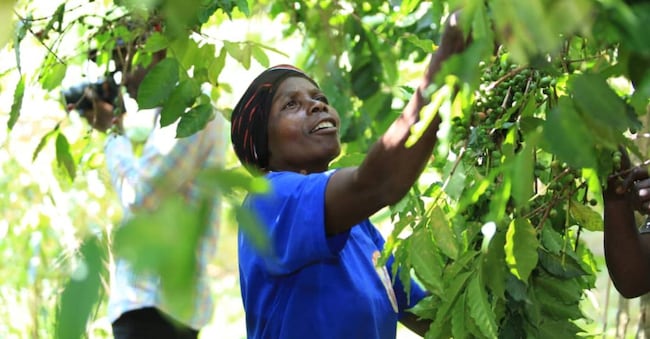
The channels for commercial agreements with the major retail chains, starting with Conad, have already been opened. And the first step involves the distribution of one tonne of coffee per month. This is the debut in Italy of Njuki, proposed by the start-up Nzatu. A project, even before being a business, that involves 60 thousand farmers in 15 African countries, from Uganda to Zambia, to support the development of local communities and the creation of a sustainable and long-lasting economic system through regenerative agriculture. But it also has ambitions of entrepreneurial growth, with a forecast turnover that already in the short term, within two years, should fluctuate between 5 and 10 million euros, and with a plan for global expansion, between Europe, the United States and Asia.
"We are the bridge between farmers and customers internationally," says Michele Sofisti, co-founder of Nzatu together with Andrea Chiesi, an industrialist from Parma in the pharmaceutical sector. "Our goal is to generate a positive impact on the population and the environment," says Chiesi. AroundNjuki (which in the various local languages means honey) there is already great excitement.
"We are seeing great interest in this product and in the supply chain that revolves around it, which is not part of the circuit of the large multinationals," confirms Luca Montagna, founder and director of Artcafè, the artisanal coffee roasting company based in Parma that distributes Njuki coffee in Italy and Europe, while in the USA it will be entrusted to the online platform Urban Afrique. With two branches in South Africa and Zambia, Nzatu - which has its headquarters in Switzerland - will also open its own office, by the end of the month, in Hong Kong, to enter the Asian market by focusing on the formula of a production that preserves biodiversity and alternates coffee with beekeeping (in the periods of vegetative recovery of the plant) to guarantee income for African farmers at all times. The embryo of the company is the brainchild of two native Zambian sisters, Gwen and Denise Jones. Their meeting with Sofisti and Chiesi, who have long been committed to the protection of biodiversity, led to the birth of Nzatu, which in the local language means 'ours', to indicate that every aspect of the project is shared with the various partners and the territory.
The group was joined by a young Indian climate economist, Prithvi Naik. And today the company produces not only coffee and honey but also cocoa and ancient cereals. It will soon also ensure the tracking and certification of crops for the new anti-deforestation regulations of the European Community.
"Positioned in a medium-high market segment, Njuki will be priced in the average range of high quality products," explains Montagna. "We are talking about a coffee that not only meets very high quality standards: it also embodies a sustainable and responsible business model. The support for the local population is aimed at stabilising the lives of families, to allow their children an education, but also to prevent teenage girls from early marriages.

