Current Affairs

Po River Observatory: drought worsens, alert level rises to ‘high’, northern regions in difficulty

The water stress level in the river basin has risen from ‘medium’ to ‘high’. Over a hundred municipalities across Lombardy and Piedmont are experiencing difficulties with their water supply, and in several of them water tankers are already being used

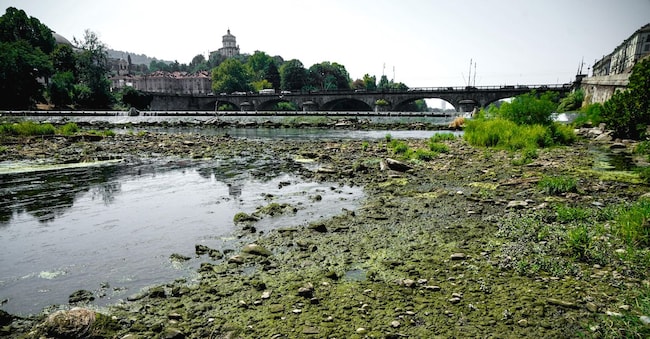
Il fiume Po in secca, all'altezza del ponte Vittorio, dove si sono formateidegli isolotti per la drastica diminuzione della portata dovuta alla prolungata siccità. Torino 30 luglio 2026 ANSA/TINO ROMANO --- The Po River is dry near Ponte Vittorio, where small islands have formed due to the drastic reduction in flow caused by the prolonged drought. Turin, July 30, 2026 ANSA/TINO ROMANO ANSA

3' min read

Translated by AI
Versione italiana

3' min read

Translated by AI
Versione italiana

The alarm has been raised over the River Po. The drought situation continues to worsen and the water stress level has been raised from ‘medium’ to ‘high’. The decision was taken unanimously by the Permanent Observatory on Water Use, coordinated by the Po River Basin Authority, during a meeting held yesterday. The next meeting is scheduled for 6 August.

The situation is currently critical across the entire Po Valley, particularly with regard to drinking water supplies, and there are already over a hundred municipalities in Piedmont and Lombardy facing supply difficulties. Several of these have been using water tankers and tanker lorries for days to replenish the water supply reservoirs and ensure the service for residents.

Loading...

A worsening situation

According to Alessandro Delpiano, Secretary-General of the Po River Basin Authority, ‘the situation has worsened. Let us not delude ourselves that summer downpours can be the solution to deep-rooted problems. Compared with ten days ago, despite the rainfall, we actually have less water in the lakes and less water in the rivers, whilst irrigation needs remain significant for various crops, starting with rice.”

In addition, in the coming days, according to the Observatory, due to the reduction in river and tributary flows, a resumption of saltwater intrusion in the Po Delta is also expected, which may affect the Ponte Molo water treatment plant, in the Taglio di Po area, in the province of Rovigo.

Heatwave and drought

The northern regions are therefore facing a very difficult situation, and the arrival of the fourth heatwave of the year – which is bringing extreme temperatures across the entire peninsula – further reduces the chances of the crisis being resolved any time soon.

Temperatures are rising steadily and the weekend is set to be sweltering. There are currently 11 cities on ‘red alert’ – the highest alert level – and tomorrow this figure will rise to 19 out of a total of 27 urban centres monitored daily by the Ministry of Health. Over the weekend, temperatures will reach 41 degrees in Terni and 40 degrees in Ferrara, Florence, Modena and Piacenza. Central and Northern Italy will be hardest hit by the fourth wave.

Agriculture

In the regions surrounding the Po basin, there are therefore critical issues in the agricultural sector and difficulties with the supply of drinking water due to the drought. According to the latest report from the ADBPO Water Use Observatory, the regional situation is critical.

In the Aosta Valley, total water availability over the last six months has been 20 per cent lower, and the flow rates of the Dora Baltea are below the seasonal average, with the consequent impact on fodder production in the mountain pastures. In the major reservoirs, the overall fill rate now stands at 45 per cent, representing a 35 per cent decrease compared with the previous year.

The situation is no better in Piedmont, where, in addition to the rice sector, ‘there are now concerns about the condition of permanent grassland’. The situation is also deteriorating in Liguria: springs are continuing to face difficulties due to the drop in some groundwater levels.

The deterioration is ‘even more evident in Lombardy, where water resources are practically exhausted in the Ticino catchment area and the overall shortfall in regional water resources now stands at between 50 and 60 per cent (with the exception of the Garda-Mincio catchment area, the only one not yet affected)”.

Loading...

In Emilia-Romagna, meanwhile, the water levels in the Mignano (24.8 per cent) and Molato (15.5 per cent) reservoirs are ‘plummeting’, whilst the situation is better in the Bologna area, where Suviana (92 per cent), Brasimone (67 per cent) and Renovivo (78 per cent) are still able to meet the region’s needs.

The Veneto region is also experiencing a ‘significant deterioration, despite emergency measures to restore river flows at source’. The situation is more positive in the trans-Apennine part of Tuscany and in the Reno valley. There are some critical issues in the Autonomous Province of Trento, in the Chiese area.

Copyright reserved ©
Loading...

Brand connect

Loading...

Newsletter

Notizie e approfondimenti sugli avvenimenti politici, economici e finanziari.

Iscriviti