
Oil and gas account for 71 per cent of energy requirements
Fossil fuels continued to account for the largest share of the energy mix in the second quarter. Between January and June, LNG imports rose to 10.7 billion cubic metres

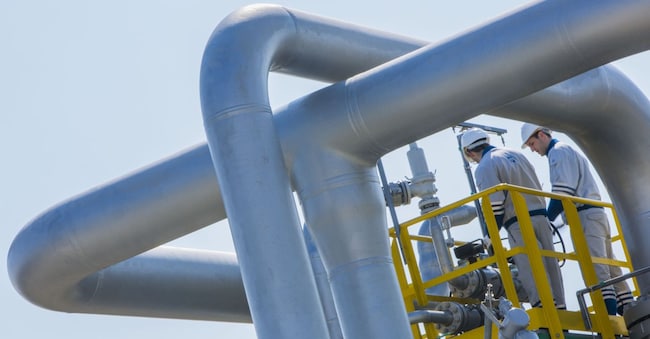
Despite a decline in primary energy demand, due to the fall in heating consumption, fossil fuels continue to account for the largest share of Italia’s energy mix: in the second quarter, in fact, oil and gas covered 71 per cent of total demand. Renewables account for 23 per cent and are consolidating their contribution thanks to the growing share of solar and wind power. This is the picture painted by the first edition of Polaris, the new Snam Observatory on the Italian gas system, which will be published today by the group led by Agostino Scornajenchi. This first edition marks the launch of a monthly report, which will be complemented four times a year (in January, April, July and October) by a quarterly in-depth analysis of the key trends in the energy and gas sectors. According to initial projections, the gas sector continues to play a crucial role in the national energy system, accounting for 30 per cent of primary energy demand.
Storage
Against this backdrop, made all the more complex by the ongoing conflict in the Middle East, gas storage continues to play a stabilising role. Italia, as highlighted by Snam’s report, ended the cold season with stocks above the level recorded on the same date last year, and the gas injected into storage facilities – natural gas fields that have ceased production and have now been converted into storage facilities – has helped to mitigate volatility in global markets. Thus, between October 2025 and March 2026, Italian storage sites – with a total capacity of 19 billion cubic metres – released 9.5 billion cubic metres, covering 23 per cent of gas demand. As for refilling in preparation for the coming winter season, the fill rate recorded by Polaris (figures as at 30 June) stands at 67 per cent, 9 percentage points higher than that recorded in the same month of 2022 – the year of the energy crisis following the conflict in Ukraine – and approximately 18 percentage points higher than the EU average. This trend continued in the following weeks – not covered by the Observatory, which stops reporting figures at the end of June – to the extent that Italia now has a storage level of over 72 per cent, compared with a European average of 54 per cent.
This is all down to the high level of reserves built up before winter, the prudent management of withdrawals and the timely launch of the replenishment campaign which, despite the fallout from the crisis between the US and Iran, will in all likelihood enable Italia to reach the 90 per cent target which, albeit with greater flexibility, Brussels has set as the deadline to be met before the next cold season.
Gas demand
Snam’s new Polaris Observatory also examines trends in gas demand, which stood at 33.1 billion cubic metres in the first half of the year, slightly above the same period in 2025 (+0.4%), with the thermoelectric sector recording a 4% increase, whilst the commercial and residential sectors saw a decline (-1%). The industrial sector, on the other hand, remained virtually in line with 2025 figures. In June alone, gas-fired power generation totalled 10.2 terawatt-hours (TWh) and met 36 per cent of total electricity demand; within this, the contribution of renewables remains significant, having met 39 per cent of electricity demand.
In the first half of the year, the Polaris Observatory explains, 3.1 gigawatts (GW) of new solar capacity was installed (+10 per cent compared with the first half of 2025) and 328 megawatts (MW) of new wind capacity (+20 per cent). Taking all renewable energy sources together (including hydroelectric and geothermal), growth over the same period in 2025 stood at 9 percentage points.


