The summit

Oil, from Opec+ production cuts until 2026

The reopening of the taps slips to April and will be even more cautious: the group will not return to full production until the end of 2026, a year later than it had planned. The UAE has also been persuaded to dilute the quota increase over time.
by Sissi Bellomo

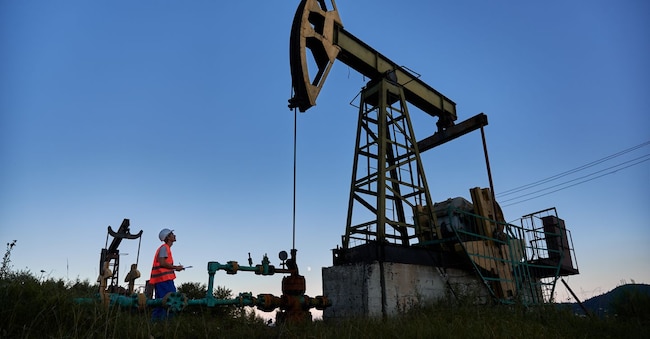
Male worker holding clipboard and looking at petroleum pump jack while working in oil field. Oil man standing near oil pumping unit under blue sky. Concept of oil extraction and petroleum industry.

3' min read

3' min read

Opec+ postpones oil production increases: all increases, including the one that had been granted to the United Arab Emirates with a higher quota. Even the most tangled knot on the negotiating table was thus untied, with concessions from Dubai exceeding expectations. The coalition was thus able to show off its unity by announcing an agreement across the board.

The market had only partly discounted the outcome of the summit. Oil prices nevertheless reacted moderately: a rise of around half a percentage point, which kept Brent under 73 dollars per barrel and Wti around 69 dollars.

Loading...

It will probably take time to 'digest' the new Opec+ plans, which this time too - as seems to be the norm by now - are rather complex. Moreover, not only was the summit held by videoconference (for the third time in a row, with no apparent justification), but there was not even a final press conference: another historical custom that has almost been lost.

No opportunity to ask for clarification then, not even from analysts. And no comments beyond the aseptic formulas of the communiqués. Impossible even to observe the gestures and expressions of the participating ministers, to try to decipher their state of mind.

Beyond the details, the meaning of the latest Opec+ decisions is however clear: the group still does not feel up to endorsing an increase in production. The reopening of the taps therefore slips from January to April (in the original plans it was to start in October and this is already the third postponement).

Moreover, it will take place even more gradually than was originally indicated: the last cuts at this point should only be withdrawn - barring further reconsideration - at the end of 2026, whereas the first version of the 'exit strategy', presented last June, indicated the end of 2025 as the target date.

An extra measure of caution that seems justified by weak demand, the strong growth in the supply of oil from countries outside Opec+ (such as the US, Canada and Guyana) and the numerous uncertainties on the geopolitical front, including the unknown factor of what Donald Trump will actually do once he takes office in the White House: duties, sanctions, but also mediations for possible peace agreements, for example between Russia and Ukraine

Opec+ has cut production several times between 2022 and 2023, and today there are two categories of cuts in force, voluntary (made only by some countries) and collective, which together account for about 6 per cent of global crude oil supply. The first to be withdrawn will be the extra 2.2 million barrels per day cuts implemented from November 2023 by a group of eight member countries, namely Saudi Arabia, Russia, Iraq, the Arab Emirates, Kuwait, Kazakhstan, Algeria and Oman.

These cuts - according to yesterday's announcement - will only be phased out in stages starting in April, until they will be eliminated altogether in September 2026, over 18 months instead of the previously planned 12 months. All other collective and non-collective production cuts, totalling 3.66 mbg, were extended by one year: until December 2026.

Very important, as mentioned at the beginning, is the pact reached with the United Arab Emirates, which in the past have often made their own claims, going so far as to paralyse the work of Opec+. This time, however, they have been very cooperative, at least in appearance.

Dubai does not lose the 'privilege' of increasing its production quota by 300,000 barrels per day (from 2.9 to 3.2 mbg), but has in fact agreed to align with the other members of the group in reopening the taps, committing to extract more only from April and in a super gradual manner, so as to reach the new quota only in September 2026, in 18 months instead of 9.

A noble gesture towards the allies, even if it is likely to remain only symbolic: according to independent estimates, the Emirates are now 'overshooting' their quota by about one million barrels per day. And in Opec+ everyone is pretending nothing is happening.

Copyright reserved ©
Loading...

Brand connect

Loading...

Newsletter

Notizie e approfondimenti sugli avvenimenti politici, economici e finanziari.

Iscriviti