
Oil, the government's plan: 500 million for intensive cultivation and more promotion
Towards examination in the State-Regions Conference of the programme to relaunch production: resources allocated for the next three years. Among the sector's requests is the need for a single Commissioner against Xylella

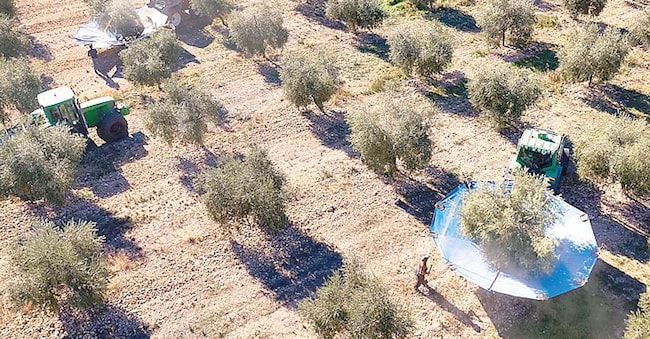
The launch of an olive-growing plan is already news in itself, since there has never been one since the post-war period. But the plan that is now on the home stretch after a year-long discussion between the Ministry of Agriculture, the regions and associations of the olive-oil production chain also aims to become a benchmark that can act as a forerunner for similar development plans in other key sectors of the 'Made in Italy' agri-food industry.
The project that has just been launched by Masaf will now be submitted for a fortnight for comments from the supply chain operators. At the end of this comparison, the measure will be taken to the State-Regions Conference for final approval. A fundamental pillar of the plan is the strengthening of production. 'This is the first of the guidelines we want to introduce,' explains the undersecretary for Agriculture with responsibility for the sector, Patrizio La Pietra. 'Until now we have often started from economic resources, from the search for funds to spend, often without even having a clear idea of what to do. Now we start instead from a precise idea, to increase production, and then look for the resources to put it into practice'. And it is also in this sense that the olive-growing plan should be a point of reference for future sector plans.
The resources are there: just under EUR 500 million for five years. "The most important slice is the funds allocated by Coltiva Italia," continues La Pietra, "which amount to 300 million (50 for 2026, 50 for 2027 and 200 for 2028). Allocations to which must be added the approximately 35 million euros per year of GMO resources (those of the old operational plans, ed.) which for five years make another 175 million. The resources are therefore already there, but it is even more important to have clear ideas on what to do. And to have defined them after discussion with the other actors involved'.
Objective number one, therefore, is the strengthening of production after Italy (with about 300,000 tonnes of production forecast for this year) slipped to third place among the world's leading producers, bypassed by Spain and Tunisia . "To the productive strengthening," the undersecretary added, "will be allocated all the funds of Coltiva Italia. We have involved the Regions and the producers' organisations to define the interventions that will not be the same everywhere but will be declined on the territories. So we will focus on super-intensive olive groves where it is possible and makes sense. Elsewhere we will try to intervene differently in the wake of territorial prerogatives, traditions and the protection of biodiversity'.
Still in terms of strengthening production, another pillar will be the recovery of abandoned olive groves. But even in this case, a thorough screening is needed because if an olive grove has been abandoned, it is first and foremost because it did not allow the producer adequate profitability to continue growing it.


