
Olympics: swimming, fencing, gymnastics and cycling, the most successful federations
Italy has been in the G-10 of world sport since Atlanta 1996. In Paris, an expedition that convinced by quality and quantity of performance

4' min read
4' min read
Italy has been in the G-10 of world sport since Atlanta 1996. With the 40 medals won in Paris, it has replicated the historic record of podiums of Tokyo, but with two golds and three bronze medals more, surpassing Germany in the rankings, in ninth place, something that had not happened for 64 years. Beyond the medals, there are other numbers that give a sense of the depth of the Italian sports movement. Italy has been able to win medals in so many different sports, unlike other countries that have serial winners and disciplines from which they draw in bursts, such as China that won 8 golds in diving, South Korea that snatched 5 in archery or Uzbekistan that won 5 golds in boxing.
A multidisciplinary Italy
."We are perhaps the most multidisciplinary country, we have won medals in 20 different disciplines. Since Rio 2016, the streak of 37 five-ring days in which Italy has won at least one medal has begun," pointed out Coni President Giovanni Malagò, taking stock of the expedition. "In Paris we took 87 athletes to the finals. And out of 12 gold medals, two are mixed, skeet and sailing, three are men's and seven women's. We won the very strange ranking of fourth places, there were 20. And 27 fifth places: that shows how qualitative this expedition was. When our medal table was less rich, some disciplines counted for a lot: I am thinking for example of fencing and shooting. Overall, there were 80 medallists. Furthermore, if we look at the women's medals, there are multiple components so the final number of gold medals reads 26 women and five men.
The Most Winning Federations
.Among the most medal-winning and most improved Federations is Fgi, which achieved podiums with both artistic and rhythmic gymnastics. The Fairies won one gold, one silver and one bronze, the Butterflies two bronzes. In Rio the spoils had been zero podiums, in Tokyo one silver and one bronze. In Rio, 12 gymnasts were qualified, in Tokyo 14 and in Paris 17. In the four-year period 2017-2020, before the Japanese Olympics (although due to the postponement of the Games by one year to 2021, it would perhaps be more appropriate to speak of a five-year period), the Fgi received funding for its operation and the management of competitive activities amounting to 28.7 million. In the four-year period prior to the Paris Games, the contributions - provided since 2020 by Sport and Health and no longer by CONI, which invests an average of 7 to 9 million per year for its Olympic preparation activities - rose to 32.2 million.
By far the most successful Federation in Paris was the Fin. Six medals came from swimming, with the two gold medals of Thomas Ceccon and Nicolò Martinenghi, Greg Paltrinieri's silver and bronze, Ginevra Taddeducci's bronze in the 10 km cross-country, and the men's 4x100 freestyle relay. The Fin delegation comprised 81 athletes in Paris (including the water polo teams), as in Rio, against 66 in Tokyo. In Tokyo there were seven medals but no golds, in Rio eight but only one Olympic title. In the four-year pre-Tokyo period, Fin received contributions of 61 million, which fell to 55 million in the period following the Paris event.
Cycling, fencing and athletics
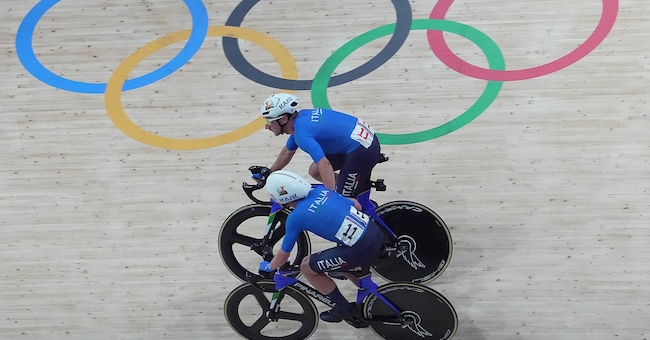
.Federciclismo's trophy cabinet is also rich. The Fci led a delegation of 25 men and women cyclists to Paris and stood on the podium four times, with one gold, two silver and one bronze. In Tokyo there were 26 azzurri and azzururre della bici who brought home one gold and two bronze medals, while in Rio the team of 23 cyclists won only two medals (one gold and one bronze). As for the funding, from 2017 to 2020, 39.5 million ended up in the FCI coffers. From 2021 to 2024, slightly less: 38.4 mil.


