
On the island called prison, a landing place for castaways of life
The latest book by Daria Bignardi, a volunteer among the inmates of San Vittore, in an emergency that calls on everyone

4' min read
4' min read
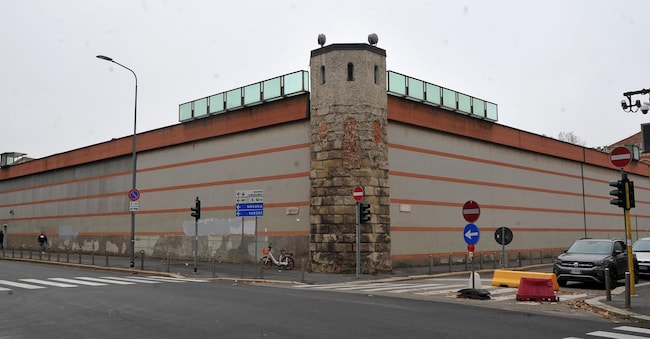
If it is true - in the words of John Donne - that 'no man is an island', to truly understand the voices of a prison, one must also listen to those who remain outside. As on certain evenings at the Mantellate in Rome or around via Filangieri in Milan, when the wind repeats names of husbands, sons, brothers - almost only men - chanted at the top of their lungs by women who thus make their embrace reach beyond the barricades and gates.
The closeness of families is decisive in the path of prisoners: prison operators know this well, as does someone who, like Daria Bignardi, has for years made a gift of her time to the inmates of the Milan prison. A bond that has now become a book, which is a navigation diary and a zibaldone of stories, between faces met or sought out. Between prisons and islands. Between San Vittore, mainly, and Linosa. Because "Every prison is an island" (Mondadori, 168 pages, 18.50 euro), reads the title of the book, which is neither an investigation nor an essay, it does not aspire to explain complexity, but develops along a personal journey in the company of the inhabitants of a prison and an island.
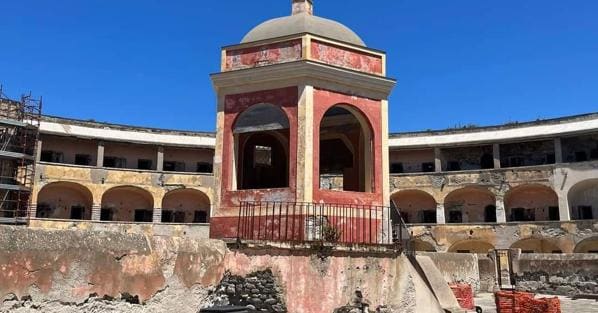
Over the years, some rocks have become penitentiaries, some of the toughest. Such as the Asinara and Pianosa, with their maximum security cells for murderous bosses. Or, with a leap backwards, like the panopticon of Santo Stefano, opposite Ventotene, where the future president of the Republic, Sandro Pertini, was imprisoned, as was Luigi Settembrini. 'We live,' he noted in his Letters from life imprisonment, 'at the mercy of the winds, the sea and the sailors'. A sentence chosen by Bignardi as the book's exergue, in which the reader, in the encounter with the inmates, finds mirrored the unresolved evils of the world outside. This is why "no one wants to talk about prison", the author premises, as she enters the ritual of gates, parlours and "domandine" (little questions) with an effort to purge every sentence of the too much and the vain. It is prison life that interests her, made up 'of pain, injustice, poverty, love, illness, death, friendship, regret of a happiness and desire for freedom'. But it is also made up of conversations, even more authentic inside than outside, because they are limited; of torment and attempts at reparation, 'because prisoners feel guilty about their relatives,' the author writes, 'and they talk about it all the time'.
The stories (the former lifer turned entrepreneur who gives work to other inmates; the ex of the Vallanzasca gang with his head no longer 'hot but desperate for the years of life lost'; the brother of a victim of the Modena riot with his pain and his questions; former members of the armed struggle) are studded with reflections, which can only come from 'a Seventy-eight', as those who are allowed to enter prison are called in the jargon 'for the purpose of participating in the work aimed at the moral support of inmates and internees, and their future reintegration into social life'. Bignardi does this in the La Nave ward of San Vittore for drug addicts, between writing courses, newspaper articles and a choir, made possible thanks to the generosity of volunteers. For this reason, too, every prison is different. Because each prison is also the territory that surrounds it. As well as a place of community in which 'if the prisoner is sick, the guard is sick too', reflects a former inmate, convinced that 'the same ones who beat up in Santa Maria Capua Vetere in Bollate would not have done so'. Just as those who, in the institute on the outskirts of Milan, have had access to a professional opportunity more rarely return to crime, as shown by research on recidivism.
For years, however, "prisons have gone back to wearing the dress of the general hospitals of the past", admits the director of the prison services of Paris in a hearing quoted by Bignardi. Aubergedes pauvres, shelters for every category of outcast. In France, as in Italy. The prison therefore a distant island, a space separated from the society of the free, but sometimes even a landing place.


