Data from distributors

Almost twice as many power cuts on the islands

In 2025, Sicily and Sardinia will record just under 9 incidents per user, compared with an average of 4.9

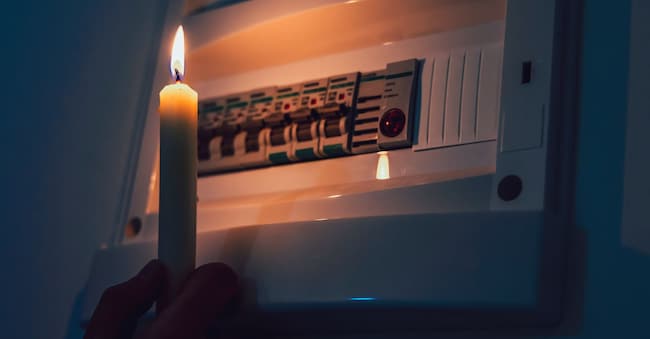
 (AdobeStock)

3' min read

Translated by AI
Versione italiana

3' min read

Translated by AI
Versione italiana

With the arrival of summer, the power cuts have returned, right on schedule. In recent weeks, reports have come in from all over Italia: neighbourhoods left in the dark in Turin and Naples, but also in the Milanese hinterland and in various provinces of Lombardy, as far as Pescara and Jesolo. Beyond these individual incidents, the most recent data show that power cuts are concentrated in the South.

In 2025, households in Sicily and Sardinia experienced an average of 8.7 power cuts lasting longer than a second. Shorter outages may go unnoticed by a household, but in manufacturing plants they risk damaging machinery and products in the process of being manufactured. In the other southern regions, the figure drops to 6.9 incidents per meter, two more than the national average (4.9).

Loading...

The data

This is according to an analysis by Sole 24 Ore of regional data published in early July by the main local distributors, which cover 95 per cent of supply points. The analysis considers only unplanned outages that were not communicated in advance, regardless of cause or origin. National trends, on the other hand, are based on the 2026 report by the Regulatory Authority for Energy, Networks and the Environment (ARERA).

IL TREND

Frequenza delle interruzioni senza preavviso per utente in bassa tensione, 2008-2025

Loading...

In Italia, the frequency of service disruptions remained stable between 2023 and 2025, at around five incidents per year per user, which is higher than in the previous decade, when the figure stood at 4.2.

The regional disparity is significant: Southern Italy recorded an average of 7.5 outages in 2025, compared with 4.4 in Central Italy and 3.5 in Northern Italy. The most critical situations are concentrated in Sicily and Campania. The provinces of Trapani and Avellino recorded over 11 power cuts, whilst Catania, Caserta and Ragusa exceeded 10.

SUL TERRITORIO

Frequenza media per utente delle interruzioni (lunghe e brevi) senza preavviso

Loading...

The lowest rates are all found in the Centre-North: leading the way are Trento (1.3) and Ascoli Piceno (2.3), followed by Prato, Forlì-Cesena and Imperia (all around 2.6).

The highest levels recorded in recent years are mainly linked to the effects on the grid of an increasingly hot climate. “In summer, when temperatures remain high even at night, the soil dries out more deeply,” explains Maurizio Delfanti, full professor of Electrical Energy Systems at the Politecnico di Milano. “Dry soil conducts less heat and has greater difficulty dissipating the heat generated by the cables, reducing their capacity and increasing the risk of faults. The problem mainly affects underground lines: this is why disruptions are concentrated in areas with higher load density, such as cities, where heat islands form and the grid is almost entirely underground. Overhead lines in rural areas are not affected.”

North-South divide

In 2025, the average duration of the longest episodes – those lasting more than 3 minutes – was 69 minutes, with marked differences between the country’s regions: 95 minutes in the South, compared with 68 in the Centre and 52 in the North. Nationally, the figure has improved: over two years, the duration has fallen by around 30 minutes, although 2023 was marked by exceptional events, including an intense heatwave in Sicily in July and the floods in Romagna. Even compared with the decade 2013–2022, thelongest power cuts have been reduced by around 10 minutes.

The north-south divide is not solely down to higher temperatures and related effects, such as forest fires which can cause power cuts. Another factor is a distribution network that is still not uniform, despite the progress made in recent decades.

“Historically, we started with power cuts lasting 60 minutes a year in the North, compared with 3 hours in the South,” explains Delfanti. “Twenty-five years of regulation by ARERA have brought the situation across Italy into line, in terms of both duration and frequency: this does not mean that everyone has reached the same level, but the picture has become more uniform. The measures taken by distributors to improve the service are the same everywhere, but in the South they have been implemented more extensively: more primary and secondary substations, network upgrades and, above all, automation.”

Copyright reserved ©

Brand connect

Loading...

Newsletter

Notizie e approfondimenti sugli avvenimenti politici, economici e finanziari.

Iscriviti