
From online manipulation to disinformation. Here are the risks of cognitive warfare
Nato's Blatny and Giannini of la Sapienza discuss the new frontiers of modern conflicts in the Confcommercio headquarters

Key points
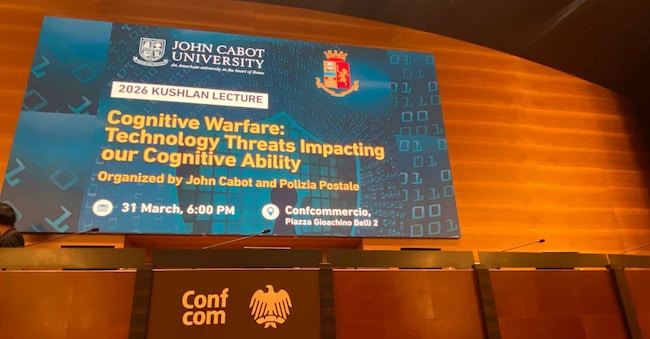
A meeting organised by John Cabot University in collaboration with the Postal Police dedicated to digital threats, with the aim of navigating more consciously through the web.
The conference 'Cognitive Warfare: Technological Threats Impacting Our Cognitive Capabilities' opens the Kushlan Lecture series to provide a scientific and institutional overview of the strategies needed to protect decision-making autonomy.
These are the new frontiers related to the so-called cognitive warfare where one does not clash in the field, but through the network. And so it is that disinformation processes risk polarising the knowledge of users, generating in them a cognitive bias that could lead them to favour one political position over another.
There are indeed other types of weapons to fight a war. Not only tanks, ballistic missiles and drones, but also manipulation and persuasion can become tools to annihilate the enemy. And the long list does not lack artificial intelligence.
Nato, Blatney "Area to be investigated"
Create shields to defend against the dangers of cognitive warfare. This is just one of the objectives to be pursued according to NATO to counter the dangers of misinformation running on the web, a place where geopolitics collides with online propaganda.

