
UN: commitments on cutting greenhouse gases are not enough
Emissions will fall by only 10 per cent by 2035, 'a long way' from the 60 per cent target needed to keep the rise in global temperatures within 1.5 degrees Celsius by the end of the century. And extreme events are intensifying: Hurricane Melissa hits the Caribbean, Cyclone Montha hits India

Key points
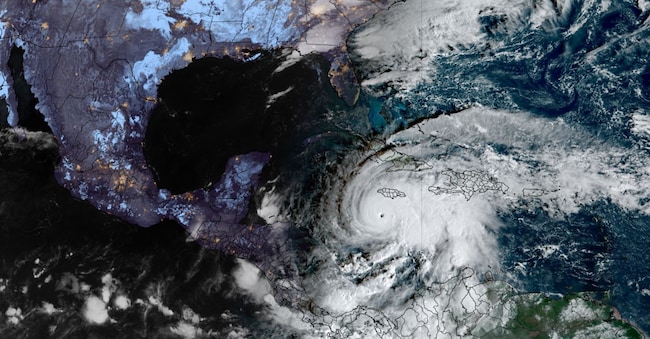
In Kingston, Jamaica's capital city, the authorities await with resignation the impact of Hurricane Melissa, which is expected to be the strongest storm ever to hit the island. The Prime Minister, Andrew Holness, threw up his hands: 'There is no infrastructure in the region that can withstand a category 5 hurricane'. Thousands of kilometres away, schools in Indian towns bordering the Bay of Bengal have been closed in anticipation of the arrival of Cyclone Montha.
Around the same time (Tuesday 28 October), the United Nations warns that extreme events, such as Melissa and Montha, are set to become more frequent. The commitments presented by countries to reduce greenhouse gas emissions, which fuel climate change, are 'far from necessary'.
Too little, too slow
Based on these pledges, it is estimated that pollutant emissions will only fall by 10% by 2035. This is the first time that the UN has predicted a decrease, but it is not enough. The United Nations Environment Programme (UNEP) has calculated that a 60% cut from 2019 levels is needed to contain the rise in global temperatures to within 1.5° Celsius, the safest threshold indicated by science and incorporated in the 2015 Paris Agreement.
The denunciation comes just days before the opening of the World Climate Conference, Cop30 in Brazil. Only 64 of the almost 200 signatory states have submitted their updated national plans (NDCs) on time (the deadline expired on 30 September). An obligation to be fulfilled every five years, although it is not accompanied by sanctions.
The emission reduction estimate, prepared by the United Nations Framework Convention on Climate Change (UNFCCC), includes China's disappointing and not yet formal promises of a 7-10% reduction by 2035, and the even more disappointing declaration of intent by the European Union (cuts between 66 and 72.5% compared to 1990), which in turn failed to submit an MoU due to the breakdown of the consensus on the Green Deal. The document is due on 4 November.


