
Open sea aquaculture, Italia lags behind in Europe
There are only 19 plants along the Italian coast, compared to 300 in Greece and 540 in Turkey: operators are aiming to increase production, but are asking for clearer competences and more streamlined procedures

Key points
On Italian tables there is more and more fish, farmed and above all foreign. Just 19 concessions for sea farms on over 8 thousand kilometres of coastline make Italia the Cinderella of Europe in this sector. Despite consumption that is higher than the European average, 31 kg per capita per year compared to 24, 60% concentrated outside the home and growing by 3% by 2024, the overall deficit has reached 86% (the EU one stops at 73%, with a red balance of trade of 20 billion, of which seven billion for Italia). Yet aquaculture is a healthy sector with wide margins for growth, also given the crisis in traditional fishing, against which it made a historic global overtaking last year, destined to consolidate in 2050 when, according to the FAO, it will cover 70% of world consumption.
Target: doubling production
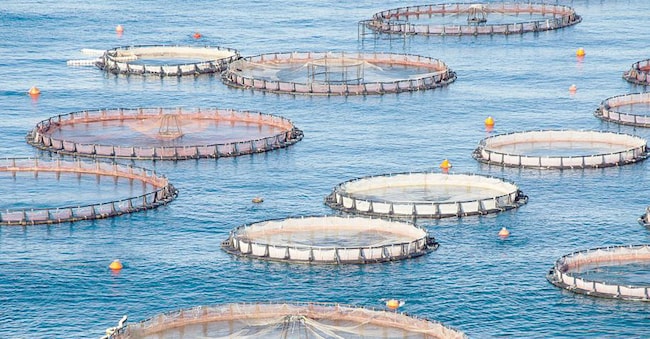
As emerged at a recent meeting promoted by the Italian Fish Farmers Association, fish farms aim to double production, allying themselves with traditional fishing to intercept a growing consumption increasingly covered by imports. An objective that is possible provided that we overcome the structural knots that hold back the sector's growth, starting with that of concessions for offshore fish farms: the 19 Italians are compared to the 540 of Turkey and the over 300 of Greece, the main competitors in the Mediterranean area.
Not to mention Norway, whose salmon, with thousands of farms, is the leading national industry (ahead of even oil) as evidenced by the invasion of the world market, well accompanied and financed by the rich state promotion agency. The Scandinavian country has come to produce 1.5 million tonnes of fish in the sea, while Italia is stuck at 15 thousand.
In Italia traditional fishing still prevails over aquaculture, with a production of around 65 million tonnes and 600 million turnover against 51 million 400 million in turnover, achieved at over 800 production sites.
Excellence in inland aquaculture
However, some niches shine in 'domestic' aquaculture: Italia isthe first sturgeon caviar producer in Europe and the second in the world after China, which has grown very fast in a short time and now occupies 54% of the world market. The sea bass and sea bream hatchery sector has also tripled in the last five years, but Italia only absorbs 10% of production and difficult logistics risk holding back exports. If there were more farms, supplies would be ready for a 100% Made in Italy supply chain.

