USA

OpenAI is discussing the possible sale of a 5 per cent stake to the Trump administration

This is reported by the Financial Times

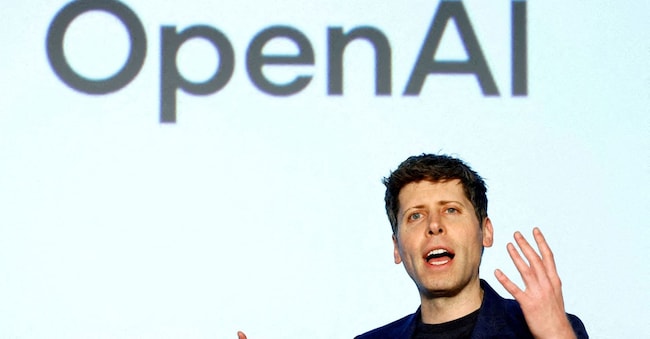
Il Ceo di OpenAI, Sam Altman, partecipa a un evento a Tokyo, in Giappone, il 3 febbraio 2025. REUTERS/Kim Kyung-Hoon/Foto d'archivio REUTERS

2' min read

Translated by AI
Versione italiana

2' min read

Translated by AI
Versione italiana

OpenAI is reportedly discussing the possibility of selling a 5% stake in the company that develops ChatGPT to the US government, with the CEO of the artificial intelligence start-up (valued at 852 billion dollars) Sam Altman – who, according to the Financial Times – is said to have discussed the sale of the stake with President Donald Trump, Secretary of Commerce Howard Lutnick and Secretary of the Treasury Scott Bessent.

The Financial Times quotes two people with knowledge of the talks.

Loading...

OpenAI’s chief executive, Sam Altman , and other executives are reported to have proposed this initiative as part of a broader agreement under which Washington would hold a 5 per cent stake in each of the major US companies operating in the artificial intelligence sector. These could include Anthropic, as well as the listed giants Google and Meta Platforms, although it is unclear whether these companies would accept the proposal.

According to the Financial Times, Altman argues that offering the public a stake in his company is the best way to share the economic benefits arising from the artificial intelligence boom. As reported by Bloomberg, the CEO had been discussing the idea of government stakes in leading AI companies with the Trump administration since 2025.

Pressure from the US government on AI companies

The proposal comes against a backdrop of growing pressure from the US government on leading AI companies. Last month, Anthropic suspended its most advanced models after the government ordered it to restrict access to them for foreign nationals on national security grounds.

This week, Washington has lifted restrictions on Anthropic’s Fable 5 model, authorising its wider distribution after the start-up had addressed the Trump administration’s security concerns.

Meanwhile, there are growing calls for governments and businesses to address the widening gap between those who benefit from the economic advantages of the AI revolution and those who are excluded from them. The large-scale construction of data centres around the world is, in fact, fuelling strong growth in profits and share prices for chip manufacturers and IT infrastructure providers, whilst more traditional sectors are lagging behind.

Redistributing the profits from artificial intelligence

In recent months, there has also been a rise in calls for profit-sharing schemes , fuelled by fears that artificial intelligence could replace many jobs. At the same time, several companies in the sector – including OpenAI and Anthropic – are preparing for potential stock market listings that could reach valuations in the region of a trillion dollars.

President Donald Trump has expressed interest in the idea of the US government holding stakes in leading AI companies through a public sovereign wealth fund, which would redistribute part of the profits generated by the sector to citizens. He stated that he had discussed this possibility with a number of companies, though he did not provide any specific details.

It remains unclear, however, how the government might acquire such stakes. Since Trump’s return to the White House, the administration has invested in around a dozen companies, including some operating in the critical minerals sector, and has also promised to acquire a stake of up to 10 per cent in the semiconductor manufacturer Intel Corp.

Copyright reserved ©

Brand connect

Loading...

Newsletter

Notizie e approfondimenti sugli avvenimenti politici, economici e finanziari.

Iscriviti