USA

OpenAI joins the race for record-breaking IPOs: here is the confidential prospectus

The timing of the listing and valuations remain uncertain as the battle with rivals, from SpaceX to Anthropic, rages on. There is anticipation and uncertainty surrounding SpaceX’s listing on the Nasdaq on Friday
by Marco Valsania

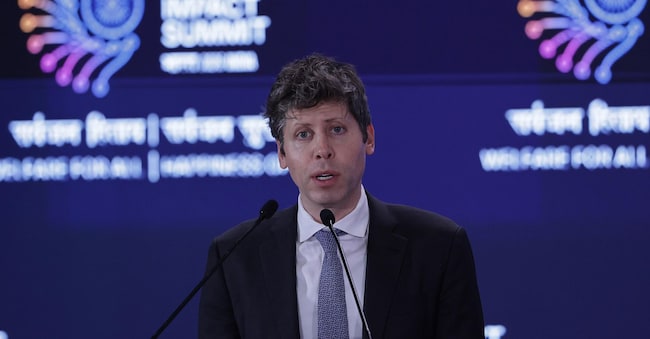
 Il CEO di OpenAI, Sam Altman, partecipa a una sessione dell'AI Impact Summit 2026 al Bharat Mandapam di Nuova Delhi, in India, il 19 febbraio 2026. L'India ospita l'AI Impact Summit 2026 dal 16 al 20 febbraio 2026 a Nuova Delhi.  EPA/RAJAT GUPTA EPA

3' min read

Translated by AI
Versione italiana

3' min read

Translated by AI
Versione italiana

OpenAI has entered the race for artificial intelligence IPOs by submitting its confidential prospectus to the SEC. The company has indicated that it intends to pursue the opportunity but has not yet decided on the date or details of the transaction, which had previously been expected in the autumn and is now said to be subject to numerous variables.

“We haven’t decided on a timeline; it could take a long time because there are steps we want to take that are easier to implement as a private company,” announced the firm led by Sam Altman. “But we are facing a complex web of trade-offs, and our current decision gives us the option to list more quickly if that turns out to be the best course of action.”

Loading...

The company, a pioneer in generative artificial intelligence with its ChatGPT in 2022, may, according to observers, attempt to streamline and simplify its operations after failing to meet a series of internal growth targets. It is also reeling from internal upheavals, with executives having left. However, it recently won a lawsuit brought by Musk, formerly one of the group’s co-founders, who had accused it of betraying its original non-profit mission.

OpenAI valutata 500 miliardi di dollari, superate SpaceX e Exxon

OpenAI, currently valued at around $850 billion, is the latest of the trio of leading unlisted AI firms to take concrete steps towards going public, seeking to capitalise on the IPO frenzy and the buzz surrounding stocks linked to this new technological frontier that is buoying the markets. This is despite controversy and doubts over excessive spending and techno-optimism, with critics questioning claims of profitability and promised economic productivity gains – all of which remain to be proven – as well as social repercussions that have yet to be assessed.

All the more so in a climate of lax regulation and, in the US, often controversial links between political power and the new industry, with the spotlight on the close ties between figures such as Altman of OpenAI and Elon Musk of SpaceX and Donald Trump. The Google co-founder Sergey Brin is himself a recent – and, in his case, very committed – convert to the MAGA movement.

Target: to raise $75 billion

SpaceX will be the first to go public on Wall Street, on the Nasdaq, with the listing now just around the corner on Friday 12 June. Musk’s aim is to raise a record $75 billion at a valuation of nearly $1.8 trillion. Investor demand appears strong, but so do the risks: SpaceX burns through huge amounts of capital, has demonstrated a murky financial structure with substantial transactions with other parts of Musk’s empire, and equally opaque governance, with Musk retaining control of around 85% of the voting rights.

Revenue is primarily generated by the Starlink communications satellite network, rather than by the more high-profile businesses of space rockets and AI. The key lies in huge federal contracts, which, however, are themselves the subject of debate with the Pentagon, US intelligence and the national security apparatus, as it has sometimes emerged that they were specifically designed to favour the company.

It also remains to be seen how it will perform on Wall Street – and beyond – on its debut: many analysts are predicting a traditional rise on the first day of trading. Musk has opted to set a fixed share price of $135, rather than specifying a traditional price range. In the longer term, however, the outcome for SPX is still up in the air, with last-minute investors – that is, those buying at the end of the session who did not have access to the initial pricing – potentially finding themselves out of pocket.

Wealth for the few alone

The Wall Street Journal has highlighted that, over a three-year period, IPOs on average underperform a weighted market index by 21%. In short, they certainly make only a few people rich; in the case of SpaceX, this includes a number of employees, early investors and top executives of the group (Musk aims to become the world’s first trillionaire).

Anthropic, led by Dario Amodei, is now approaching a valuation of one trillion and is aiming for a potential listing in October, having surpassed

to OpenAI in terms of innovation, with its Claude model, as well as in submitting a confidential prospectus to the authorities for its listing. Amodei has, moreover, sought so far to present his company as pursuing a different strategy, one characterised by a more cautious approach to risks and a greater focus on business. An approach that has caused tensions with the Trump administration, although these were subsequently followed by efforts to improve relations.

Copyright reserved ©
Loading...

Brand connect

Loading...

Newsletter

Notizie e approfondimenti sugli avvenimenti politici, economici e finanziari.

Iscriviti