

Osteoporosis, bones talk to the brain: why new prevention is needed
Better understanding the dialogue between brain, pituitary gland, nervous system and bone means paving the way for more precise strategies to prevent fractures and protect people

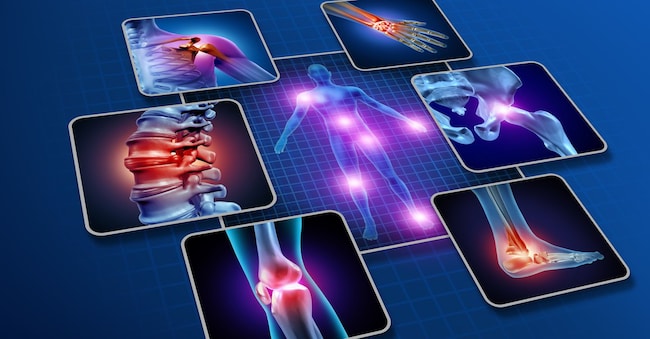
Osteoporosis is still too often regarded as an almost inevitable consequence of ageing, a 'mechanical' fragility of the skeleton linked mainly to a lack of calcium, vitamin D or sex hormones. This view, although based on important clinical elements, is no longer sufficient today.
Bone as living tissue
Research is showing with increasing clarity that bone is not an inert structure, nor a mere mineral deposit. It is a living, dynamic, constantly renewing tissue, capable of dialogue with the rest of the organism. The brain, pituitary gland and nervous system also come into play in this dialogue. This is the central message of the review 'Neuroendocrine and neural control of bone mass in health and disease', recently published in the Journal of Clinical Investigation, which we signed with an international group of experts. The work brings together the most recent evidence on the neuroendocrine and neural control of bone mass, showing how the skeleton receives signals not only from hormones traditionally associated with mineral metabolism, but also from central and peripheral circuits capable of modulating the balance between bone formation and resorption. In simple terms, there are at least two major communication pathways between the nervous system, hormones and bone. The first is neurohormonal and involves certain pituitary hormones, such as FSH, TSH, GH, oxytocin and vasopressin, which can directly influence the activity of the cells responsible for skeletal remodelling. The second is nervous and involves sympathetic, parasympathetic and sensory fibres that reach the bone and help regulate its metabolism.
"Systemic" fragility
This means that skeletal fragility must increasingly be read as a systemic condition. Menopause, ageing, endocrine diseases, inflammation, metabolic changes, drugs, neurological disorders and hormonal signals can all contribute in different ways to bone loss and fracture risk. One of the most interesting areas concerns FSH, the follicle-stimulating hormone. Traditionally linked to reproductive function, FSH is now also being studied for its possible direct role in bone loss, particularly in the menopausal transition. The data should be interpreted with caution: there is still no new therapy available based on this mechanism. But it is an important example of how research is broadening the way we understand osteoporosis.
A complex disease
This new perspective does not replace the already known risk factors, nor does it change the pillars of prevention: adequate diet, physical activity, prevention of falls, early diagnosis and treatment when indicated remain fundamental. But it does help explain why osteoporosis is a complex disease, often underdiagnosed and undertreated.
The numbers are a stark reminder. In Italia there are an estimated 4.3 million people with osteoporosis and about 568 thousand new fragility fractures every year: 1,560 a day, 65 every hour. The clinical, social and economic impact is enormous, with costs estimated at around EUR 9.45 billion per year. Yet, even after a fragility fracture, many patients are not identified and treated appropriately.
Fracture should be an alarm bell, not an isolated episode. It should trigger a diagnostic and therapeutic course, but also a broader evaluation of the mechanisms that led to fragility. In this perspective, endocrinology plays a central role: conditions such as thyroid alterations, pituitary disorders, acromegaly, growth hormone deficiency or panhypopituitarism may be associated with an increased skeletal risk and require specific attention.
The challenge of the coming years will be to move from a view of osteoporosis as a simple effect of age to a more integrated, preventive and personalised medicine of bone fragility. Better understanding the dialogue between brain, pituitary gland, nervous system and bone means paving the way for more precise strategies to prevent fractures and protect people's autonomy, quality of life and health.

