
Out-of-meal: consumption of crisps, popcorn and cornflakes is on the rise
US-imported trend growing strongly in Europe and Italy with more than 2 billion in sales, so much so that the snack economy is being talked about

3' min read
3' min read
The snack economy is crisper than ever. According to Euromonitor, global turnover will increase by 23% by 2028, exceeding USD 831 billion. In Europe, sales in the retail channel have now surpassed EUR 234 billion and Italy is the second largest country in the EU, behind the Netherlands, in terms of the share of food expenditure allocated to these products (43.2%), says a Circana report. In the cradle of the Mediterranean diet and the world's best-loved cuisine, 55% of consumers consider snacks a key element of their day, reveals a survey by Danone.
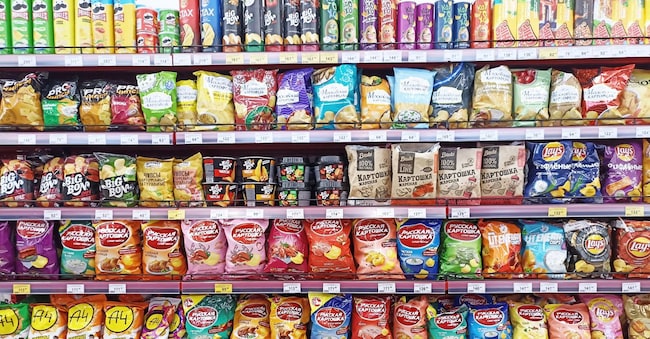
In 2024 from the sale of crisps, extruded products, chips, tortillas, popcorn, galette and sweet bars, Italian retail chains grossed about 2 billion euros, Niq elaborations say. Mostly salty snacks ended up in shopping trolleys: as many as 800 million packs, 2.6 per cent more than the previous year, for an expenditure of more than 1.2 billion euros. The queens are potato crisps, which account for 44% of the spending on savoury snacks and 46% of the quantities. In the out-of-home sector, sales of savoury snacks also increased (+2.5%), while in the vending sector it was mainly sweet snacks that grew (+6.7%) (source: Confida). The latter also grossed more in the large-scale retail trade (+2.6%), exceeding EUR 742 million despite a 2.7% drop in volumes.
If in the USA, the home of the 'snacking economy', sales of snacks continue to fall because consumers are more critical of these products and more inclined to cook, in Italy the opposite is true and the attitude of eating on many occasions, ranging from after sport to a break at work, is advancing. According to the Danone study, six out of ten Italians prefer snacks to the more abundant traditional meals, which hardly fit in with the new lifestyles. No more set tables and elaborate menus: in the 'snack age', one can eat anytime, anyplace, even while walking, travelling or attending a lecture at university, so much so that by now snack foods are included in classic meals, from breakfast to dinner, or even take their place. New habits expressions of a society in perpetual movement but also the result of a supply that is changing the approach to food.
Products designed literally to win you over at first glance, as snacking is predominantly an impulse purchase. Products with an irresistible promise of taste and gratification, which are often offered in limited editions made in collaboration with celebrities (such as Pringles/Super Mario and Wacko's/Sferaebbasta) and recipes that are constantly changing in order to remain attractive and appetising. Thus, in recent months, there has been an increase in high-protein products (such as beef jerky bites), those that wink at health (such as rice chips and light ones), and those that pander to the plant-based trend (such as veg based on legumes). But, on the other hand, innovations that focus on maximum gratification and pleasure also work well, not caring about nutritionally correctness, as is the case with the 'finger-licking' savoury extruded products, the San Carlo Grill crisp to put in your sandwich, chocolate-covered pulses, sweet popcorn or oat cubes with fruit. Emblematic is what is happening in the burgeoning tortilla segment, where it is the flavoured versions with various flavours (such as cheese or chilli) that are the most popular among the young and very young. The same is happening in flavoured snacks, which are growing three times faster than classic snacks, and in potato crisps, where flavoured versions have been growing at a double-digit rate for the past couple of years (+14% in volume) to over 104 million sell-outs.
The snacks sector is also a dynamic one, not least because behind the triad of leaders Unichips, Mondelēz and Kelloggs there are many companies on the move and several M& A operations. At the beginning of August, the Preziosi food group - which produces over 130 million packs of savoury snacks under its own brand name and for the private labels of the large-scale retail trade - passed to the Maltese holding company Foster Clark products ltd. The next to change hands could be Crik Crok, a historic potato crisp company founded in 1949, which has submitted a plan of arrangement with creditors to the Court of Velletri. A move not only to settle debts but also to allow the entry of a new owner, which rumours indicate in the Casillo family, owner of Pastificio Liguori.

