
Batteries: OX2 acquires 200 MW of projects in Puglia from Hanwha
The two plants will have a combined capacity of 800 MWh and are expected to come on stream by the end of 2028. The Italian energy storage market is attracting new operators and investment

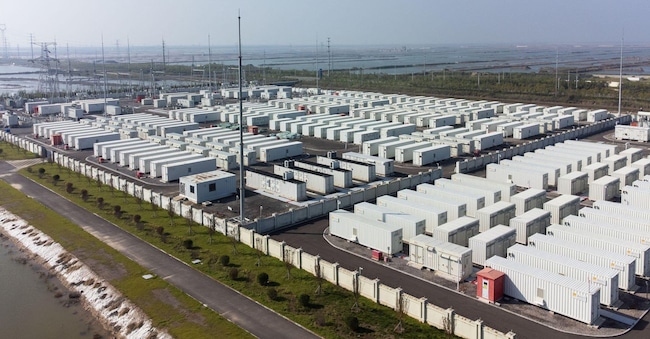
Batteries: the Italian utility-scale market has seen another deal: the Swedish company OX2 is acquiring two energy storage projects from Hanwha Energy Europe, the European arm of the South Korean multinational. The two plants will be built in Puglia from the second quarter of 2027 and will each have a capacity of 100 MW and a storage capacity of 400 MWh. They are expected to come on stream by the end of 2028.
Compared with Italia’s installed capacity at the end of 2025, the two projects would account for account for approximately 2.7 per cent of total battery power and 4.5 per cent of their energy capacity (7,362 MW of rated power and 17,920 MWh of capacity respectively, according to Terna survey). The systems will be stand-alone, meaning they will not be connected to a specific wind or solar farm; they will absorb energy when production exceeds demand, and then feed it back into the grid during periods of high demand.
Focus on Italy
According to Paolo Tusa, head of OX2 Italia, the acquisition is “a substantial addition to our energy storage portfolio in Italia”. The deal, he adds, “marks a further step forward in OX2’s ongoing expansion in the Italian market”. The company entered the Italia market in 2021 and currently has projects totalling 1.5 GW across onshore wind, solar PV and battery storage. The first project to be completed was the Maia wind farm, which began operations in Puglia in 2025.
Hanwha Energy Europe developed the two plants before selling them. According to Hyojin Jeon, the company’s European head, the deal “demonstrates our expertise and proven track record in developing energy storage projects”. Fabio Scarpa, head of operations for Italia, also emphasises “the strength of our local development capabilities” and is confident that the batteries can help “make the Italian electricity system more flexible and resilient”.
Batteries and the Macse
The growth in renewable energy sources is increasing the need to shift electricity between different times of day. Generation patterns can depend on weather conditions such as sunshine or wind, making it necessary to store electricity when generation and consumption do not coincide. Operators are investing in industrial batteries and several projects are in the pipeline. Terna estimates that by 2030, 71.5 GWh of new storage capacity will be required (excluding existing hydroelectric pumped-storage systems). Last year saw the launch of Macse (the forward market for storage), an instrument that is driving the market and for which a second auction is scheduled after the summer.

