

Pacemaker: what it is and how it helps the heart, short recovery times
The operation that President Mattarella underwent involves 24/48 hours of hospitalisation, followed by about ten days of rest to stabilise the implant

2' min read
Key points
2' min read
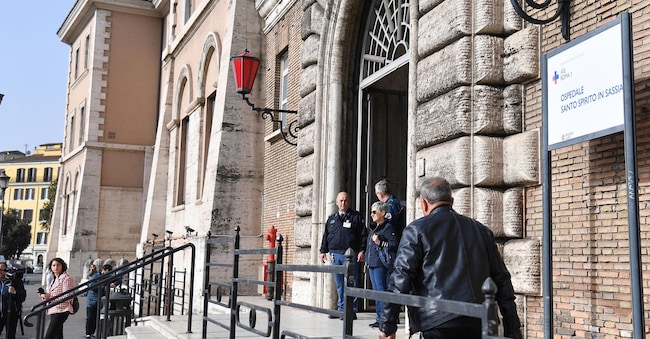
The application of a pacemaker, which necessitated the admission of the President of the Republic, Sergio Mattarella, to the cardiology department of Rome's Santo Spirito hospital, makes it possible to correct disturbances in the heart's activity linked to rhythm abnormalities. These are dysfunctions known as cardiac arrhythmias and can manifest themselves as beating too fast (tachycardia), too slow (bradycardia) or irregularly (as in atrial fibrillation). While many arrhythmias are harmless, some can impair the pumping function of the heart, potentially causing damage to vital organs.
When the heart registers less than 60 beats per minute
.'Our heart,' explains Domenico Gabrielli, director of the UOC of Cardiology at the San Camillo Hospital in Rome and president of the Foundation for Your Heart Anmco, 'has a natural pacemaker, i.e. a point from which the electrical impulse arises and propagates. With age, this pacemaker and the conduction system through which the electrical impulse propagates age and the heart begins to limp'.
'The pacemaker,' Gabrielli continues, 'is a small electronic device that has the fundamental task of monitoring and regulating the heart rhythm when the heart is unable to maintain a regular rhythm on its own, ready to intervene when the heart beats too slowly or when unwanted pauses occur between beats. There are different types and shapes up to the latest 'wireless' models.
Normally, at rest, the heart beats between 60 and 100 times per minute. Below this limit is bradycardia, which, when pathological, can cause symptoms such as fainting, dizziness, weakness, fatigue, shortness of breath and mental confusion.
What is the recovery time
.The surgery to implant a pacemaker, according to Gabrielli, can be considered routine and recovery is immediate. "The patient," he explains, "if there are no complications, can be discharged as early as 24/48 hours after the operation, then about ten days of rest are needed to stabilise the implant and avoid inappropriate strain.

