

Palliative care: half of older people require it, yet it is conspicuously absent from care homes and hospitals
More than a third of hospital wards and long-term care homes do not provide care outside the hospice setting

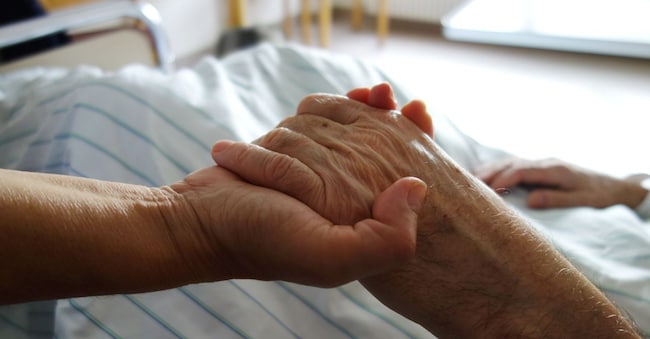
This is the first and most comprehensive survey carried out in Italia to assess the extent to which palliative care – understood not as end-of-life care but as support provided to older people with chronic conditions to offer relief from physical pain – is actually provided to this age group by non-hospice facilities, which are traditionally dedicated to alleviating the final stages of life for cancer patients. The study, which covered 235 Italian hospitals and residential care homes, reveals that palliative care is provided to half of the elderly people admitted to hospital and residing in residential care homes, but is not available in more than a third of hospital wards and long-term care facilities.
The survey
The survey, coordinated by Dario Leosco, President of the Italian Society of Gerontology and Geriatrics (SIGG), together with Graziano Onder, Professor of Medicine and Palliative Care at the Catholic University of the Sacred Heart in Rome, involved 100 internal medicine departments, 56 geriatric departments and 79 residential care homes for the elderly, spread across 17 regions and the Republic of San Marino. This reveals a ‘hidden’ yet very pressing need: the study’s findings, published in *Aging Clinical and Experimental Research* and presented on National Palliative Care Day, show that this need is widespread amongst the most frail elderly people in hospitals and residential care homes, and does not – in fact – concern only cancer patients; yet actual access remains severely limited.
The survey was carried out on last year’s National Palliative Care Day amongst approximately 5,400 older people: more than 3,300 were hospitalised in internal medicine and geriatric wards, with an average age of 81, and nearly 2,100 were residents in long-term care facilities, with an average age of 86.
Not just hospice care
‘Palliative care is traditionally associated with hospice care and the treatment of cancer. However, the majority of older people in hospital or living in care homes very often have multiple chronic conditions, predominantly non-cancerous but highly debilitating and causing significant suffering, which require a palliative approach at any stage of the disease’s progression and not just in the final days of life”, explains Dario Leosco, president of SIGG and professor of Geriatrics at the University of Naples Federico II.
The results
Highlighting this still largely unrecognised need are the study’s findings, which show that, overall, 58.3 per cent of elderly people in hospital and 48 per cent of those in care homes require palliative care that is not available in more than a third of the hospital wards and care homes that took part in the study. ‘This need increases with age and remains high even without a cancer diagnosis, although the prevalence is higher in such cases: 77.2 per cent in hospital and 61.5 per cent in care homes amongst cancer patients, compared with 50.8 per cent in hospital and 46.8 per cent in care homes amongst non-cancer patients’, reports Graziano Onder, coordinator of the survey. Among those with palliative care needs, cognitive decline (56.2 per cent in hospital, 48.7 per cent in care homes), deterioration in nutritional status (36.6 per cent in hospital, 23.9 per cent in care homes), dysphagia (17.6 per cent in hospital, 28.8 per cent in care homes) and pain, which is present in around one in two patients. ‘Dementia, present in half of the sample, is a factor of particular vulnerability: the need for palliative care affects 65.6 per cent of those with dementia, compared with 44.9 per cent of those without it,’ adds Onder.

