

Pancreatic cancer: sensors detect the response to chemotherapy
A team comprising the CNR-Nanotec, Tecnomed Puglia, the University of Salento and the Lecce Local Health Authority has developed a platform that replicates tissue

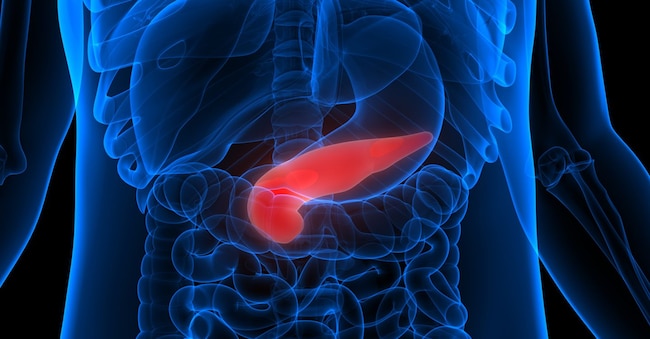
Smart sensors embedded in tissue to measure the response to chemotherapy in pancreatic cancer. This is the result of work carried out by a research team from CNR-Nanotec, Tecnomed Puglia, the University of Salento and the Lecce Local Health Authority. The laboratory platform developed replicates each patient’s tumour and measures its response to chemotherapy drugs. ‘Tested on a preclinical sample of patients who had undergone surgery for pancreatic cancer,’ the CNR reports, ‘the platform showed results consistent with the observed clinical course. The study was published in the international journal *Small*.’
The research
As part of the research carried out by the working group, tumour tissue samples were taken from five patients, then dissociated into individual cells and encapsulated in tiny three-dimensional gel spheres, the so-called ‘tumourspheres’ they have developed, together with optical sensors, also developed by the same team, capable of measuring in real time – without the need for further biopsies – changes in acidity in the space surrounding each individual cell.
The platform
“The tumourspheres were then exposed to three drugs used in the treatment of pancreatic cancer: the Folfirinox protocol and the active ingredients gemcitabine and paclitaxel,” explains Loretta L. del Mercato, Research Director at CNR-Nanotec and Tecnomed Puglia. The changes in acidity measured during treatment varied depending on both the patient and the drug, and were linked to the tumour cells’ response to treatment, providing an early indication of the response to the drugs.” The researchers have created an innovative laboratory platform that integrates advanced sensing and imaging with complex tissues taken directly from patients: “‘Tiny optical sensors, observed under a microscope in real time,’ the researcher continues, ‘allow us to measure, cell by cell, how each patient’s tumour – reproduced in 3D in vitro models – reacts to a drug in the laboratory, bringing research closer to the specific needs of each individual patient.’
Expanding the research base
In clinical practice, as Marcello G. Spampinato, Head of the Department of General and Specialist Surgery at the Lecce Local Health Authority, adds, it is only ‘after weeks or months that we discover whether a treatment is effective. In this study, the predictions obtained in the laboratory from tumourspheres were consistent with the actual clinical course in four out of five patients, an initial encouraging sign towards more personalised therapies’. At the heart of this result lies the collaboration between basic and clinical translational research. This initiative was made possible by Tecnomed Puglia, the joint CNR-University of Salento centre for precision medicine, in collaboration with the Lecce Local Health Authority. ‘The next objective,’ concludes Giuseppe Gigli, scientific director of Tecnomed Puglia, ‘is to validate the platform on a larger number of patients, to understand whether it can become a practical tool in the future to support treatment decisions for the most difficult-to-treat cancers.’

