
Panels, companies call for urea to be excluded from Cbam
Appreciation for the EU Commission's proposal to suspend tariffs on fertilisers, but not enough to avoid cost increases for the sector

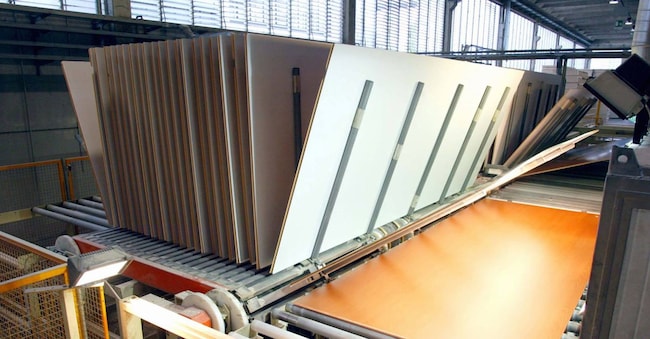
The effects of the Cbam are being felt by the panel industry. Introduced last 1 January, the Carbon Border Adjustment Mechanism is an EU regulation that introduces a tax on imports of raw materials and semi-finished products that generate high quantities of CO2 in order to be produced. These include urea, a natural gas derivative used mainly in agriculture as a fertiliser (85%), but also in industry as a base for glue production.
A regulation that, according to Assopannelli's estimates, will lead to an increase in the import costs of urea (the production of which in Europe has drastically decreased in recent years, following the increase in gas costs) and, consequently, in the production costs of panels, up to 12% more. The first price increases are already being felt, although, to date, these are in the order of 2-3%, so they have not yet reached the downstream sectors of the supply chain, such as furniture.
Nor will the European Commission's proposal to suspend, for one year, Most Favoured Nation (MFN) tariffs on imports of several essential nitrogen fertilisers and inputs for their production (ammonia, urea) help to avoid this prospect. The tariff suspension will apply to all countries, except Russia and Belarus (for which there should be a further tariff crackdown as part of the sanctions review), through tariff-free quotas.
"We look at the European Commission's proposal with attention and, although it has obvious limits with respect to the critical aspects of the sector, we appreciate its attempts at improvement," comments Paolo Fantoni, president of Assopannelli of FederlegnoArredo. Analyses show that the share of urea imports from countries actually subject to tariffs is marginal compared to the total, and the main countries from which we import do not apply any tariffs".
The woodworking companies' request is therefore that we can go further by suspending the application of the Cbam on urea: 'the real impact of suspending tariffs alone would be limited and would not compensate for the additional costs resulting from the entry into force of the Cbam mechanism,' Fantoni adds.

